It sure feels like 1979 again. Iran is fighting the West. The price of gas has been rising for weeks. Moscow is aiming to take advantage of a distracted White House. The party in control of Washington is anxiously looking at the polls. Flared pants and jumpsuits are back! So are cigarettes. Steven Spielberg is riding high after doing a movie about humans encountering aliens. (Not to be outdone, actual space missions are back too.) U2 put out new music. Even the Pittsburgh Pirates are good.
And if we do seem to have returned to that moment in time, then, well, Donald Trump would seem to be ready for whatever comes next, because the guy has lived his whole life like it’s the 1980s.
He embraces the big-bigger-biggest ethos of the decade, with its gold-plated style and “greed is good” mantra. His views have been shaped by the brash era in which excess was the norm and ostentatious displays of wealth and power were celebrated in pop culture and in Trump’s Manhattan. (The pink-marbled lobby of his Trump Tower skyscraper looks just as it did when it opened in 1983.) It was also a moment when New York City was defined by extreme wealth stratification and racial unrest, a time of high crime and corruption. To this day, Trump’s touchstones almost seem preserved in amber from that decade: Sylvester Stallone, George Steinbrenner, Hulk Hogan, the musical Cats. This was an era of over-the-top displays of patriotism and even jingoism; the phrase Let’s make America great again was in. (It’s true—Ronald Reagan got there first.) This was when Trump became a celebrity, when he still had youth on his side. In his mind, at least, he hasn’t left.
Trump’s favorite era may also be shaping his approach to the war with Iran. Back then was when Trump revealed himself to be an Iran hawk, one who believed that President Jimmy Carter’s failed efforts to rescue hostages at the U.S. embassy broadcast a sign of American weakness to the globe. In a series of remarks over the decade when he became a public figure, Trump said he’d punish Iran, and he began to float his now-familiar refrain of take the oil. Indeed, those 1980s discussions of foreign policy and Iran were when the media began speculating that Trump might someday run for president. The lessons he learned decades ago have informed his bombastic approach to this war, which has included the killing of Iran’s leader, the degradation of its military, and a threat Tuesday to wipe out the nation’s “whole civilization.” A fragile cease-fire is now in place. Republicans hope that this Iran crisis won’t wound the White House like the one that did 47 years ago.
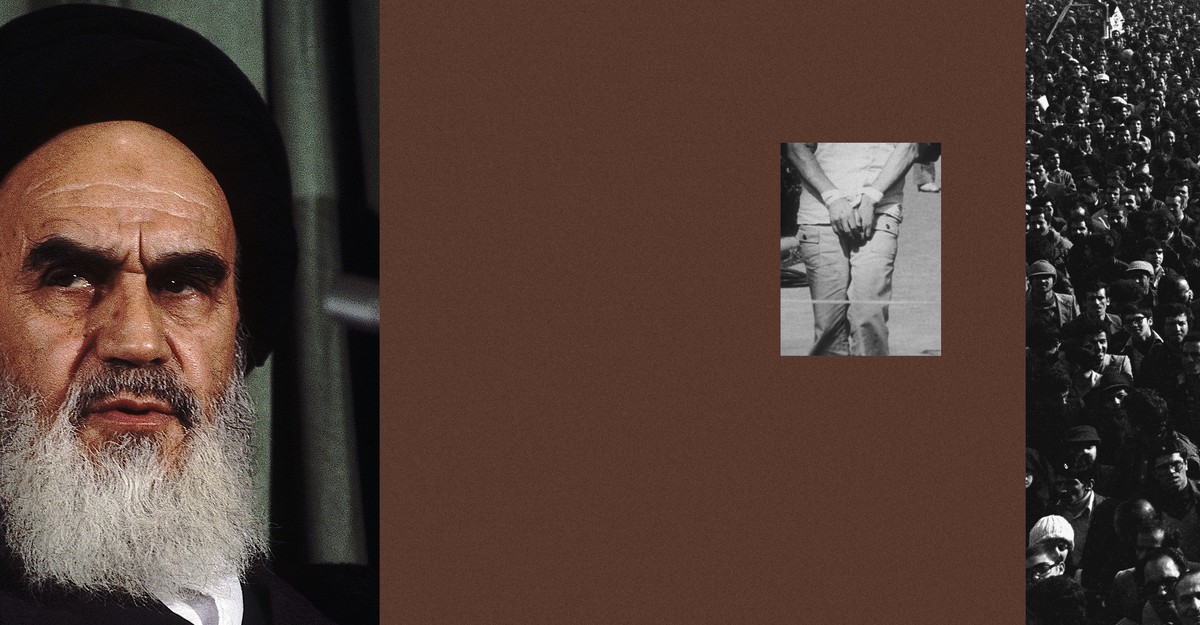
Carter’s presidency was largely doomed when, amid the Iranian Revolution of 1979, militants seized the American embassy in Tehran. Weeks later, Ruhollah Khomeini, an Islamist cleric, emerged as the new theocratic state’s supreme leader and fueled extreme anti-American sentiment. A military rescue effort failed, and the standoff gripped the United States throughout a presidential-election year. Carter later received some credit for having prevented the situation from growing worse, but at the time, he seemed weak and powerless. In October 1980, a young Trump, then just 34 years old, gave an interview that is believed to be the first time he publicly weighed in on foreign policy.
“That this country sits back and allows a country such as Iran to hold our hostages, to my way of thinking, is a horror, and I don’t think they’d do it with other countries,” Trump said during an interview on NBC with the gossip columnist Rona Barrett. When Barrett asked whether he’d advocate for sending in troops to free the hostages and seize Iran’s resources, Trump answered in the affirmative, saying, “I think right now we’d be an oil-rich nation, and I believe that we should have done it.”
From the June 2025 issue: ‘I run the country and the world’
Sounds familiar. As best we can tell, this is also the first time that Trump publicly mused about taking another nation’s oil. It wouldn’t be the last. Reagan won in a landslide a month later, though he never got around to taking any oil. As a parting kiss-off to Carter, the hostages were released on the day of the Republican’s inauguration.
Douglas Brinkley, a presidential historian and a professor at Rice University, told us that “it almost became orthodoxy in the party in 1980 to say, If I were president, I would not have been weak like Carter. I would have bombed Iran back to the Stone Age.” But Brinkley warned that Trump may have overcompensated. In his effort to project toughness and strength, he’s unleashing bellicose rhetoric that won’t intimidate the Iranian theocracy (after all, their leaders talk that way too) and that, ultimately, will leave him with few good options. “It looks like he wants to live on that 1980 threat. It’s like the ‘madman theory’ of foreign policy,” Brinkley said. “You’ve got to make Iran believe they have to cut a deal.”
By the late 1980s, Trump was a celebrity real-estate developer, a best-selling author, and a tabloid fixture. But what he said then effectively previews how he is governing now; indeed, for a politician who has few consistent ideologies (except on tariffs; he has always loved tariffs), it’s striking how Trump’s views on Iran haven’t really changed. A New York Times write-up of an October 1987 speech in New Hampshire relayed that the businessman had suggested that the U.S. “should attack Iran and seize some of its oil fields in retaliation for what he called Iran’s bullying of America.” A couple of months later, Trump complained to Phil Donahue (we told you this was a very 1980s tale) that American allies were not doing enough to protect access to oil in the Persian Gulf. The following year, Trump told The Guardian that if he were ever to run for president, he’d be “harsh” on Iran, declaring that “one bullet shot at one of our men or ships, and I’d do a number on Kharg Island. I’d go in and take it.” Nearly 40 years later, the Pentagon has prepared a plan for a ground invasion to do just this. It’s awaiting Trump’s approval if the cease-fire falters.