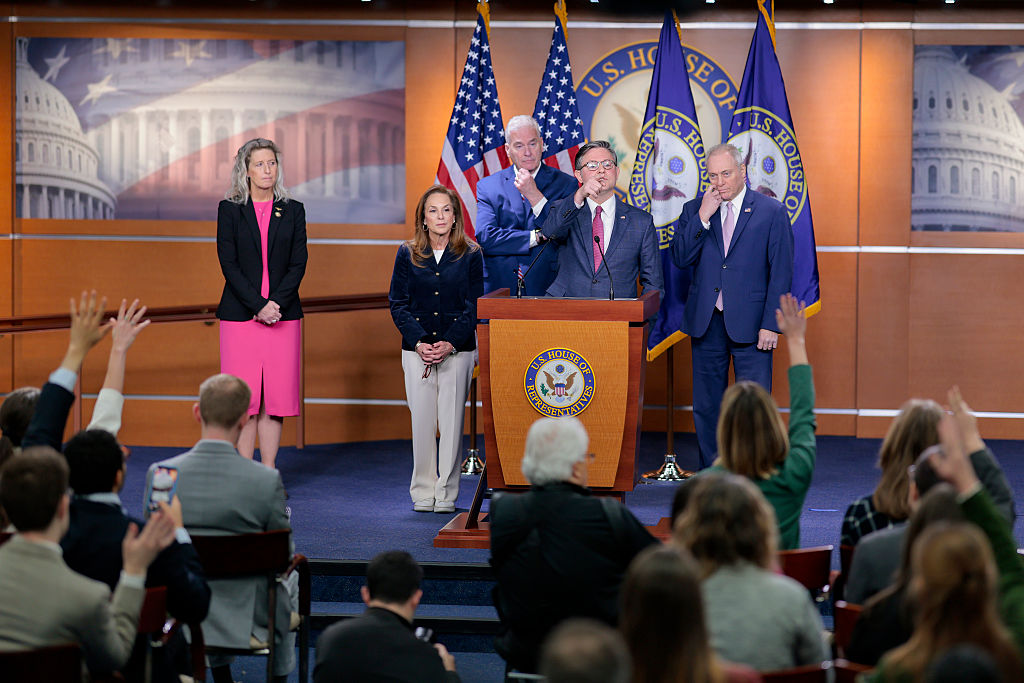
We've been here before: congressional Democrats and Republicans sparring over the future of the Affordable Care Act.
But this time there's an extra complication. Though it's the middle of open enrollment, lawmakers are still debating whether to extend the subsidies that have given consumers extra help paying their health insurance premiums in recent years.
The circumstances have led to deep consumer concerns about higher costs and fears of political fallout among some Republican lawmakers.
According to a KFF poll released in December, about half of current enrollees who are registered to vote said that if their overall health care expenses — copays, deductibles, and premiums — increased by $1,000 next year, it would have a "major impact" on whether they vote in next year's midterm elections or which party's candidate they support.
For those caught in the middle — including consumers and leaders of the 20 states, along with the District of Columbia, that run their own ACA marketplaces — the lack of action on Capitol Hill has led to uncertainty about what to do.
"Before I sign up, I will wait and see what happens," said poll participant Daniela Perez, a 34-year-old education consultant in Chicago who says her current plan will increase to $1,200 a month from about $180 this year without an extension of the tax credits. "I'm not super hopeful. Seems like everything is in gridlock."
In Washington, as part of the deal to end the recent government shutdown, a Senate vote was held Dec. 11 on a proposal to extend the subsidies. Another option, which was advanced by Republicans and included funding health savings accounts, or HSAs, was also considered. Neither reached the 60-vote mark necessary for passage.
On the House side, Speaker Mike Johnson plans this week to bring to the floor a narrow legislative package designed to "tackle the real drivers of health care costs." It would include expanded access to association health plans and appropriations for cost-sharing reduction payments to stabilize the individual market and lower premiums. It would also increase transparency requirements for pharmacy benefit managers. Like the bill put forward by Republicans in the Senate, it would not extend the ACA enhanced subsidies. Lawmakers are likely to vote on such an extension at some point, but it is not clear when.
In general, Democrats want to extend the life of the more generous subsidies, created in response to the COVID pandemic. Those are set to expire at the end of the year. Republicans are split, with many balking at the cost of a straightforward extension, as well as the policy and political implications that might come with a vote to buttress the ACA, which many have long viewed as public enemy No. 1.
And a few back various proposals that would extend the tax subsidies, fearing that failing to do so will result in political fallout in next year's midterm elections.