In Oliver Stone’s harrowing, semi-autobiographical masterpiece Platoon, which turns 40 this year, a sadistic soldier called Bunny ranks life’s pleasures while chugging a can of beer and listening to Merle Haggard. “Ain’t nothing like a piece of p****, except maybe the Indy 500,” he says.
Stone knew what the line was doing. In 1986, he could drop those three last words into a script and know the audience could instantly locate the American culture in which he was placing Bunny, soon to be a war criminal: cars, country music, beer, bravado and chauvinism.
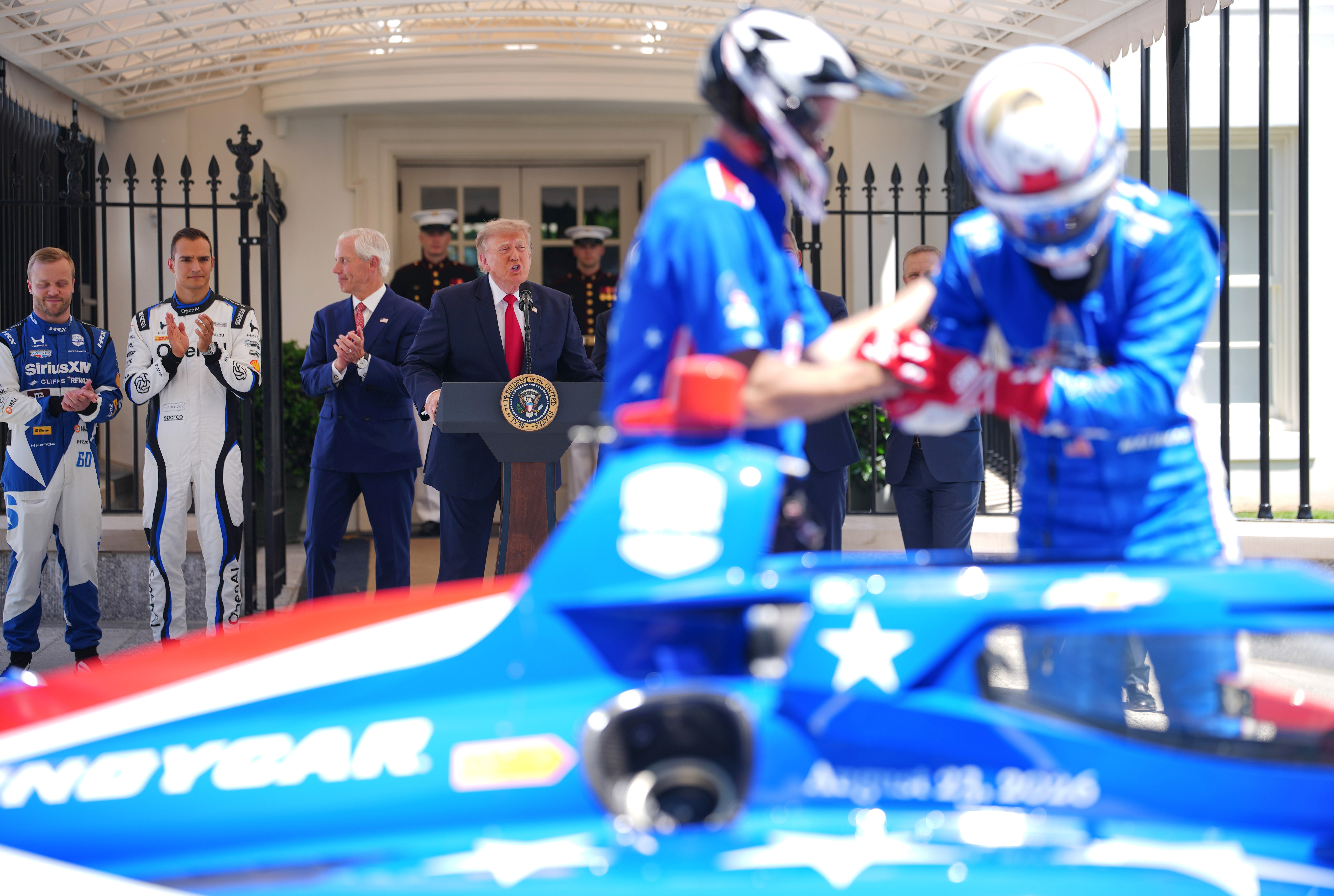
Now, almost nothing American is allowed to remain merely cultural. From 1:10 p.m. today, 25 IndyCars will run 147 laps around the National Mall, in the bluest city in the country, in a race created by President Donald Trump. The mainstream interpretation has crossed the finish line before the cars: it's Bunny’s red-state pastime, deliberately dropped by MAGA presidential decree into the capital of the other side.
Forget the race itself for now, because that culture clash actually seems one of the most promising things about it. Now, at least, the redneck swaggering across the infield and the coastal elite cycling over the crosswalk will share the same track.
That’s true as far as it goes, except that both those descriptions are false. And the way they are false hints at where American political conversation has taken such a screeching wrong turn.
Trump’s history with IndyCar racing goes back years. The last time he was supposed to take center stage at Indy was in 2011, when he was still a reality show host with a deepening grudge about a birth certificate.
The Indianapolis Motor Speedway invited him to drive the pace car at the 100th running of the 500. Fans revolted and an Indianapolis lawyer, Michael Wallack, started a “Bump Trump” campaign that collected 17,000 signatures.
Wallack’s objection, unlike many of those fans, was not chiefly that Trump was a birther. It was that he had no connection to Indianapolis, the 500 or cars. “It just didn’t feel right,” he said.
Trump withdrew, citing his schedule amid a potential presidential bid, and four-time Indy 500 winner A.J. Foyt took the wheel instead. Fifteen years later, Trump is president, and he no longer needs an invitation.
The institutional and business relationship has changed too. Race-team owner Roger Penske received the Presidential Medal of Freedom from Trump in 2019, bought IndyCar and the Indianapolis Motor Speedway in 2020, and endorsed Trump’s re-election that year. When the Freedom 250 Grand Prix was announced, Penske sent Trump a letter that said, “I am proud to support you and your administration.”