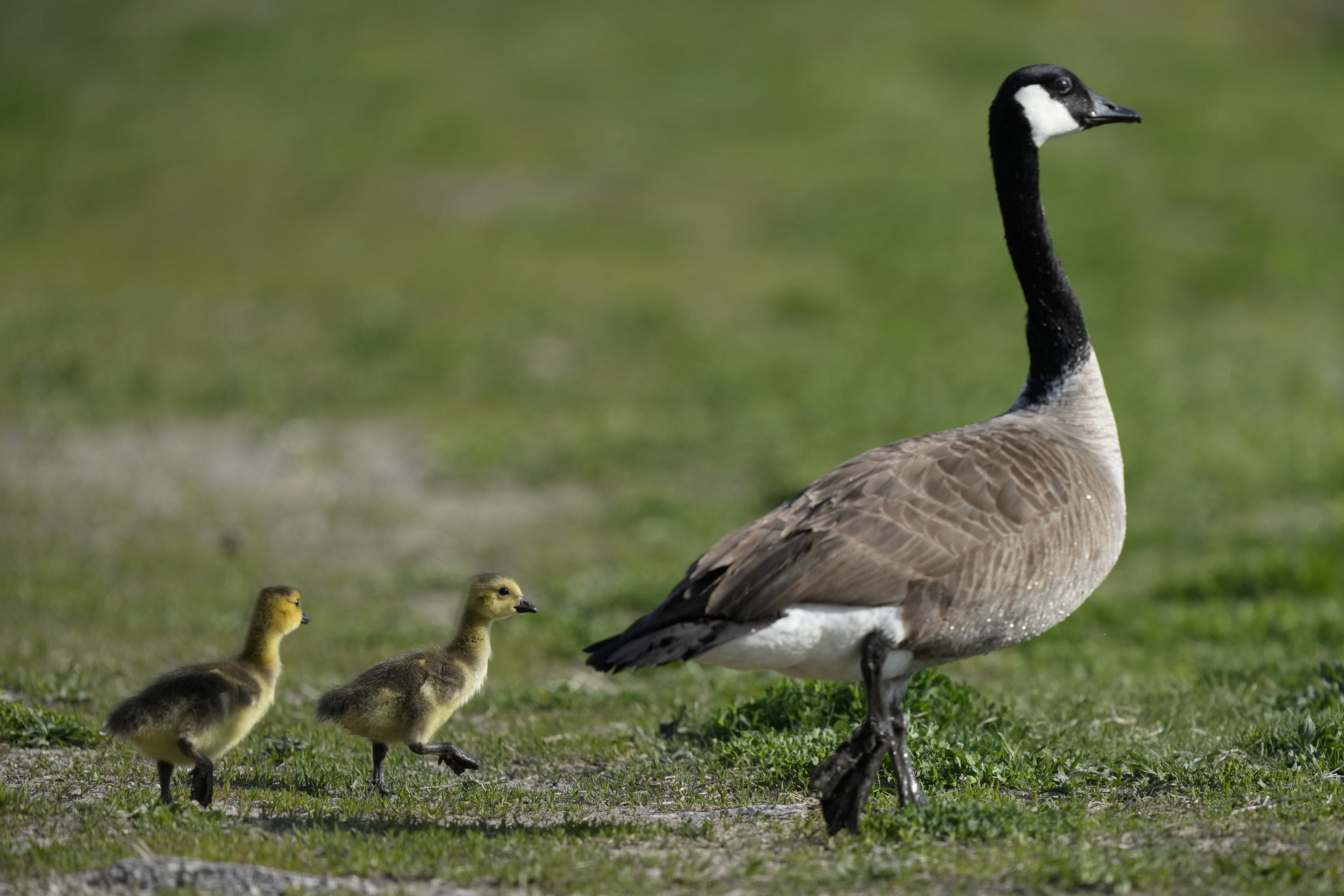
It's a beautiful and clear March day, perfect for our flight north today.
I'll be your flight attendant on this journey. Our pilots have started returning from the south. They started traveling northbound flights in late February, and will continue into May. They're going to their summer homes from thousands of miles away, and with the help of our crew of experts, I'll be walking you through takeoff, in-flight and landing procedures.
Enjoy your ride, and as always, thank you for choosing Goose Airlines.
When geese migrate, they're following their food, said Mitch Weegman, an avian ecologist who teaches at the University of Saskatchewan in Canada.
"Because it's cold, sometimes ice prevents the access to drinking water for these birds, and snow is preventing access to food," he said. "So they're getting kicked out of these places."
Our pilots could stay in their wintering areas for the summer, but that also means more competition for resources from the local, year-round residents.
"Any one environment can only support so many different species," Weegman said.
They know it's time to return when the days get warmer and longer, the snow has started melting and vegetation has started growing again.
"They are following the green wave, as we call it," said Andrea Kölzsch, an assistant professor of ecology at Radboud University in the Netherlands.
This typically happens from late February to May, and there are four major routes, or "flyways," that migrating geese in North America take, Weegman said.