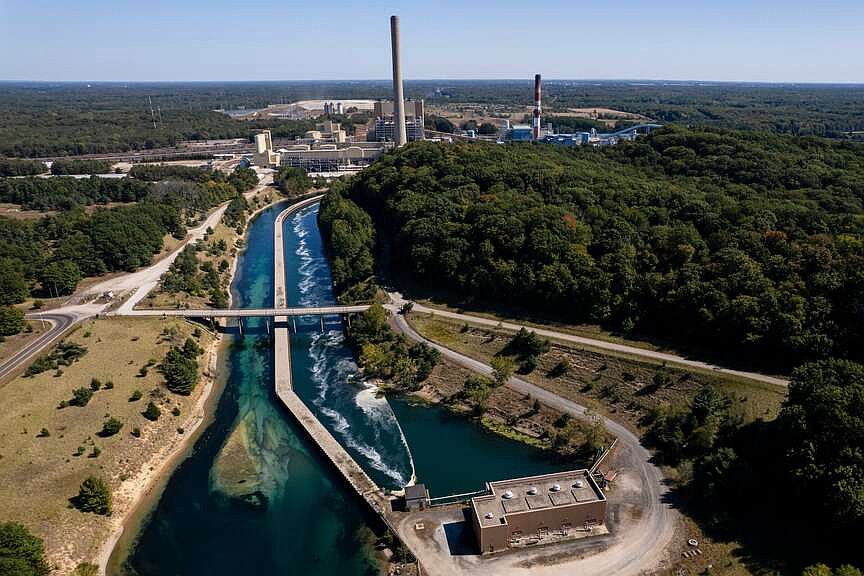
In a defeat for the Trump administration, a federal court on Friday ruled that the Energy Department exceeded its authority when it forced a Michigan coal-fired power plant to stay open past its scheduled retirement date last year.
Energy Secretary Chris Wright had said the 64-year-old J.H. Campbell Generating Plant was needed to ensure reliable electricity in the region, and he used emergency powers to keep it operating. Environmental groups and three states -- Michigan, Illinois and Minnesota -- went to court to try to overturn orders keeping the plant online.
The U.S. Court of Appeals for the District of Columbia Circuit sided with the states and the groups, saying there was no real emergency under the law.
The section of the Federal Power Act that allows emergency orders "is essentially a narrow, last-resort backstop," Appeals Court Judge Cornelia Pillard wrote for a unanimous three-judge panel. Use of emergency authority "is triggered only when there is a need for immediate, essentially last-resort action and the circumstances require action by DOE in particular, as opposed to action by the state or states responsible for resource adequacy," she added.
Reversing the Campbell plant's "long and carefully planned retirement" is "disruptive," Pillard wrote.
Michigan Attorney General Dana Nessel said she was relieved the appeals court "threw out DOE's order that had zero basis in reality."
Nessel, a Democrat, said her office "has been fighting this unlawful political stunt at every turn, and this ruling proves what we have been saying all along: this administration does not get to invent fake emergencies to bypass the rule of law against the best interests of Michigan residents."
The Michigan case is one of several legal disputes that have emerged across the country as the Trump administration uses emergency powers to force a half-dozen coal-fired plants to remain open.
The orders, which also apply to plants in Indiana, Colorado, Florida and Washington state, are raising ratepayer bills and adding air and water pollution that could have been avoided, critics say. An oil and gas plant in Pennsylvania was also ordered to keep its turbines running as a hedge against electricity shortages in the mid-Atlantic grid.
President Donald Trump declared a national energy emergency in a January 2025 executive order, citing demand increases from artificial intelligence and data center growth.