Scattered snow showers during the evening. Then partly to mostly cloudy overnight. Low -6F. Winds NNW at 15 to 25 mph. Chance of snow 30%..
Scattered snow showers during the evening. Then partly to mostly cloudy overnight. Low -6F. Winds NNW at 15 to 25 mph. Chance of snow 30%.
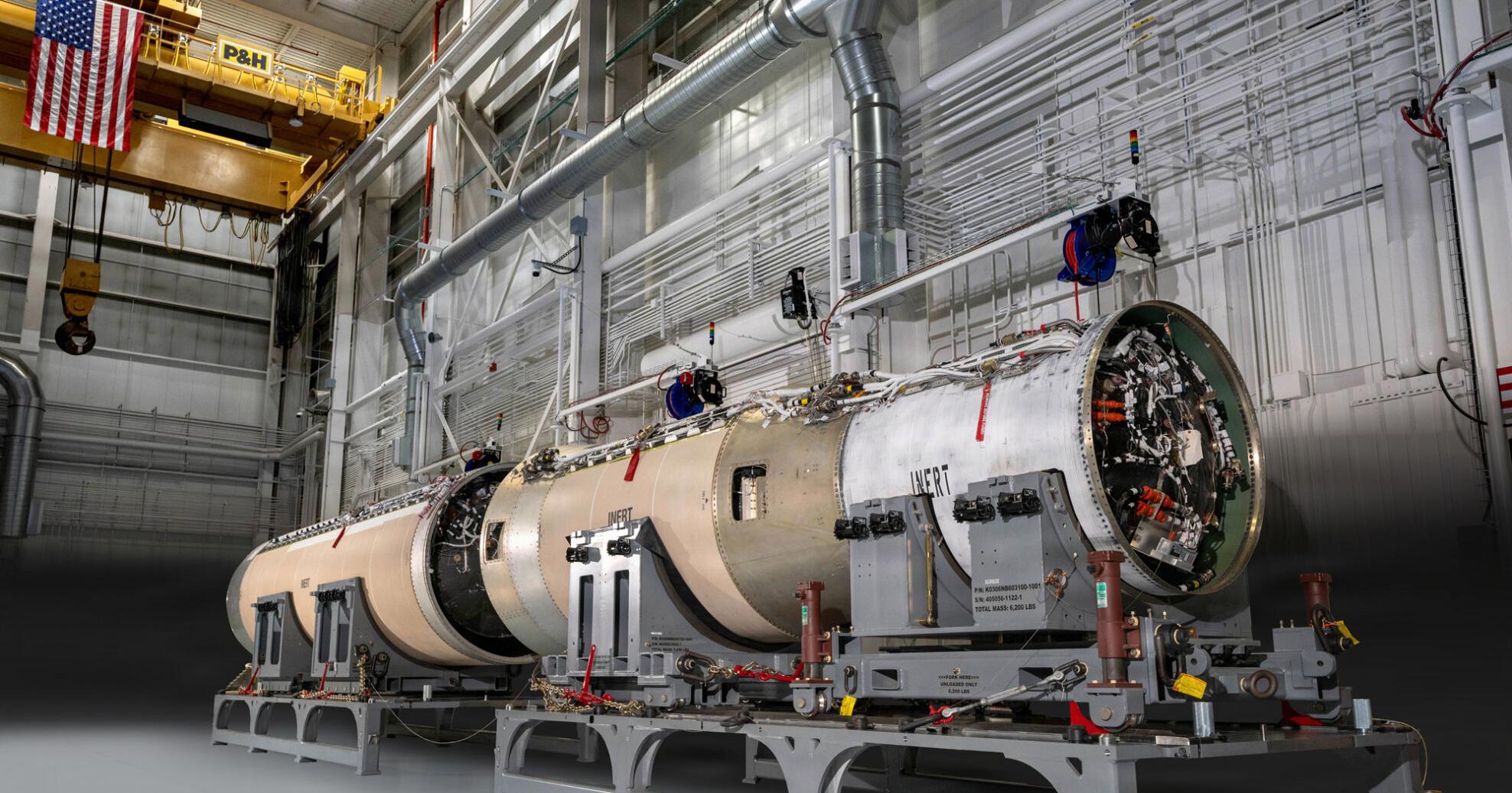
An undated photo of an LGM-35A Sentinel test booster, including stages-one, -two and -three solid rocket motors and both interstage mechanisms, is assembled. The booster will be integrated with the missile’s forward section to create the first fully assembled ground Sentinel test missile. This pathfinder test missile is essential for verifying the weapon system's design and preparing for the first Sentinel flight test, ensuring the future of our nation's strategic deterrence. (U.S. Air Force courtesy photo)
ARLINGTON, Va. (AFNS) - In direct response to the 2026 National Defense Strategy’s call for urgency and speed, the U.S. Air Force rolled out its plan for the LGM-35A Sentinel program, which will deliver the nation’s next-generation, modernized, land-based nuclear deterrent to America’s warfighters. Leveraging considerable progress over the last 12-18 months, program officials are executing a transformed acquisition strategy paving the way to complete the restructure and achieve a Milestone B decision by the end of 2026, while delivering an initial capability targeted for the early 2030s.
To accelerate critical modernization efforts, Secretary of War Pete Hegseth established the Department of War Direct Reporting Portfolio Manager (DRPM) for Critical Major Weapon Systems (CMWS) in August of last year. Reporting to the Deputy Secretary of War, the DRPM role places program like Sentinel, MMIII, F-47, B-21 and other major Air Force weapon system programs under a single empowered leader. The DRPM is explicitly designed to cut through bureaucracy and reduce decision latency across requirements, acquisition, infrastructure, and operational transition — ensuring the rapid delivery of capability at speed and scale.
“The DRPM has the direct authority to make decisions, informed by integrated inputs across the enterprise and in alignment with the mission priorities set by the Secretary of War and the Secretary for the Air Force,” said Gen. Dale White, director, Critical Major Weapon Systems. “That construct allows us to resolve tradeoffs quickly and move with the speed required to deliver credible deterrence — while preserving the discipline this mission demands.”
Under the newly established DRPM structure, U.S. Strategic Command remains the combatant command responsible for deterring strategic attack, Air Force Global Strike Command leads operational transition and readiness, and the Department of the Air Force executes acquisition and infrastructure delivery — all now synchronized through a single, accountable decision authority. This alignment enables faster resolution of cross-cutting issues that historically required sequential coordination across multiple organizations.
An undated artist rendering of an LGM-35A Sentinel. (Courtesy illustration)
Sentinel is a comprehensive, once-in-a-generation modernization of the entire land-based leg of the nuclear triad, a key component of the nation’s integrated deterrence posture. It is a full-scale replacement of the missile, launch systems and command-and-control infrastructure with a new architecture designed with built-in adaptability for the digital era.
Throughout the restructuring process, the Air Force and its industry partners kept executing critical technical work on the system’s air vehicle, command-and-launch systems, wing command centers and supporting infrastructure. These sustained efforts produced measurable progress over the past year, pulling technical risk left and informing future integration activities.