In a closely watched decision released on March 3, 2026, the U.S. Court of Appeals for the Eighth Circuit issued a split ruling in United States v. Brad Wendt. The court unanimously affirmed Brad Wendt’s convictions for making false statements to the ATF and conspiracy to defraud the agency, but reversed his conviction for illegal possession of a machine gun. The 2-1 decision spotlights deep divisions over the scope of federal machine-gun prohibitions when applied to law-enforcement officers and provokes significant questions about vagueness, statutory interpretation, and Second Amendment protections.
Brad Wendt’s story reads like a cautionary narrative at the intersection of small-town policing and the firearms industry. Since 2013, Wendt owned and operated two federal firearms licensees (FFLs) in Anita and Denison, Iowa, under the name BW Outfitters. In 2016, he obtained Special Occupational Tax (SOT) status, allowing legal dealing in machine guns, highly restricted weapons whose civilian possession has been effectively frozen since 1986 under 18 U.S.C. § 922(o).
Between July 2018 and July 2022, Wendt authored approximately 90 such letters. Prosecutors alleged, and the jury found, that many were fraudulent. Wendt purchased machine guns with his personal funds, registered them to the tiny police department, and then resold them at massive markups. One example: Heckler & Koch MP7A2s bought for $2,080 each and sold for $25,000 apiece. Over time, he profited roughly $79,660 from guns registered to Adair.
He also wrote demonstration letters for other FFL-SOTs, including Robert Williams and Jonathan Marcum, knowing the Adair department had zero interest in the weapons. Marcum later pleaded guilty to related charges.
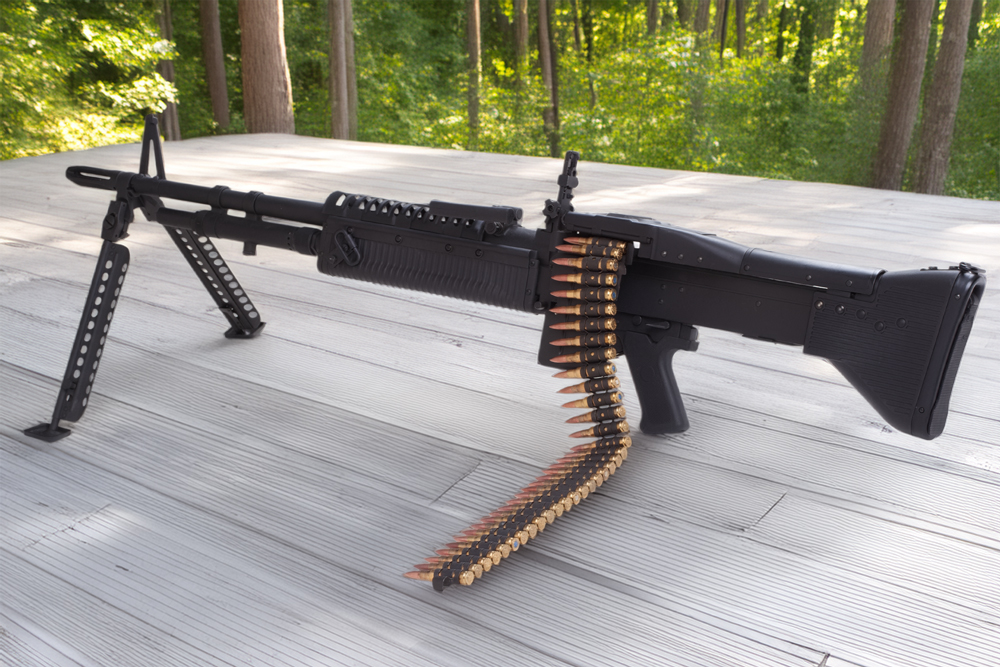
The scheme culminated on April 16, 2022, when BW Outfitters hosted a commercial “machine gun shoot” in Woodbine, Iowa, 57 miles from Adair. Wendt attended off-duty, out of uniform. His business supplied ammunition, and at least eleven machine guns, including a U.S. Ordnance M60 registered to the Adair Police Department. Civilians paid to shoot; law-enforcement attendees shot for free. Undercover ATF agents were present.
On appeal, Wendt challenged jury instructions on the false-statement counts and the sufficiency of evidence for possession. The panel unanimously rejected his arguments on the § 1001 convictions.
Judge L. Steven Erickson, writing for the majority, held that the district court’s instructions accurately tracked the statutory elements and the specific false representations Wendt made in his law letters. Wendt had certified that the guns were for “official use” and “not for resale” or that demonstrations were sought for potential future purchase by Adair; statements the jury found knowingly false.
Erickson dismissed Wendt’s request for a “Harra-style” ambiguity instruction, noting that, unlike the complex banking guidance in United States v. Harra, the ATF regulations here were unambiguous: transfers must be for genuine official use or legitimate demonstration.
The court also upheld the Guidelines calculation, confirming the district court properly associated the false-statement counts with the firearms guideline under USSG § 2B1.1(c)(3).
A person of ordinary intelligence, Erickson wrote, would not have fair notice that a police chief lacks authority to transport a department-registered machine gun to a law-enforcement-friendly shooting event even if off-duty and sponsored by his private business. The statute and ATF regulations provide no guidance on off-duty status, geographic limits, uniform requirements, or commercial context.