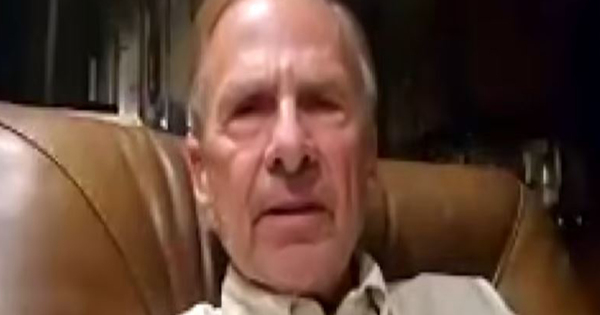
Washington DC [US], November 8 (ANI): Former CIA officer Richard Barlow has revealed that senior officials in the US State Department secretly tipped off the Pakistani government about an undercover American operation to arrest a retired Pakistani general involved in nuclear smuggling during the 1980s.
In an interview with ANI, Barlow recounted that the operation, jointly run by the CIA and US Customs, was targeting a Pakistani agent named Arshad Parvez, who was attempting to purchase 25 metric tons of Maraging 350 steel, a critical material used in uranium enrichment, from a US steel company.
Barlow said Parvez was working under the direction of retired Brigadier General Inam-ul-Haq, a known procurement agent at that time for Pakistan's Khan Research Laboratories (KRL) and the Pakistan Atomic Energy Commission (PAEC), the two institutions responsible for the country's clandestine nuclear weapons program.
'We established the Nuclear Export Violations Working Group. Not long after that group was established, we had many other cases we were working on, but I was informed by someone in the Department of Energy that a Pakistani by the name of Arshad Parvez, who lived in Canada, had contacted a U.S. steel company seeking very large quantities, about 25 metric tons of Maraging 350 steel,' Barlow told ANI.
'So, in that case, working with the Customs Service, we ran an undercover operation and eventually we arrested Parvez. He was being run by a retired Pakistani general named Inam-ul-Haq and he was supposed to show up in Pennsylvania at the steel company and there was a warrant for his arrest as well but Haq didn't show up. And I learned that some people in the State Department had tipped off the Pakistani government to this arrest warrant,' he said.
Barlow, who investigated Pakistan's nuclear procurement network during the Cold War, said the tip-off came from senior State Department officials, effectively derailing the US operation. He described his reaction to the betrayal as one of shock and outrage.
'I was ballistic. These were people in my own government, the enemy within,' Barlow recalled.
According to Barlow, the case exposed how elements within the US administration prioritised Pakistan's role in the Afghan war over enforcing American laws designed to curb nuclear proliferation. The incident, he said, deepened divisions between intelligence officers who wanted to stop Pakistan's nuclear build-up and policymakers who wanted to maintain close ties with Islamabad during the Soviet-Afghan conflict.
He said that his team had collected overwhelming evidence linking the arrested agents to Pakistan's nuclear establishment.
'There was no doubt on that issue that they were agents of the Pakistani government. We had hard evidence of this. I mean, we got into all the pounds and pounds of documents and evidence and things that were said in undercover meetings that were taped,' Barlow told ANI.