This is read by an automated voice. Please report any issues or inconsistencies here.
WASHINGTON — Twenty-two days into the government shutdown, California Rep. Kevin Kiley spent an hour of his morning in Washington guiding a group of middle school students from Grass Valley through the empty corridors of the U.S. Capitol.
Normally, one of his staff members would have led the tour. But the Capitol is closed to all tours during the shutdown, unless the elected member is present. So the schoolchildren from Lyman Gilmore Middle School ended up with Kiley, a Republican from Rocklin, as their personal tour guide.
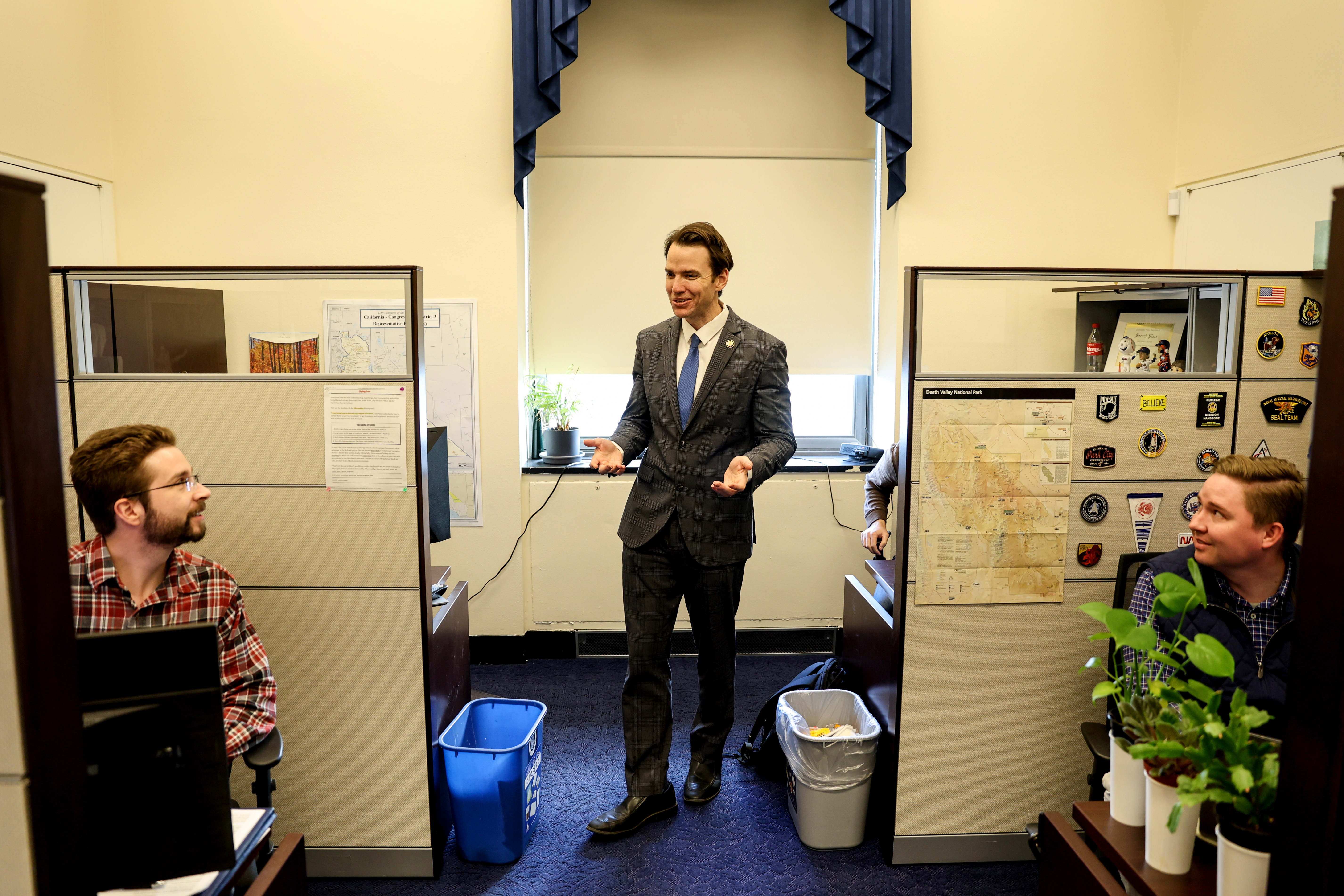
“I would have visited with these kids anyway,” Kiley said in his office after the event. “But I actually got to go on the whole tour of the Capitol with them as well.”
Kiley’s impromptu tour is an example of how members of California’s congressional delegation are improvising their routines as the shutdown drags on and most of Washington remains at a standstill.
Tax credits for people who get health insurance through the marketplaces created by the Affordable Care Act, also known as Obamacare, expire at the end of the year.
Some are in Washington in case negotiations resume, others are back at home in their districts meeting with federal workers who are furloughed or working without pay, giving interviews or visiting community health centers that rely on tax credits central to the budget negotiations. One member attended the groundbreaking of a flood control project in their district. Others are traveling back and forth.
“I’ve had to fly back to Washington for caucus meetings, while the opposition, the Republicans, don’t even convene and meet,” Rep. Maxine Waters, a longtime Los Angeles Democrat, said in an interview. “We will meet anytime, anyplace, anywhere, with [House Speaker Mike] Johnson, with the president, with the Senate, to do everything that we can to open up the government. We are absolutely unified on that.”
The shutdown is being felt across California, which has the most federal workers outside the District of Columbia. Food assistance benefits for millions of low-income Californians could soon be delayed. And millions of Californians could see their healthcare premiums rise sharply if Affordable Care Act subsidies are allowed to expire.
For the California delegation, the fallout at home has become impossible to ignore. Yet the shutdown is in its fourth week with no end in sight.