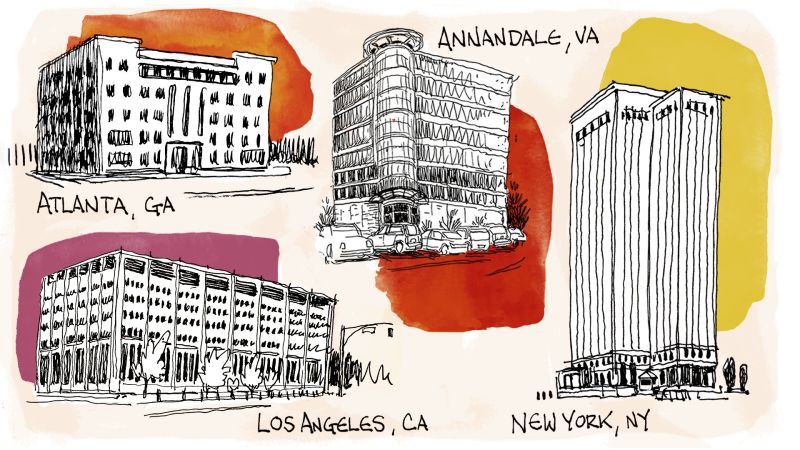
Mispelys Salazar clutches a stack of papers close to her chest as bristling wind gusts threaten to send them flying into the air. She nervously shuffles forward in line as she waits to enter 26 Federal Plaza in downtown Manhattan for her first immigration court appearance.
Her future will be decided in a courtroom inside the nation’s tallest federal building: She could be allowed to stay in the country she’s lived in for the past two years. The alternative outcome — one that’s just as common across US immigration courts — is she will be ordered deported.
The Panamanian woman, in line with her partner and two children, learns of a third possible outcome when a volunteer with an immigrant advocacy organization hands her a flyer that begins with ominous advice: “If you are attending immigration court in person, you should be prepared for the possibility of detention regardless of what happens in the courtroom.”
“Oh, wow,” she laughs nervously, speaking in Spanish. “Well, that makes me feel a lot better.”
But there’s no humor behind her eyes. There’s confusion and fear as they well up with tears.
“Siento que podría llorar,” she says. I feel like I could cry.
Suddenly, she’s at the front of the security line. A guard asks to see her paperwork; Salazar turns to her child to translate, but he struggles to find the right words.
“¿Qué es el ‘paperwork?’” he asks his mom. What does ‘paperwork’ mean?
She rifles through her stack of documents, not quite sure what to look for, before pulling out a piece of paper to show the guard, who nods. Salazar takes a deep breath, and with her family, heads into the building.
She knows once the doors close behind her, there’s a chilling and real possibility she may not soon come back out.