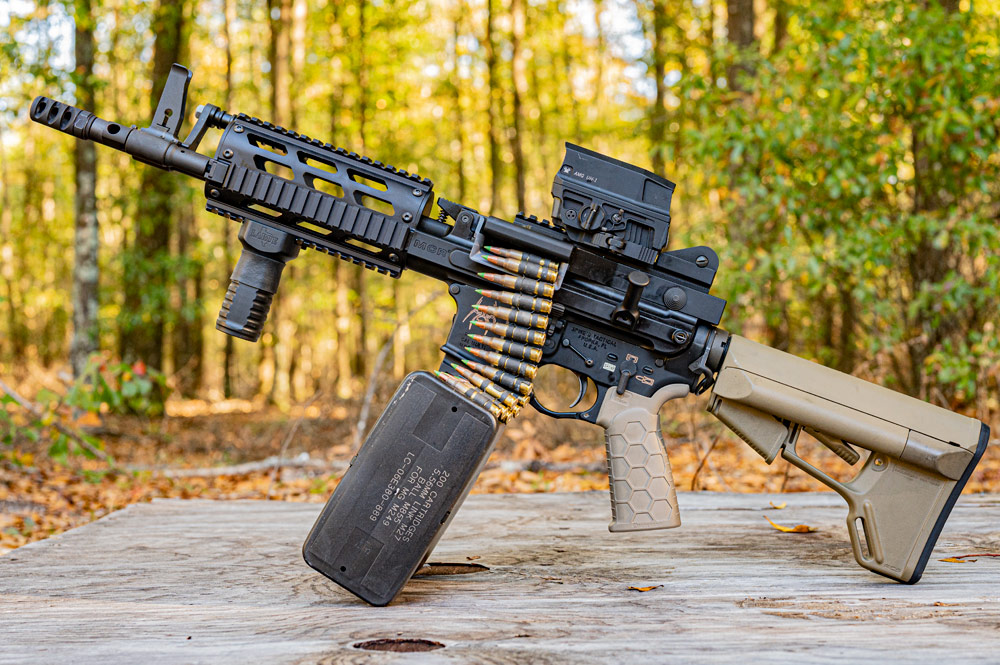
Gun Owners of America (GOA) announced its strong support for newly introduced legislation in West Virginia on February 20, 2026. The bill would establish state-run entities (like ABC stores in other states that sell liquor) to purchase and transfer fully automatic machine guns to qualified, law-abiding private citizens. This approach aims to utilize a specific exemption in federal law under 18 U.S.C. § 922(o), known as the Hughes Amendment, which has prohibited the registration of new machine guns for civilian ownership since 1986.
The press release from GOA, issued from its Springfield, Virginia headquarters, describes the proposal as a way to restore access to what supporters call constitutionally protected arms. It leverages language in the federal statute stating that the machine gun prohibition “does not apply with respect to … a transfer to or by, or possession by or under the authority of” a state or its political subdivisions.
Under the bill’s framework, West Virginia would create authorized distribution centers. These state-operated facilities would acquire machine guns, potentially including newly manufactured ones, and conduct transfers “by” the state directly to eligible members of the public. Supporters contend this structure falls squarely within the statutory exception, allowing compliant transfers while complying with federal requirements such as background checks, the $200 National Firearms Act (NFA) tax stamp, and approval processes administered by the Bureau of Alcohol, Tobacco, Firearms and Explosives (ATF).
The proposal draws on historical precedents for government-supplied arms to civilians. GOA points to the Militia Act of 1792, which required able-bodied men to equip themselves with military-grade weapons, and to periods of surplus military firearm sales to private citizens throughout U.S. history. Advocates argue that the Founding Fathers envisioned an armed citizenry capable of militia service, with access to arms comparable to those used by government forces.
The 1986 Hughes Amendment, attached to the Firearm Owners’ Protection Act (FOPA), closed the registry for new civilian machine guns after May 19, 1986. Only pre-1986 registered machine guns, roughly 200,000 to 300,000 transferable examples, remain legally available to civilians under the NFA process. These often command prices of $20,000 or more due to scarcity.
West Virginia has maintained a pro-Second Amendment legislative track record in recent years, including constitutional carry since 2016 and efforts to limit local gun restrictions. Related 2026 bills include House Bill 4185, which seeks to repeal the state’s own ban on machine gun possession (though federal law would still apply), and other measures like the Second Amendment Preservation Act (Senate Bill 850) and Second Amendment Reaffirmation and Protection Act variants that challenge federal overreach on intrastate firearm transactions.
If enacted, the GOA-backed measure could represent one of the most direct state-level challenges to the post-1986 civilian machine gun restrictions. Legal experts note that, while the statutory exemption exists, the ATF and the Department of Justice have historically interpreted § 922(o) narrowly, viewing state-facilitated transfers to private citizens as a potential circumvention of congressional intent. Such a program would likely trigger federal scrutiny, possible litigation, or enforcement actions.
Supporters say that qualified transfers would follow strict NFA protocols, including extensive vetting, and that law-abiding citizens should not face permanent disarmament relative to government entities that retain access to such firearms for law enforcement and military use.
GOA, a nonprofit lobbying group with millions of members and a reputation for an uncompromising stance on gun rights issues (often contrasting with more moderate organizations like the NRA), positions the West Virginia effort as part of a broader pushback against perceived federal infringements.
As of February 20, 2026, specific bill numbers, sponsors, or full legislative text for the state-transfer mechanism were not immediately detailed in public records beyond GOA’s announcement. The proposal arrives amid a busy 2026 West Virginia legislative session addressing various firearm-related measures, from concealed carry expansions for younger adults to broader preemption of federal gun laws.