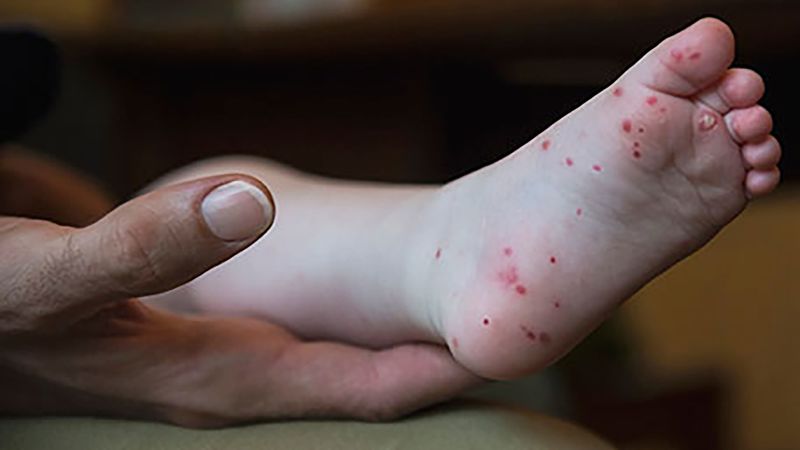
Health officials in the mid-Atlantic region have recently reported a rise in hand, foot and mouth disease, or HFMD.
There were 197 emergency department visits related to the disease in September, primarily among children younger than 5, according to the District of Columbia Health Department. The Virginia Department of Health is also reporting significant increases in emergency department and urgent care visits for hand, foot and mouth disease. Compared with previous years, in Virginia and West Virginia, there has been a notable increase in reported outbreaks, with schools and day care centers accounting for the majority of outbreaks.
What is hand, foot and mouth disease, and what causes it? How is it spread? What are the symptoms, and how long do they last? Can adults also get it? How is it diagnosed and treated? Should parents keep children home from school or day care when they have it? What steps can families take to help prevent infection?
To help us answer these questions, I spoke with CNN wellness expert Dr. Leana Wen. Wen is an emergency physician and clinical associate professor at the George Washington University. She previously served as Baltimore’s health commissioner.
Dr. Leana Wen: Hand, foot and mouth disease is a highly contagious viral illness that primarily affects infants and young children. It’s caused by a group of viruses known as enteroviruses, most commonly coxsackievirus A16. It is not the same as foot-and-mouth disease, which affects farm animals like cattle, sheep, pigs and goats and does not infect humans.
Hand, foot and mouth disease gets its name from the small blister-like sores it causes on the hands and feet and inside the mouth. While the illness can be uncomfortable, it is generally mild and resolves on its own.
Wen: Hand, foot and mouth disease spreads very easily through close personal contact and contaminated surfaces. A person can become infected after being exposed to droplets released when someone with the illness coughs, sneezes or talks. It can also spread through touching an infected person, such as during hugging, kissing, or sharing cups and utensils.The virus is present in stool as well, so changing diapers or helping a sick child in the bathroom can lead to infection if hands aren’t washed thoroughly.
It can also spread when someone touches objects or surfaces like toys or doorknobs that have the virus on them, and then touches their eyes, nose or mouth. Rarely, people can become infected by swallowing contaminated recreational water, such as from a pool that hasn’t been properly treated.
Young children are most at risk because their immune systems are still developing, and they are more likely to struggle with personal hygiene and share toys and have close contact with others.
CNN: What are the symptoms, and how long do they last?