We’re sorry, this feature is currently unavailable. We’re working to restore it. Please try again later.
It took just one night for Europe to be suddenly reminded of its total exposure to airborne malice, forcing leaders to step up work on their defences.
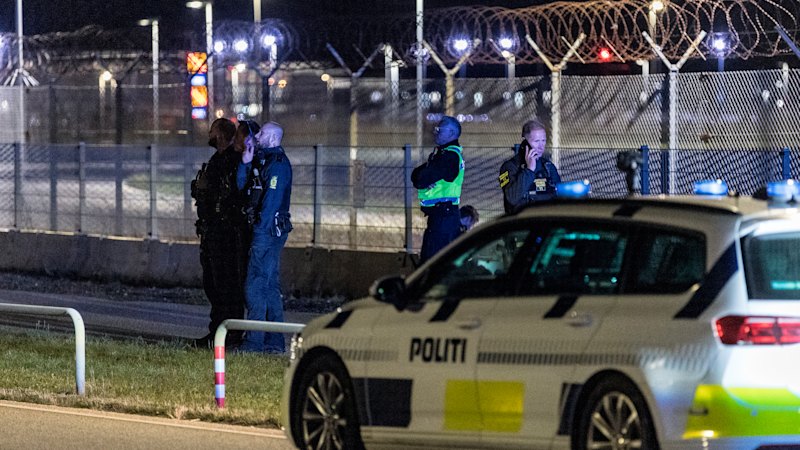
Danish police patrol at Copenhagen Airport in September after a drone incursion.Credit: AP
Add articles to your saved list and come back to them any time.
A single night of calculated mayhem left at least 20,000 passengers in chaos when a small number of drones flew over Copenhagen airport and forced authorities to ground dozens of flights. The chaos came to Oslo airport soon afterwards, and then to smaller airfields. Within days, there were drones over military bases in Denmark and Norway.
Europe was suddenly reminded of its total exposure to airborne malice. The chronic disruption in September forced national leaders to step up their work on drone defences. The European Union quickly updated its defence plans to pledge more spending on systems that could intercept drones and force them to the ground. Leaders even talked about a “drone wall” to stop attacks.
But none of that helped Brussels Airport this week when it had to ground flights on Tuesday and Thursday after drones were seen around the runway, which it shares with the Melsbroek military air base. Nor Sweden’s second-largest airport, Gothenburg-Landvetter, which halted traffic on Thursday and launched a sabotage investigation. Nor Liege Airport in Belgium, which stopped flights briefly on Friday morning. Week after week, the drones keep coming – and authorities are struggling to stop them. Amsterdam was targeted in September, Munich in October.
The events force urgent questions about the cost and capacity of new technologies that can protect people and essential infrastructure. Some of the answers come from Australia.
“No civilian airport in the world, to my knowledge, has a fully deployed counter-drone system,” says Oleg Vornik, the chief executive of DroneShield, a company based in Sydney that exports systems to stop drones. He knows of many projects under way, and his company is part of the work at airports and other sites, but he does not describe these systems as full defences. Not yet, at least.
Another Australian company, Electro Optical Systems (EOS), is making drone defences in Canberra and exporting them at a rapid rate. Its chief executive, Andreas Schwer, is watching what happens in Europe because he expects it to keep happening. Like many others, he sees drones as an emerging “hybrid” threat from hostile nations.