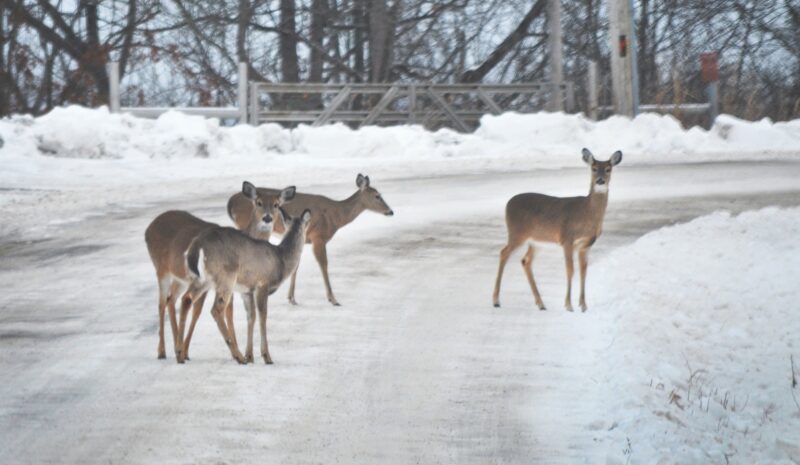
A group of young deer stand in the middle of Warren Chapel Road during extremely cold weather Tuesday morning. Snow and ice have made movement difficult for people and animals since the winter storm on Sunday. (Photo by Art Smith)
The Mid-Ohio Valley has been coated in snow and ice for the past few days accompanied by frigid and below freezing temperatures.
As school districts, county offices, and businesses close due to unsafe road conditions, people have taken cover in the warmth and security of their homes. But what about the wildlife; how do they stay warm and fed during severe winter weather?
While people bundle up in warm coats and blankets, most critters have spent months preparing their bodies for incoming winter weather.
Dave McShaffrey taught biology and environmental science as a professor at Marietta College for 36 years. He specialized in dragonflies and insects and said when the temperature drops, most insects will burrow in the ground where it’s warm or take shelter at the bottom of water sources.
“Anything that lives in the water is fine because the water is cold but as long as it doesn’t freeze completely or stay frozen for long, the insects and fish survive,” said McShaffrey. “They don’t need much oxygen and food to survive so they just take cover at the bottom.”
Ohio Wildlife Rehabilitator Ryan Bates holds one of nearly 20 or so horned grebes he gathered from nearby. He said he released the healthy birds after warming them and feeding them for 48 hours. (Photo provided by Ryan Bates)
McShaffrey said turtles can stay under water and hibernate for six to seven months because their respiration rates are so slow. He said most insects and creatures burrow down into the leaf and debris litter where it’s warm because the snow traps in heat.
“Honey bees are the exception because they stay together in a mass in their nests and vibrate their wings to produce heat,” said McShaffrey. “As it gets hotter the bees will take turns migrating to the center for warmth … and they have their honey stocked up.”
The West Virginia Department of Natural Resources said wildlife relies on instincts and natural strategies to survive the cold.