Oct 19 2026 (IPS) -
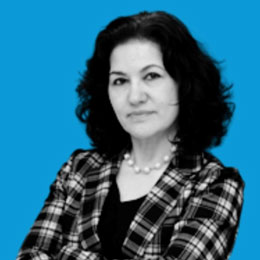
CIVICUS discusses the persecution of Uyghurs and activism in exile with Rushan Abbas, an Uyghur American activist, founder and executive director of Campaign for Uyghurs and chair of the Executive Committee of the World Uyghur Congress.
Rushan AbbasOn 31 August, the World Uyghur Congress urged the United Nations (UN) and states to step up pressure on China over its treatment of Uyghurs in the Xinjiang region. Its call came two months after a new ‘Ethnic Unity Law’ took effect as part of a broader push to impose a single national identity. The date also marked four years since a landmark UN report found that abuses in the region may constitute crimes against humanity. Amnesty International and Human Rights Watch estimate that over a million people have been detained in harsh conditions in ‘re-education’ camps since 2017.
I was born in Ürümchi, Xinjiang’s regional capital, during the Cultural Revolution. I started my activism as a student at Xinjiang University, where I co-organised pro-democracy protests in 1985 and 1988. In 1985, we mobilised over 20,000 students from seven universities, institutes and technical schools across the city. We demanded equality and an end to the forced sterilisation of Uyghur women and to nuclear testing in the region.
Those years brought a brief period of openness, but retaliation against the organisers came quickly. I was interrogated and, although I graduated with the highest academic honours, my job offer was withdrawn. All my prospects were denied. So in 1989, I left for the USA to pursue higher education and look for freedom and democracy.
It has, and it hit my family directly. In the early 1990s, as soon as I started working with US politicians, my father, a high-level academic in Ürümchi, lost his job at 59 in retaliation for my advocacy. In 2018, just days after I spoke publicly at the Hudson Institute, a Washington DC think tank, about the mass detentions, Chinese authorities abducted my sister Gulshan Abbas. She’s a retired physician, a mother of two and a grandmother of four, and she had never been political.
In December 2019, Chinese state media outlet CGTN denied my sister existed and accused me of making up cases and spreading rumours overseas. In December 2020, the authorities finally acknowledged Gulshan had been secretly sentenced to 20 years in prison, obviously on fabricated charges. Her case is one of the clearest examples of how the Chinese Communist Party (CCP) uses kin punishment and transnational repression to silence Uyghurs. My sister turned 64 this June. She’s still in a Chinese prison because I exercised my freedom of speech. We have no picture or video of her. No one has been able to visit her and we have received no independent report on her health or wellbeing.
I quit my job after Gulshan’s detention to campaign full time for her freedom and for the Uyghurs suffering what’s effectively an ongoing genocide. Transnational repression has followed me ever since, in the form of cyberattacks, defamation, fabricated court documents, harassment and intimidation. A video appeared on YouTube calling for my execution and that of my husband, Abdulhakim Idris. I have received emails asking what colour rifle I would prefer to be shot with. After I published my memoir, fake books claiming to tell my life story appeared on Amazon. My organisation, Campaign for Uyghurs, has experienced persistent cyberattacks. My case is not unique. Uyghurs in the diaspora and those who speak out continue to suffer transnational repression.
The Chinese government targets us because of our distinct ethnic identity and heritage and because we are the owners of the land we inherited from our ancestors. Our Muslim faith and our culture and language stand in the way of Beijing’s absolute control. Our faith in God, rather than the CCP, as the ultimate authority threatens the regime. This fear drives the regime to try to erase our culture and beliefs.
Economic interests are also at stake. The Uyghur region is rich in natural resources, including coal, natural gas, petroleum, rare earths and critical minerals such as uranium. It accounts for 20 per cent of the world’s cotton, 35 per cent of its solar-grade polysilicon, used in solar panels, 10 per cent of its aluminium and PVC production and 70 per cent of China’s tomato production.
Geography matters too. The region connects China with Central Asia and the Middle East and is a gateway to Africa and Europe, including the Balkans. Once the heart of the ancient Silk Road, it now hosts four of the six major Belt and Road Initiative land routes, part of China’s global infrastructure programme. This makes it key to China’s economic and geopolitical ambitions. The result has been ever-tighter control and securitisation, which has escalated into full-fledged genocide.