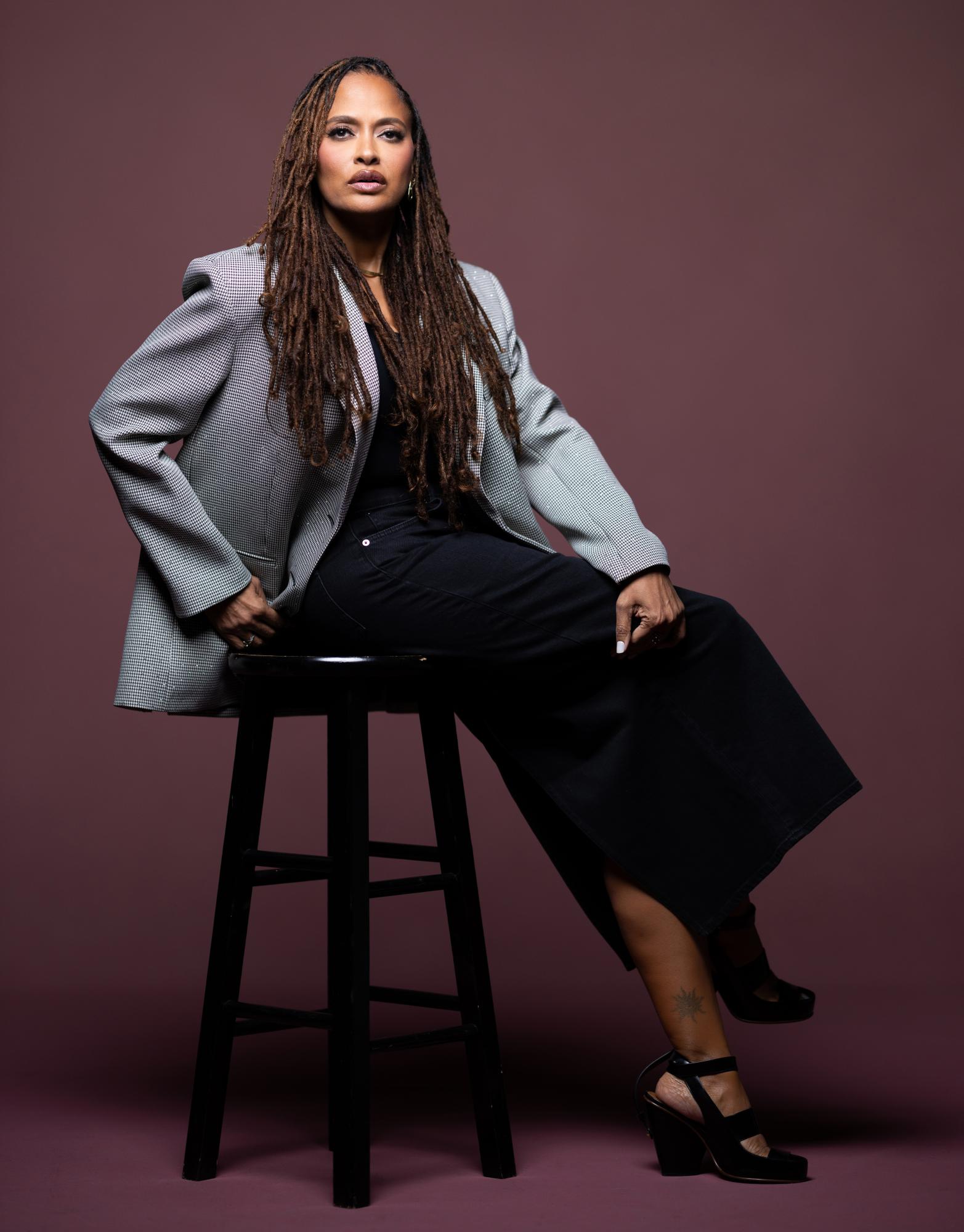
When I ask Ava DuVernay how she kept her focus while making her new film – or how anyone does, when the onslaught of news, fake news and disputed facts seems designed to overwhelm – she starts to answer, then stops. Her eyes have filled with tears.
“I just got emotional, as you said that, because it was the film that saved me,” she says. “It’s been a very tough two years. I live in Los Angeles, and I’ve seen people in my neighbourhood pulled out of their cars. The lady who sells flowers next to my office was there one day, and the next day she wasn’t. People I know personally are literally hiding in their houses, like Anne Frank vibes … So when I would feel the rage and the fear, I put it into the film … And I just … I was doing something.”
The film that saved DuVernay, titled 14th, takes a little history to explain. In early 1864, as the civil war raged on in the battlefields of Jonesville, Virginia and Dandridge, Tennessee, and with President Lincoln’s Gettysburg Address still ringing out across the nation, work began on what would become the first addition to the US constitution for 61 years. The 13th amendment ended slavery, with one exception, “as a punishment for crime”, and thus a loophole was created, which – as explored in 13th, Ava DuVernay’s Oscar-nominated documentary of 2016 – has allowed for the continued oppression of Black Americans to this day.
Now, 10 years on from 13th’s release, DuVernay has made another rousing documentary exploring how a different Reconstruction-era constitutional amendment, drafted in pursuit of that “more perfect union”, has come under sustained attack. A sequel of sorts, then – though 13th is hardly the sort of film you’d expect to birth a franchise. “Oh no. I never thought I’d do 14th until I heard they were trying to rescind birthright citizenship,” says DuVernay, referring to President Trump’s executive order of January 2025. “I mean, one of the bedrocks of America is that if you were born in America, you’re an American. Now it was going to change? Just the sheer audacity and absurdity of that propelled me to look deeper into how we got here.”
For a full year she thought she was making a film about birthright citizenship, the first and best known of the 14th amendment’s five sections, but as DuVernay travelled the country, meeting experts and conducting further research, the plan changed. “We started to see that, systematically, the other parts were also being attacked. It felt like such a design, so purposeful, that I thought there’s something here …”
At 54, and with eight feature films, six TV shows and numerous prestigious awards to her name, Ava DuVernay is an established film industry leader and a Black American icon, who counts Oprah Winfrey and the Obamas among her friends. She looks the part too, dressed today in an Oxford blue shirt and tailored taupe trousers; her nails short but manicured, and her hair styled in pristine, waist-length locs. She could pass for a senator, exuding warmth with engaging eyes and ready answers to tough questions.
People think I’m some kind of legal mind or political junkie. I’m not. I’m just a regular lady who wants to understand
DuVernay’s work has always been powered by a fiery sense of justice. After graduating from UCLA, she interned at CBS News, then worked in PR for many years before becoming a film-maker. Her 2014 feature film Selma was, incredibly, the first Hollywood biopic made about civil rights leader Martin Luther King Jr, and also the first film directed by a Black woman to be nominated for a best picture Oscar. She followed up with another Oscar nomination, for 13th, then When They See Us, an Emmy-winning drama series about a racially charged, Trump-exacerbated miscarriage of justice in 1980s New York.
Some of DuVernay’s accumulated expertise was already on show 10 years ago in 13th, which digested 100 years of American history into 100 cogent minutes, but this new film is her masterpiece. The sheer amount of information it delivers, and the galvanising clarity with which it does so, add up to an astounding feat of documentary film-making. Not only is the 14th amendment a more complex and unwieldy piece of legislation – memorably described by one contributor as “the everything bagel of democracy” – but every day in Trump’s US provides fresh examples of the human rights rollback and, for those watching closely, glimpses of an overarching strategy behind it.
“People think I’m some kind of legal mind or political junkie,” says DuVernay, between sips of hot chocolate. “I’m not. I’m just a regular lady who wants to understand.” This attitude informed the documentary and its structuring round 50 interviews, every one of which she conducted personally. Those featured include celebrity New York congresswoman Alexandria “AOC” Ocasio-Cortez, the internet’s favourite socialist sex symbol Hasan Piker, and David W Blight, Yale professor and the Pulitzer prize-winning author of several impressive tomes on slavery and the civil war.