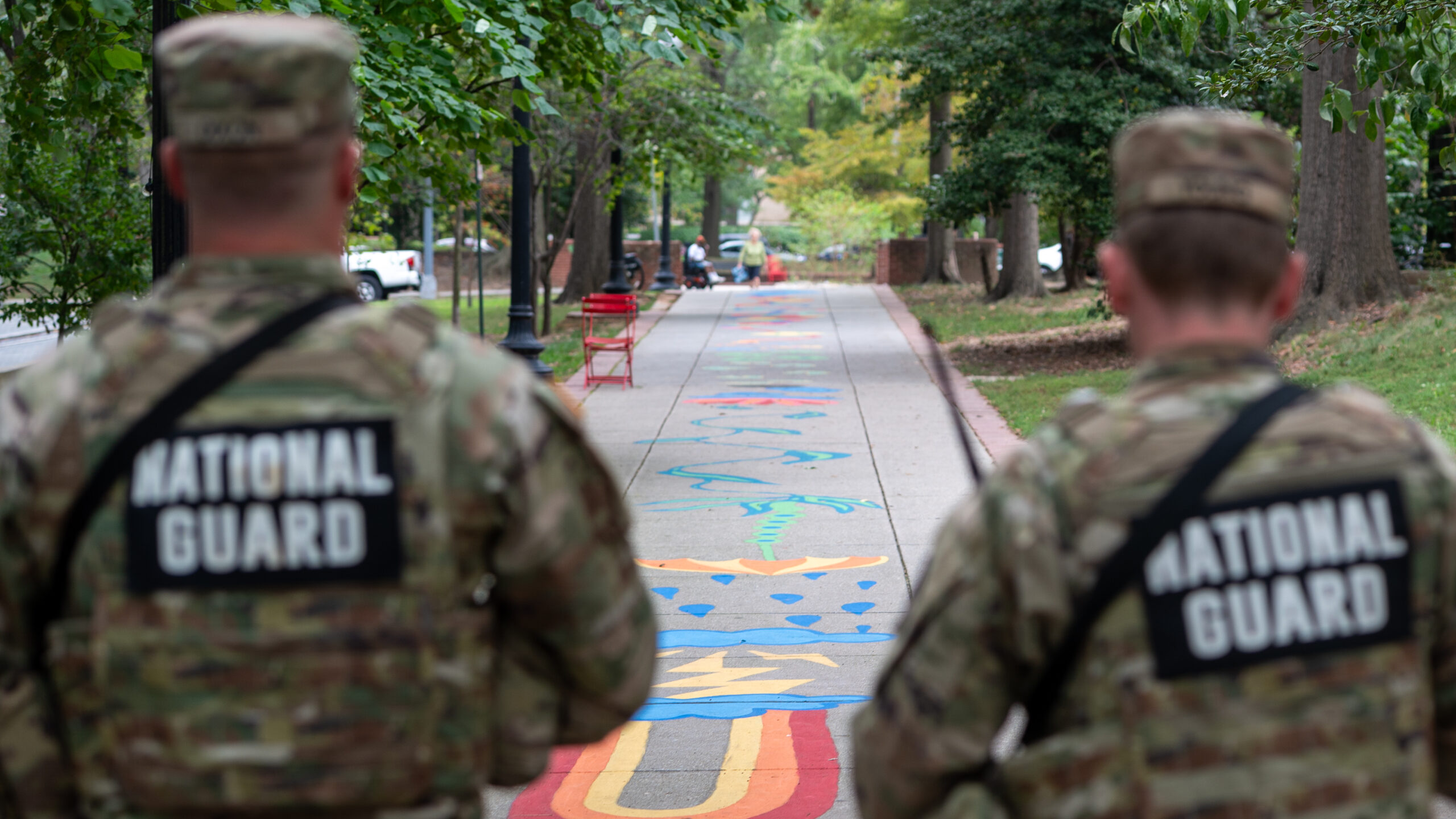
Kanawha Circuit Judge Richard Lindsay denied a preliminary injunction and dismissed a case over whether the governor has been within his authority to deploy the West Virginia National Guard to patrol Washington, D.C.
The ruling came at the end of a two-hour hearing Monday afternoon.
On August 11, President Donald Trump declared a “crime emergency” for the District of Columbia, and five days later Gov. Patrick Morrisey deployed 300 to 400 members of the West Virginia National Guard for support.
The president’s emergency declaration, which placed the Metropolitan Police Department under federal direction, expired after 30 days, Sept. 10. Yet the West Virginia National Guard deployment remains active and could be in effect through early next year or beyond.
Lindsay’s ruling weighed the unique federal oversight of the District of Columbia as a significant factor.
“I understand that the plaintiff wants to put aside the fact that this happened in D.C., or the fact that the president has the authority that he has when invoking a local statute in D.C. But I think those are important factors,” Lindsay said in the bench ruling.
“I believe we’re not talking about another state or sovereign like Pennsylvania or Ohio. We’re talking about the District of Columbia, which is under the federal jurisdiction of our Congress and government.”
ACLU-West Virginia filed the lawsuit on behalf of West Virginia Citizen Action Group. Lawyers for the state Attorney General defended the governor’s decision to deploy the Guard.
Factors in the case included the hybrid nature of the state-federal deployment, whether federal laws forbidding the use of military personnel for policing should apply, whether there’s an exception because the Guard is under the oversight of the governor — or whether the governor’s authority has been stretched to overreach.
The governor’s original announcement noted that the mission would be funded at the federal level. That’s a Title 32 order, typically for natural disasters, where the National Guard remains under the control of the state’s governor but receives pay and benefits from the federal government for federal missions.