A court in West Virginia is set to hear arguments in a lawsuit challenging the deployment of the state National Guard to patrol the streets of Washington, D.C., as part of President Donald Trump’s push to send the military into Democratic-run cities.
A court in West Virginia is set to hear arguments in a lawsuit challenging the deployment of the state National Guard to patrol the streets of Washington, D.C., as part of President Donald Trump’s push to send the military into Democratic-run cities.
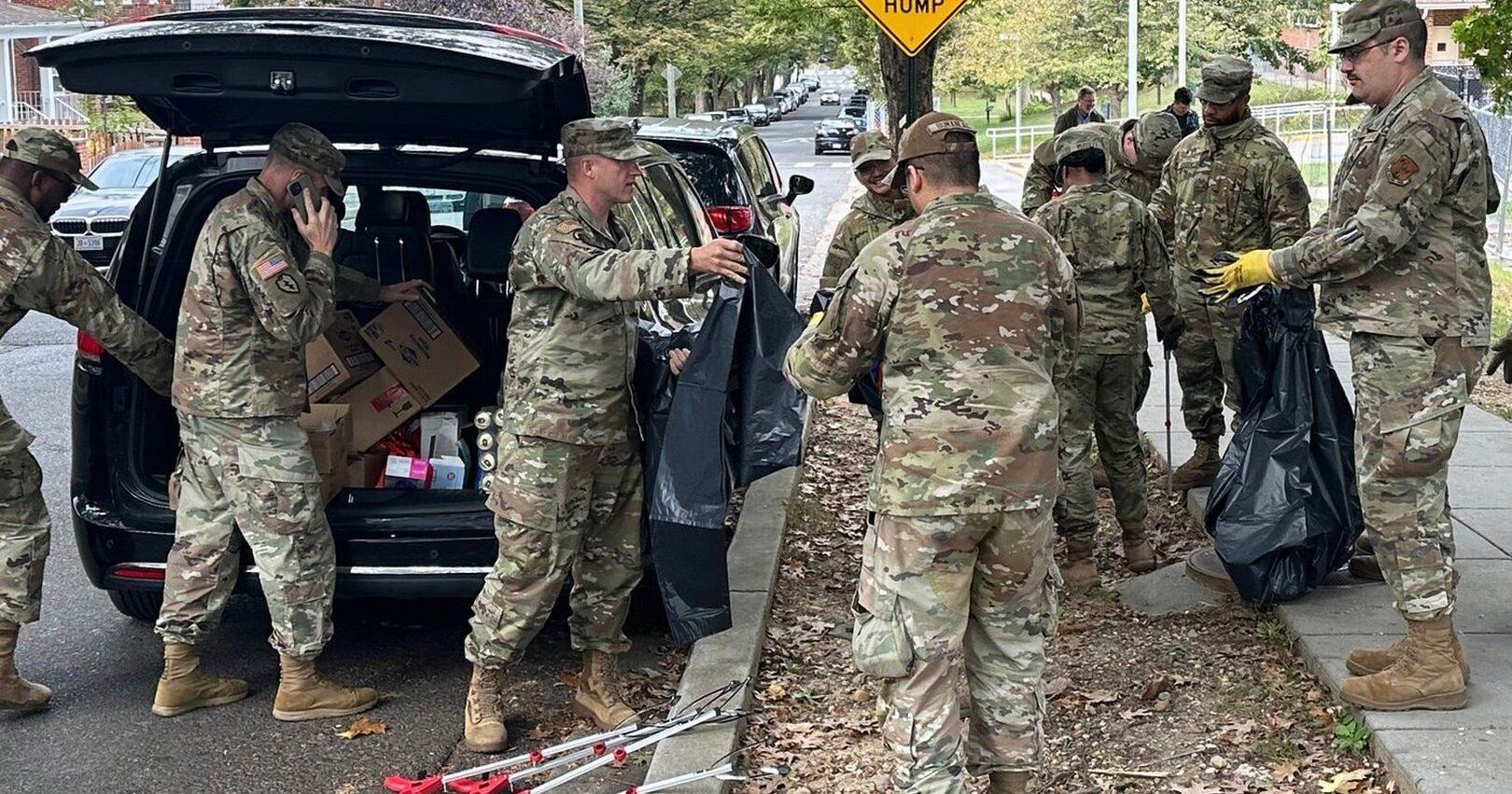
D.C. National Guard members clean up the park around Fort Stevens Recreation Center, Saturday, Oct. 11, 2025, in Washington. News of the cleanup sparked a community debate over the presence of the Guard. (AP Photo/Gary Fields)
A court in West Virginia is set to hear arguments in a lawsuit challenging the deployment of the state National Guard to patrol the streets of Washington, D.C., as part of President Donald Trump’s push to send the military into Democratic-run cities.
The hearing Monday afternoon is the third in the past three weeks in Charleston over the state’s response to Trump’s crime-fighting efforts, which have unleashed a whirlwind of lawsuits and overlapping court rulings.
West Virginia is among several states that sent National Guard members starting in August to the nation’s capital. While the state National Guard has said its deployment could last until the end of November, it is consulting with the governor’s office and others on the possibility of extending the stay. Formal orders were issued last week extending the deployment of the Washington D.C. National Guard in the city through the end of February.
A civic organization called the West Virginia Citizen Action Group says in a lawsuit that Gov. Patrick Morrisey exceeded his authority by deploying up to 300 Guard members to Washington, D.C. Under state law, the group argues, the governor may deploy the National Guard out of state only for certain purposes, such as responding to a natural disaster or another state’s emergency request.
Morrisey’s office has argued the deployment was authorized under federal law.
At an initial hearing last month, the civic group argued that it was harmed by the deployment by being forced to refocus its resources away from its core mission of government accountability and transparency. The state attorney general’s office sought to reject the case, saying the group has not been harmed and lacked standing to challenge Morrisey’s decision.
Kanawha County Circuit Judge Richard Lindsay continued that hearing after asking attorneys for the state to specifically address whether the deployment was lawful.