Online prediction markets allow users to put money on the outcome of almost anything — this weekend’s NBA game between the Warriors and the Thunder, the next supreme leader of Iran, whether the government will confirm the existence of aliens.
But those markets have no state oversight and operate even in states that ban gambling.
The platforms are raising bipartisan alarms, especially related to sports gambling. As states have legalized sports betting in recent years, they’ve required legal sportsbooks to jump through multiple hoops — from age verification procedures to protections for gambling addiction to tax collections. Online prediction markets circumvent all those rules.
Platforms including Kalshi and Polymarket say they are offering contracts similar to commodity markets that speculate on the future price of corn or oil — not outright gambling. But a growing number of states are rejecting those justifications, arguing the platforms are offering a backdoor to skirt state gambling regulations, particularly on sports.
The issue has sparked action from state regulators, new legislation, and lawsuits from both states and prediction markets. Complicating matters are the federal government’s moves to block state regulation of prediction markets, which see more than $13 billion in transactions each month.
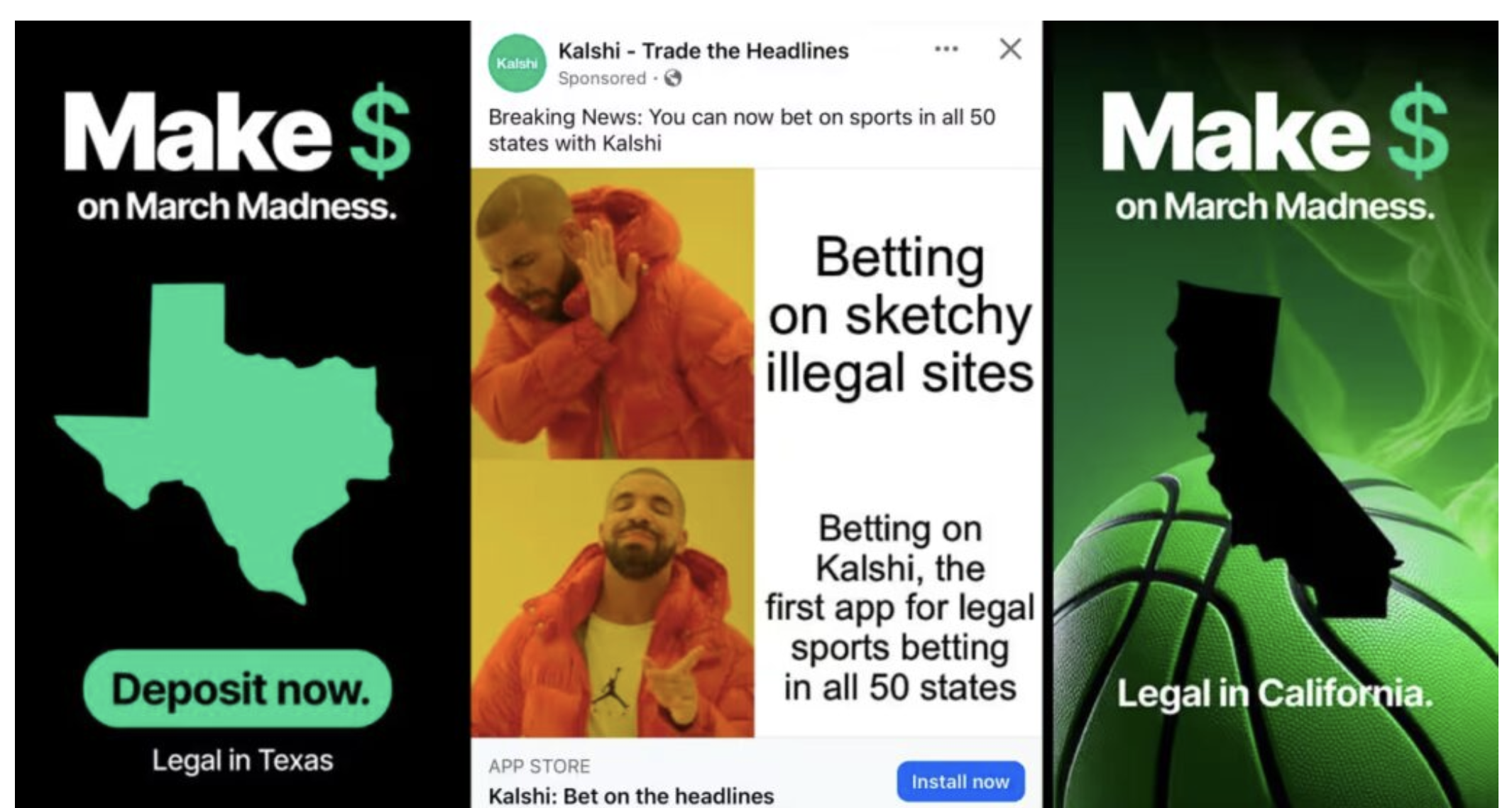
Most activity on those platforms revolves around sports. And in national ads, Kalshi even marketed itself as the first national legal sports betting platform — even though states approve and regulate sports gambling since a 2018 Supreme Court decision. In 11 states, sports gambling remains illegal.
“This is sports wagering. If it looks like a duck and quacks like a duck, it’s probably sports wagering, in this situation,” said Kentucky state Rep. Michael Meredith, a Republican.
Meredith, who sponsored a 2023 law that legalized sports betting in Kentucky, called for states to regulate prediction markets during a webinar hosted by the National Conference of State Legislatures. That organization, representing state legislators across the country, has urged Congress “to act swiftly to address the rapid growth of unregulated sports‑related event contracts.”
State leaders argue their longstanding authority to oversee gambling should allow states to regulate or ban prediction market platforms. But those companies maintain they are not beholden to state regulations.
“I think it’s very clear that this authority should be vested in our state governments,” Meredith said last month.