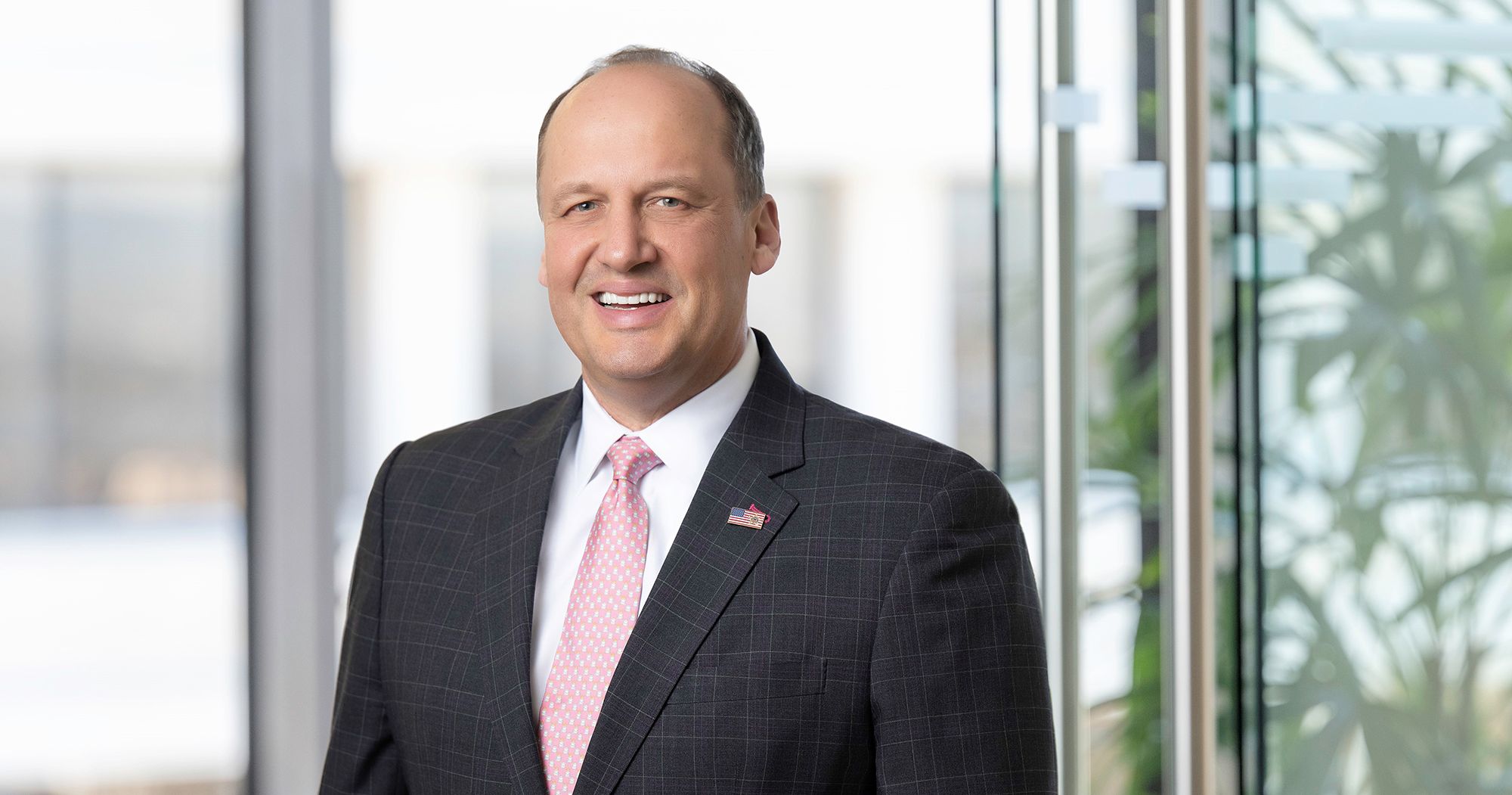
Marc DeLuca is the CEO and Eastern regional president for KBS, a commercial real estate investment firm with $6 billion in assets under management that was the largest holder of office assets in the U.S. prior to COVID-19. DeLuca manages 72 employees, three offices across the U.S., a non-traded real estate investment trust, and a listed REIT in Singapore with 13 U.S assets. Since joining KBS in 2012, he has helped direct $45.5 billion in total transaction volume.
DeLuca sat down with Commercial Observer to discuss the origins of his executive career, how he navigated $1.3 billion in debt maturities during the pandemic, what the Dutch taught him about environmental sustainability in office properties, and how his daughter’s swim careers inspired his leadership style.
This conversation has been edited for length and clarity.
Commercial Observer: How did you first get involved with commercial real estate?
Marc DeLuca: Building was in my family history. My grandfather on my dad’s side came over from Italy at a very young age, was married at 15, and along with his brothers was a stonemason and carpenter. So when I grew up, I basically worked for them in the summers and always found it pretty intriguing learning how to build stuff, just to see your creation at the end of the day. Then in college, I was introduced to folks that actually owned apartment units in Washington, D.C., and who would rehab those into affordable housing projects. And so it really intrigued me because I used to help build those or renovate those projects, and so that’s how I got into the investment management side. And then I had an uncle who was a developer, here in Northern Virginia, and just seeing that intrigued me to go into commercial real estate.
How did you join KBS and work your way up to the role of CEO?
Originally I was with a Dutch-owned company called SFRE, which was owned by a Dutch gentlemen named Julien Redley, and he came over from the Netherlands, and his father had one of the larger cocoa exporting companies, chocolate companies, in Dordrecht, and he ended up marrying [a kin to the Mars candy empire], and he didn’t want to be in the chocolate business anymore. He wanted to be in the real estate business, so he started a real estate advisory firm for all these Dutch pension funds, and I started working for him in 1996. One of our largest clients was a company called ING. ING bought a company called Clarion Partners. I worked there for 18 years, and was looking for something different, something where I can be more focused on what I enjoy doing, which is setting up deals, cultivating deals, and doing development as well. KBS was looking to hire somebody to be the regional president for the East Coast, and that basically blossomed into an opportunity that [co-founders] Chuck Schreiber and Peter Bren gave me to come work for the firm and run that position about 14 years ago.
How is KBS structured? What separates you from other firms?
At one point in time, we were the largest owner of office assets in the United States. But for the last 30 years, we actually have always dabbled in the big four food groups: office, multifamily, industrial and retail. As part of that, we also got into the non-traded REIT business, where we went away from advising separate accounts and funds to going into the non-traded REITs.
And we started a non-traded REIT specifically for multifamily, and then one specifically for office. And we kept a very small list of separate accounts that we maintained for the last 30 years that we continue to invest in. We were set up as not only a small advisory firm for two very large pension funds, but we were also in the non-traded REIT space for a very long period of time. And what’s interesting about KBS is it’s structured in such a manner where the regional presidents are myself and a gentleman named Gio Cordoves. Gio and I are responsible for our regions as a whole, but we also collaborate together to make sure we can deliver to what our clients’ needs and wants are. And so it’s very entrepreneurial, which is great, and allows us to really capitalize on our team that we have, which is spread out throughout the United States.