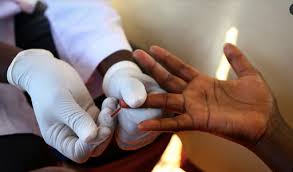
Kenya’s lower-middle-income status has made it harder to access grants, leaving loans as the option after donor withdrawal.
A new report by the Centre for Epidemiological Modelling and
Analysis (CEMA) at the University of Nairobi reveals that as Kenya climbed the
economic ladder, it simultaneously lost access to the life-saving grants that
once anchored its healthcare system.
In their place, the country has been forced to rely on
concessional loans. This debt that is now suffocating the very sector it was
meant to save.
The logic of international development dictates that as a
country’s income grows, it must transition from donor dependency.
However, for Kenya, this transition is happening faster than
domestic tax revenues can keep up, titled Immediate Impact of External Funding
Withdrawal On Kenya’s Health Sector.
It provides a stark look at how the composition of health
funding has shifted from gifts to debt:
"The on-budget support is provided in the form of
grants or concessional loans and is recorded in the national budget as either
Appropriations-in-Aid or as direct revenue to finance government expenditure.
For the period 2019/20-2025/26, the country cumulatively received more loans
than grants in external funding for health through on-budget support."
In the 2021/22 financial year, a staggering 83.2 per cent of
on-budget external health support came in the form of loans. Because healthcare
does not generate immediate cash to pay back these creditors, this borrowing
directly increases Kenya’s public debt and damages its international
creditworthiness.
The report identifies that the LMIC status is a direct
barrier to receiving the type of funding Kenya actually needs to sustain its
health gains:
"Access to grants is however hampered by the
categorization of the country into a lower middle-income country (LMIC) which
implies that the country is expected to finance its healthcare through more
loans than grants. ... Furthermore, loans borrowed to invest in healthcare do
not have a direct and immediate return on borrowed money invested."