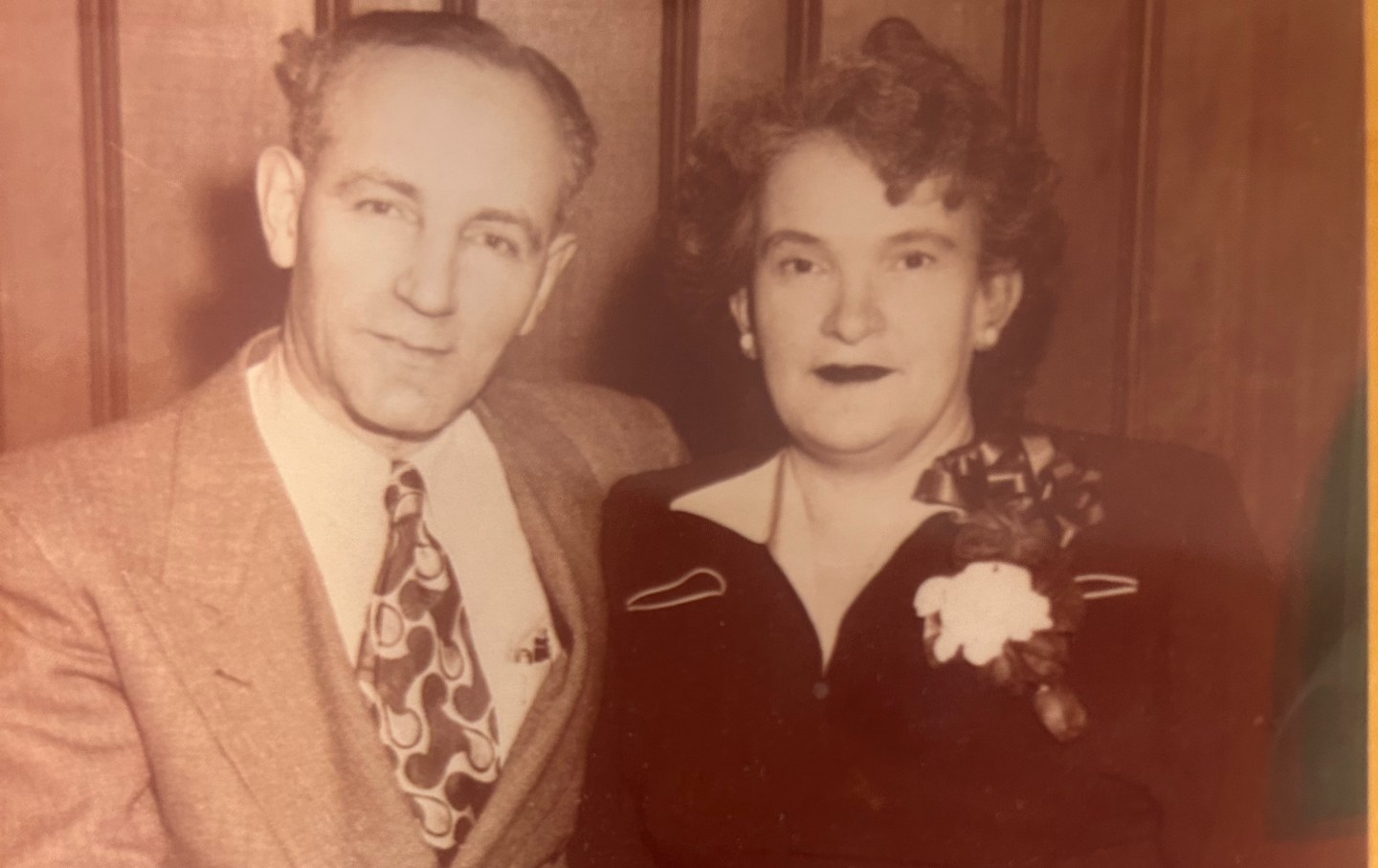
After my mother escaped the Holocaust, she broke the law to save her family. Her immigration story is more pertinent today than ever before.
In 1952, my mother, her brother, and her nephew stood before the US Supreme Court, accused of violating the 1945 War Brides Act. They had already been found guilty in the trial court, and that verdict had been upheld in the court of appeals. Now they faced their final confrontation. If their conviction was upheld at the Supreme Court, they would be fined and sentenced to prison.
The War Brides Act was enacted at the end of WWII as a way to permit the foreign spouses and children of US Armed Forces personnel to immigrate to the United States outside of the normal processes and restrictions imposed by immigration quotas at the time. More than 100,000 people entered the country this way, before the act expired in 1948.
My mother, Regina Treitler, had in fact violated the War Brides Act, but she justified her actions as the only way she could reunite her family after the Holocaust. My parents had fled Germany in 1938, right before Kristallnacht. They had saved themselves, but my mother had been tormented by the fact that her two brothers and her sister-in-law had not escaped. They were trapped in Europe for the duration of the Holocaust, their fates unknown. Other family members, such as my mother’s dear sister, had been killed by the Germans.
Immigration quotas the US government set, which at the time affected displaced European Jews, prevented my mother’s surviving family from immigrating easily—but the War Brides Act was a loophole: Foreigners who met and married American service members abroad were given swift and seamless entry and citizenship. So all they needed to do was get married. My mother, the savvy and indignant woman that she was, recruited two female veterans—a WAVE (Women Accepted for Volunteer Emergency Service) and a WAAC (Women’s Army Auxiliary Corps)—to marry her brothers in Paris, and persuaded her own nephew, my cousin Marcel, a US veteran, to marry his uncle’s wife (who claimed a past divorce) so that these three spouses could join her in Chicago.
Why tell this story now? The events happened almost 75 years ago, after all. Yet the issues that arose from the legal dilemma my family endured have recently come to my mind in light of our country’s current events: fears about a surge in antisemitism, questions regarding the prejudices of Supreme Court justices, and, most importantly, a new antagonism toward immigrants. As I read the front-page news, I find myself reflecting on this personal history, which thrust my mother, uncles, and cousin into the legal spotlight where, in the law texts, they forever remain. It is a cliché—but well-earned as clichés often are—that “those who forget the past are doomed to repeat it.” I hope that the history of my family drama serves as a significant cautionary tale for those now doing all they can to bring their families to America.
The question I keep asking myself is: Was my mother justified? Most of those years she spent in Chicago while her family was back in Europe, she had feared that her brothers had died; so you can imagine her relief when she had word they had somehow survived, hiding somewhere in Vichy France. She was ecstatic and eager to reunite her family by bringing them over to America and would do anything to make it happen.
The three arranged marriages took place in Paris, and had escaped scrutiny at the time, until a relative, a cousin on my father’s side who knew the truth, blackmailed my mother and threatened to report her to US Immigration if she did not invest in his fur business. When she refused, the cousin reported her; his wife wrote the betrayal letter, and my mother, her brothers, and her nephew were indicted. I learned of this fact only after reading it in a newspaper I picked up on my college campus.
To attend their argument before the US Supreme Court, my family, free on bail, traveled by train from Chicago to Washington, DC. The Chicago weather was uncharacteristically mild, not the usual blustery frigid conditions, only a chilly 34 degrees, but the dampness of the December day caused fog to press against the windows of the Liberty Limited and cloud over the skyline. Despite the terms under which she was traveling, my mother was excited to board this gleaming train, to hear the start whistle, to feel the wheels’ thrust as it and pulled out of the station. It could almost feel like a holiday. And my mother, steadfast in her conviction that her family had the right to escape the postwar chaos, hoped a great legal triumph might lay before her.
Outside the train’s window, landscapes were obscured. This non-view matched the outcome of the appeal, which at this time, was still in limbo. The stakes were high—if the conviction of violating the War Brides Act were upheld, my mother, her brother Munio, and her nephew Marcel would have to serve time, probably years, in federal prison.