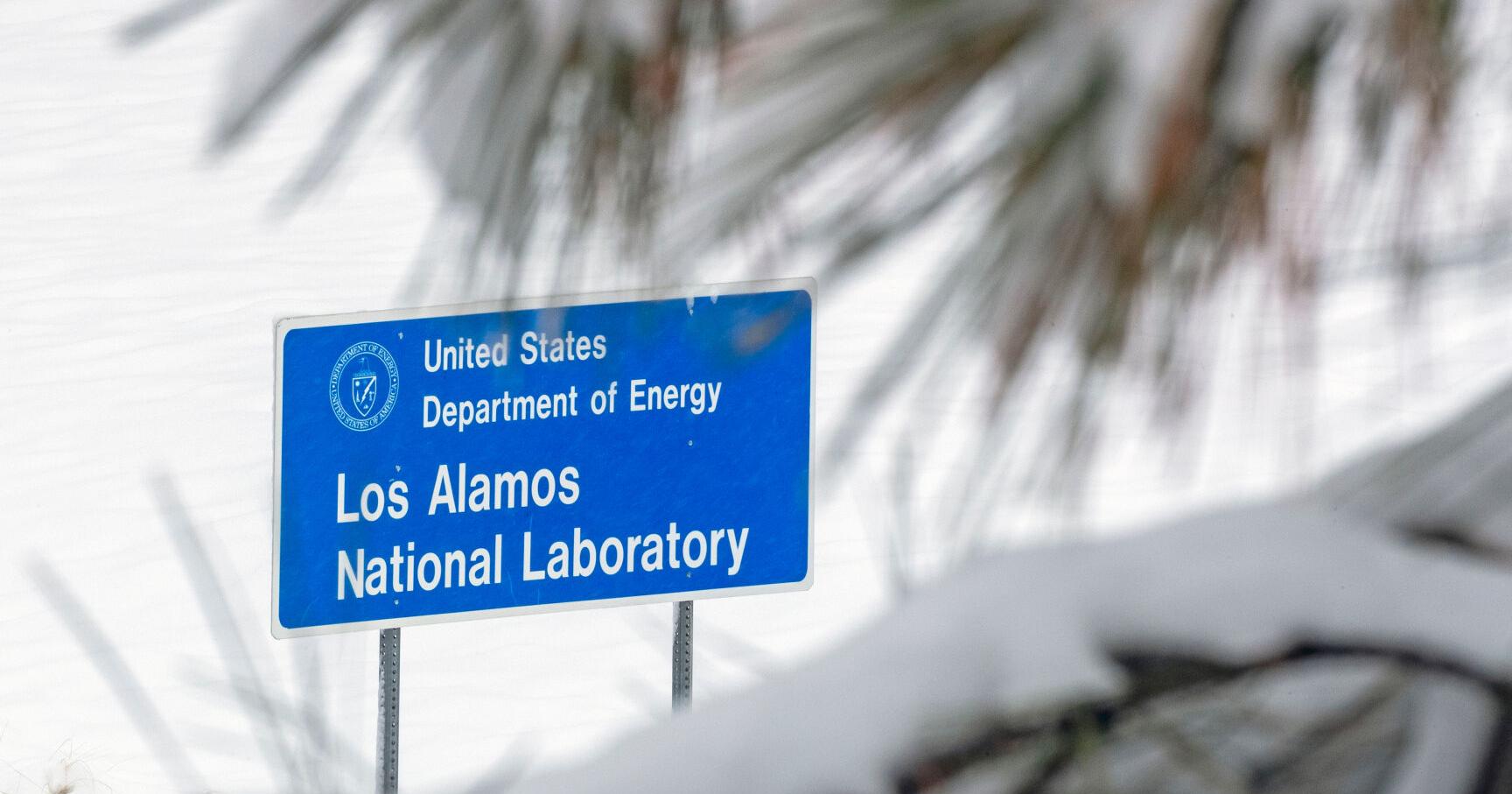
Snow covers the ground at Los Alamos National Laboratory in 2024.
A National Nuclear Security Administration official last month said Los Alamos National Laboratory has increased its limits on the dose of external and internal radiation a worker can receive in a given year without prior approval.
Sean McDonald, senior adviser for NNSA’s integrated plutonium program, made a comment about the adjustment to visitors to an annual nuclear deterrence summit in Arlington, Va., hosted by ExchangeMonitor, a media company focused on nuclear facilities and weapons.
“So Los Alamos, working with the field office, has actually changed their manual to allow additional worker dose, again, up to the safely established limit that is in statute,” McDonald said, speaking on a panel in late January, according to a recording provided to The New Mexican by the Los Alamos Study Group, a nuclear watchdog organization.
The statutory limit is 5 rem per year. Rem is a unit used to quantify potential radiation effects on the human body.
A 2017 U.S. Department of Energy standard set an administrative control level for annual dose at 2,000 millirem, or 2 rem, requiring prior approval for amounts above that. According to the Occupational Radiation Exposure Report for Calendar Year 2024, that standard also required each DOE site to establish its own administrative limit “based on historical and projected exposure” and requires approval from facility management if an individual looked like they were going to exceed it.
“There’s a statutory limit for dose rates, which is 5 rem,” McDonald said in January. “We had previously capped our administrative limits at 1 rem, for very good reasons.”
The National Nuclear Security Administration did not respond to questions about McDonald’s comments, the change itself, or the administrative limits at other DOE sites like Lawrence Livermore National Laboratory and the Savannah River Site. A spokesperson for LANL referred questions to the NNSA.
It’s “five times the danger,” said Los Alamos Study Group executive director Greg Mello.
“If they’re not going to expose people, then why is it changing?” he asked.