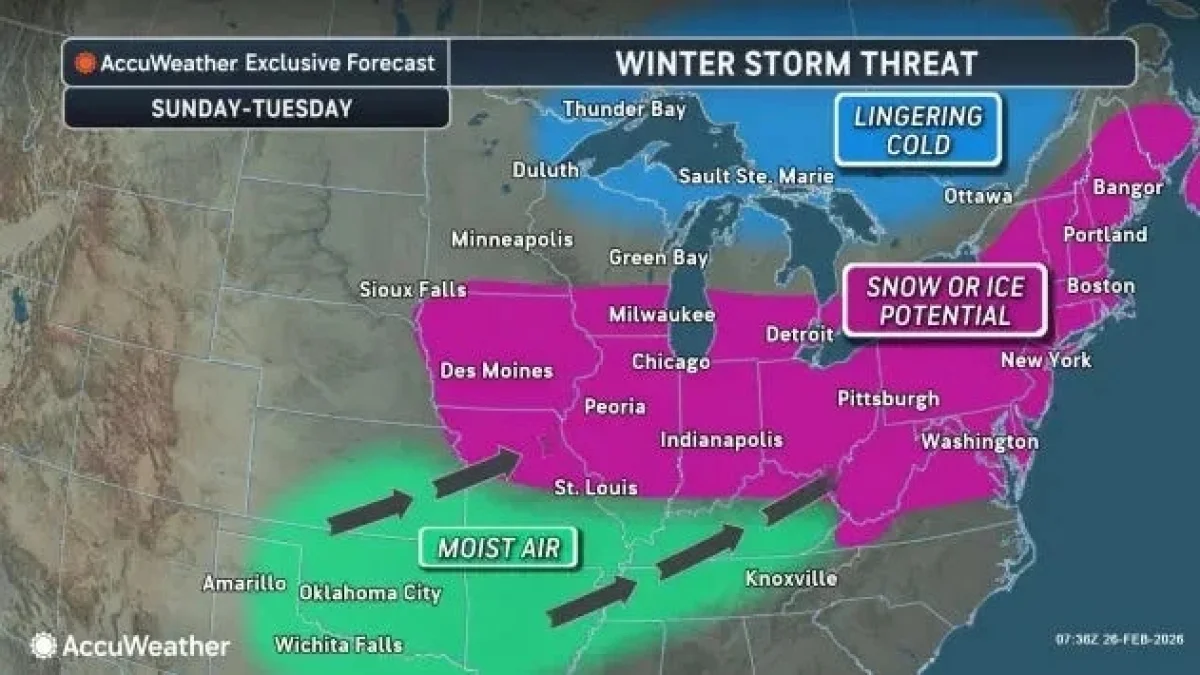
Another significant winter storm is on the horizon as forecasters predict disruptive snow and ice for early March. Fresh Arctic air is poised to set the stage for this storm, with meteorologists indicating that its impact could be felt across parts of the Midwest and Northeast. Alex Sosnowski from AccuWeather points out that before this larger threat materializes, minor wintery events will transition through these regions. Understanding these weather patterns reveals not just climatic transitions but also the deeper stakes hidden within such weather forecasts.
Forecast Dynamics: A Strategic Climate Response
The incoming storm is a manifestation of fresh cold air colliding with warm, moist systems, a dynamic that often precedes intense winter storms. However, this event is being classified as “not a blockbuster storm,” raising questions about meteorological expectations in light of recent harsh conditions. The National Weather Service reiterated that while plowable snow and ice are anticipated, substantial uncertainty exists regarding accumulations and the storm’s trajectory. This caution underscores shifting climate realities; each event now carries the weight of heightened unpredictability that may serve as a tactical hedge against complacency among emergency responders and households alike.
Comparative Impact on Stakeholders
Stakeholder
Before (Pre-Storm Conditions)
After (Post-Storm Predictions)
Travelers
Normal flight and road conditions
Flight cancellations; possible road closures
Emergency Services
Routine preparedness
Increased staffing and resource deployment
Local Businesses
Steady pedestrian traffic
Potential drop in sales due to weather disruptions
Utilities
Stable supply and service
Increased outages due to ice and snow
Key regions expected to feel the brunt of these changes include major U.S. airports spanning from Washington, DC, to Boston and Chicago, leading to an inevitable ripple effect across the national transportation network. Predictions of urban flooding in parts of the Ohio Valley and mid-Atlantic are an additional concern, emphasizing the need for region-specific flood mitigation strategies.
Localized Ripple Effect Across Regions
The impact of this forecasted snowstorm transcends U.S. borders, creating notable reverberations in international markets. In Canada, industries reliant on transportation and logistics will face disruptions, while the potential for increased heating demands will add pressure to the already strained energy sector. Conversely, in the UK and Australia, where winter conditions differ, markets will be influenced by how the U.S. responds to this climatic phenomenon. For instance, variations in commodity prices related to grain and energy resources can be anticipated, as global suppliers adjust to North America’s weather disturbances.
Projected Outcomes: Future Developments to Observe
Looking ahead, there are several pivotal outcomes to watch in the wake of this storm:
Transportation Disruptions: Expect ongoing cancellations and delays into early March as airlines and freight companies adjust schedules.
Utility Preparedness: Utility companies are likely to ramp up efforts to restore power quickly, reflecting a growing recognition of the need for swift recovery from weather events.
Climate Policy Implications: As storms become more unpredictable, local governments might reassess infrastructural investments and emergency preparedness protocols to mitigate future disruption.
This early March forecast serves not only as a reminder of seasonal shifts but also as a critical touchpoint in a year marked by climate variability. While the storm may not replicate February’s blizzard, the cascading effects could be felt far beyond state lines, touching businesses, households, and governments alike.
The incoming storm is a manifestation of fresh cold air colliding with warm, moist systems, a dynamic that often precedes intense winter storms. However, this event is being classified as “not a blockbuster storm,” raising questions about meteorological expectations in light of recent harsh conditions. The National Weather Service reiterated that while plowable snow and ice are anticipated, substantial uncertainty exists regarding accumulations and the storm’s trajectory. This caution underscores shifting climate realities; each event now carries the weight of heightened unpredictability that may serve as a tactical hedge against complacency among emergency responders and households alike.
Comparative Impact on Stakeholders
Stakeholder
Before (Pre-Storm Conditions)
After (Post-Storm Predictions)
Travelers
Normal flight and road conditions
Flight cancellations; possible road closures
Emergency Services
Routine preparedness
Increased staffing and resource deployment
Local Businesses
Steady pedestrian traffic
Potential drop in sales due to weather disruptions
Utilities
Stable supply and service
Increased outages due to ice and snow
Key regions expected to feel the brunt of these changes include major U.S. airports spanning from Washington, DC, to Boston and Chicago, leading to an inevitable ripple effect across the national transportation network. Predictions of urban flooding in parts of the Ohio Valley and mid-Atlantic are an additional concern, emphasizing the need for region-specific flood mitigation strategies.
Localized Ripple Effect Across Regions
The impact of this forecasted snowstorm transcends U.S. borders, creating notable reverberations in international markets. In Canada, industries reliant on transportation and logistics will face disruptions, while the potential for increased heating demands will add pressure to the already strained energy sector. Conversely, in the UK and Australia, where winter conditions differ, markets will be influenced by how the U.S. responds to this climatic phenomenon. For instance, variations in commodity prices related to grain and energy resources can be anticipated, as global suppliers adjust to North America’s weather disturbances.
Projected Outcomes: Future Developments to Observe
Looking ahead, there are several pivotal outcomes to watch in the wake of this storm:
Transportation Disruptions: Expect ongoing cancellations and delays into early March as airlines and freight companies adjust schedules.
Utility Preparedness: Utility companies are likely to ramp up efforts to restore power quickly, reflecting a growing recognition of the need for swift recovery from weather events.
Climate Policy Implications: As storms become more unpredictable, local governments might reassess infrastructural investments and emergency preparedness protocols to mitigate future disruption.
This early March forecast serves not only as a reminder of seasonal shifts but also as a critical touchpoint in a year marked by climate variability. While the storm may not replicate February’s blizzard, the cascading effects could be felt far beyond state lines, touching businesses, households, and governments alike.
Key regions expected to feel the brunt of these changes include major U.S. airports spanning from Washington, DC, to Boston and Chicago, leading to an inevitable ripple effect across the national transportation network. Predictions of urban flooding in parts of the Ohio Valley and mid-Atlantic are an additional concern, emphasizing the need for region-specific flood mitigation strategies.
Localized Ripple Effect Across Regions
The impact of this forecasted snowstorm transcends U.S. borders, creating notable reverberations in international markets. In Canada, industries reliant on transportation and logistics will face disruptions, while the potential for increased heating demands will add pressure to the already strained energy sector. Conversely, in the UK and Australia, where winter conditions differ, markets will be influenced by how the U.S. responds to this climatic phenomenon. For instance, variations in commodity prices related to grain and energy resources can be anticipated, as global suppliers adjust to North America’s weather disturbances.
Projected Outcomes: Future Developments to Observe
Looking ahead, there are several pivotal outcomes to watch in the wake of this storm:
Transportation Disruptions: Expect ongoing cancellations and delays into early March as airlines and freight companies adjust schedules.
Utility Preparedness: Utility companies are likely to ramp up efforts to restore power quickly, reflecting a growing recognition of the need for swift recovery from weather events.
Climate Policy Implications: As storms become more unpredictable, local governments might reassess infrastructural investments and emergency preparedness protocols to mitigate future disruption.
This early March forecast serves not only as a reminder of seasonal shifts but also as a critical touchpoint in a year marked by climate variability. While the storm may not replicate February’s blizzard, the cascading effects could be felt far beyond state lines, touching businesses, households, and governments alike.
The impact of this forecasted snowstorm transcends U.S. borders, creating notable reverberations in international markets. In Canada, industries reliant on transportation and logistics will face disruptions, while the potential for increased heating demands will add pressure to the already strained energy sector. Conversely, in the UK and Australia, where winter conditions differ, markets will be influenced by how the U.S. responds to this climatic phenomenon. For instance, variations in commodity prices related to grain and energy resources can be anticipated, as global suppliers adjust to North America’s weather disturbances.
Projected Outcomes: Future Developments to Observe
Looking ahead, there are several pivotal outcomes to watch in the wake of this storm:
Transportation Disruptions: Expect ongoing cancellations and delays into early March as airlines and freight companies adjust schedules.
Utility Preparedness: Utility companies are likely to ramp up efforts to restore power quickly, reflecting a growing recognition of the need for swift recovery from weather events.
Climate Policy Implications: As storms become more unpredictable, local governments might reassess infrastructural investments and emergency preparedness protocols to mitigate future disruption.
This early March forecast serves not only as a reminder of seasonal shifts but also as a critical touchpoint in a year marked by climate variability. While the storm may not replicate February’s blizzard, the cascading effects could be felt far beyond state lines, touching businesses, households, and governments alike.
Looking ahead, there are several pivotal outcomes to watch in the wake of this storm:
Transportation Disruptions: Expect ongoing cancellations and delays into early March as airlines and freight companies adjust schedules.
Utility Preparedness: Utility companies are likely to ramp up efforts to restore power quickly, reflecting a growing recognition of the need for swift recovery from weather events.
Climate Policy Implications: As storms become more unpredictable, local governments might reassess infrastructural investments and emergency preparedness protocols to mitigate future disruption.
This early March forecast serves not only as a reminder of seasonal shifts but also as a critical touchpoint in a year marked by climate variability. While the storm may not replicate February’s blizzard, the cascading effects could be felt far beyond state lines, touching businesses, households, and governments alike.
This early March forecast serves not only as a reminder of seasonal shifts but also as a critical touchpoint in a year marked by climate variability. While the storm may not replicate February’s blizzard, the cascading effects could be felt far beyond state lines, touching businesses, households, and governments alike.
Join our subscribers list to get the latest news, updates and special offers directly in your inbox