The National Trust for Historic Preservation filed a lawsuit against President Donald Trump and federal agencies on Dec. 12 over the ballroom construction project at the White House.
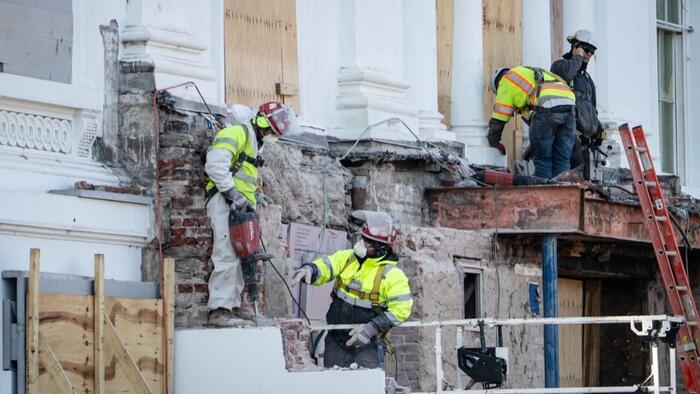
Construction on the project, which involves demolishing part of the executive mansion and building a 90,000-square-foot ballroom, began in September.
The project is expected to cost about $300 million, all of which is expected to be funded by private donors, including Trump.
The Trump administration released a list of the private donors in October.
The legal complaint, filed with the U.S. District Court for the District of Columbia, seeks a declaration that the ongoing project violates several federal statutes.
The National Trust is also asking for an injunction to halt work on the project “until the necessary federal commissions have reviewed and approved the project’s plans; adequate environmental review has been conducted; and Congress has authorized the Ballroom’s construction,” according to the complaint.
The National Trust describes itself in the complaint as a private, charitable, educational nonprofit corporation that Congress chartered in 1949. Its purpose is “to further the historic preservation policy of the United States and to promote the public’s awareness of and ability to comment on any activity that might damage or destroy our nation’s architectural heritage.” The trust has filed preservation lawsuits against several presidential administrations, the complaint said.
As Matthew Vadum details below via The Epoch Times, the lawsuit lists several federal agencies and those who head them as defendants.
The defendants are: the National Park Service, and its acting director, Jessica Bowron; John Stanwich, superintendent of the White House and President’s Park; Department of the Interior, and its secretary, Douglas Burnum; General Services Administration, and its acting administrator, Michael Rigas; and Trump.
The complaint said the demolition of the East Wing of the White House to make room for the ballroom facility began in late October without congressional approval or approval from federal commissions responsible for development oversight in the nation’s capital.