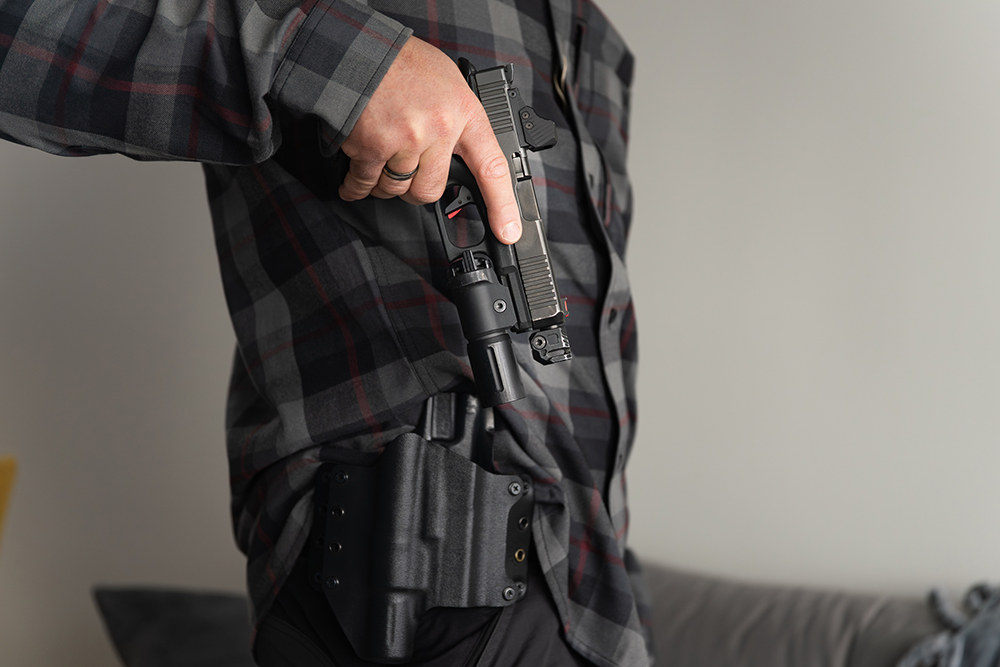
A three-judge panel from the United States Court of Appeals for the Ninth Circuit has struck down California’s restrictive ban on open carry in urban areas, affirming the constitutional right to bear arms as guaranteed by the Second and Fourteenth Amendments. The decision, detailed in the case Baird v. Bonta, marks a significant blow to the state’s long-standing efforts to limit firearm carry, particularly in its most populous counties.
The Ninth Circuit’s ruling hinges on the landmark 2022 Supreme Court decision in New York State Rifle & Pistol Ass’n v. Bruen, which established that firearm regulations must align with the nation’s historical traditions. Judge VanDyke’s opinion emphasizes that open carry was a fundamental right at the time of the Founding and the adoption of the Fourteenth Amendment. “There is no record of any law restricting open carry at the Founding, let alone a distinctly similar historical regulation,” Judge VanDyke noted, highlighting California’s failure to justify its ban with historical precedent.
Live Inventory Price Checker
CCI Blazer Brass 9mm 115gr FMJ Ammunition, 1145 fps, 1000-Round Case
Bereli
$
229.00
CCI Blazer Brass 9mm 115 Gr FMJ 1000 Rounds (Loose Packed in a Box)
Ammunition Depot
$
307.49
$
256.49
1000 Rounds of CCI Blazer Brass 9mm 115 Grain FMJ Ammo
Palmetto State Armory
$
229.99
CCI Blazer 9mm 115gr FMJ Aluminum Case Ammunition, 50 Round Box - 3509
Palmetto State Armory
$
14.99
$
12.99
For much of American history, and indeed California’s own past, open carry was the standard method of carrying firearms. From 1850, when California became a state, until the Mulford Act of 1967, public open-carry was unregulated. Even after the Mulford Act, which was enacted with racial undertones to curb the Black Panther Party’s armed protests, Californians could still openly carry unloaded handguns for nearly half a century. The urban ban, imposed in 2012, represented a sharp departure from this tradition, joining California with a small minority of states that severely restrict open carry.
However, the ruling was not a total win for Baird. The court upheld California’s licensing requirements in rural counties with populations under 200,000, where open carry is theoretically allowed under a “shall-issue” regime. Baird waived his as-applied challenge to these requirements, and the panel found that, on its face, the rural licensing scheme aligns with Bruen by allowing permits based on a general desire for self-defense. Yet, a concurring opinion by Judge Kenneth K. Lee, joined by VanDyke, raises concerns about the state’s apparent subterfuge, noting that no open-carry licenses have been issued despite the legal framework.
Judge N.R. Smith dissented in part, arguing that open carry is not explicitly protected by the Second Amendment’s text and that California can restrict it if concealed carry remains an option. This dissent underscores an ongoing debate within the judiciary about the scope of gun rights, but the majority’s reliance on Bruen sets a precedent that prioritizes historical context over modern policy preferences.
Mr. Crump is an NRA instructor and a constitutional activist. John has written about firearms, interviewed people from all walks of life, and on the Constitution. John lives in Northern Virginia with his wife and sons, follow him on X at @crumpyss, or at www.crumpy.com.