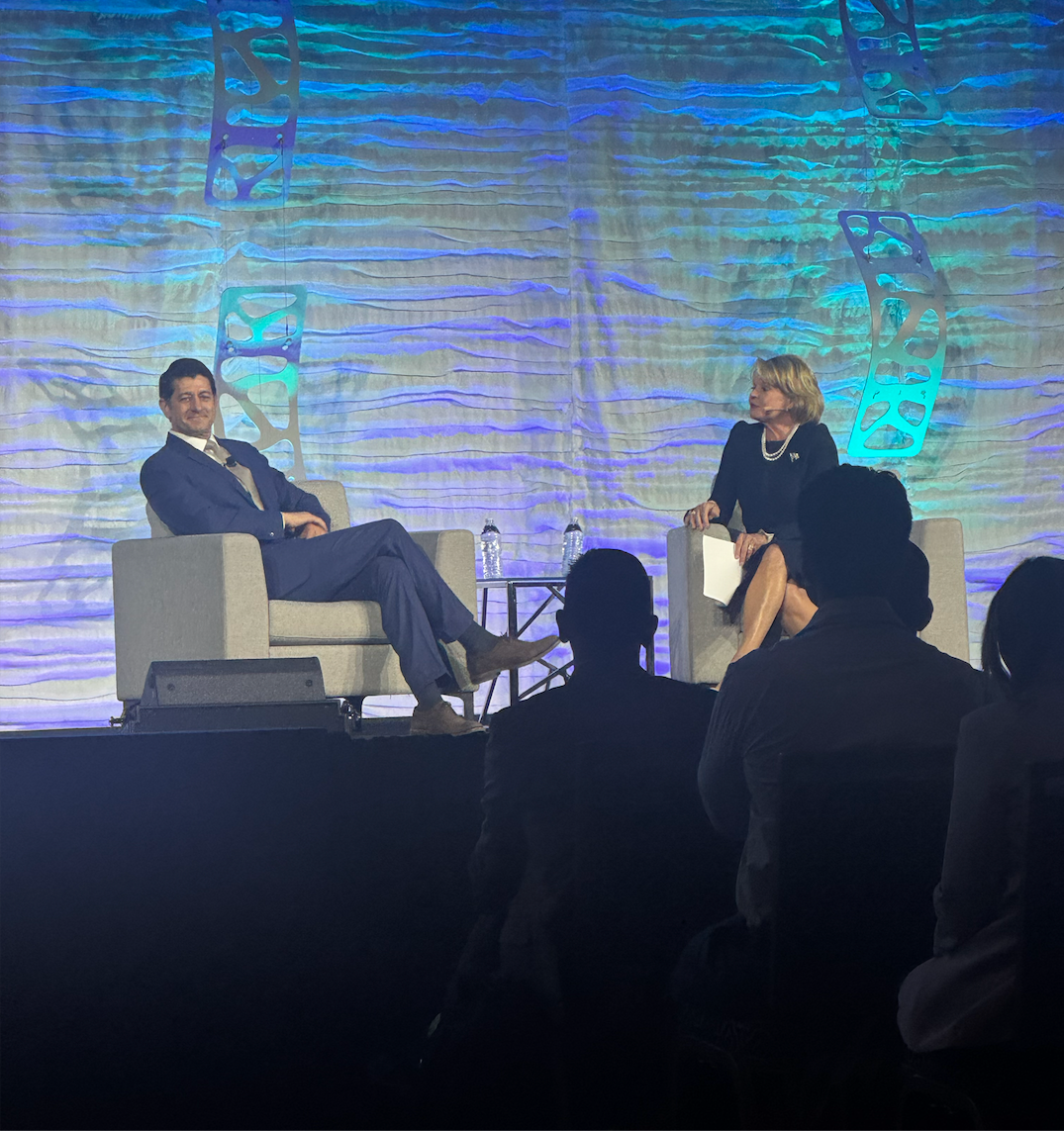
In the midst of a government shutdown, former House Speaker Paul Ryan urges clear policies, AI innovation, and patient-focused solutions to build a sustainable US health care system.
Amid a government shutdown in nearby Washington, DC, Paul Ryan, former speaker of the House, told attendees at the Academy of Managed Care Pharmacy (AMCP) Nexus 2025 meeting in National Harbor, Maryland, that thoughtful policies and technological innovation can help build a more sustainable and effective health care system.1
Moderated by Susan Cantrell, CEO of AMCP, the conversation began with Ryan’s take on Trump-era policies, particularly the “One Big Beautiful Bill.” While primarily a tax bill, Ryan explained that its Medicaid provisions, or “pay-fors,” will directly affect health care. The bill aims to address long-term pressures on entitlement programs from retiring boomers and a shrinking taxpayer base. Changes include restrictions for undocumented individuals and able-bodied, childless adults, which will affect states differently and reduce Medicaid reimbursements.
Cantrell noted that much of the health care policy during Trump’s second term so far stemmed from executive orders and asked Ryan for advice on how health care professionals can navigate this unpredictable landscape. He emphasized the importance of maintaining the proper roles of government branches. However, Ryan acknowledged that polarization and narrow party majorities have limited Congress’s ability to pass laws, leaving the executive branch to act through executive orders.
He also observed that Congress often drafts laws too vaguely, granting the executive branch wide discretion to interpret them. To address this, he argued that Congress must write clear, precise legislation to limit executive overreach.
Additionally, Ryan encouraged attendees to engage with their representatives to ensure their voices are heard.
“…it’s really important that you come through your trade associations and go explain to these policymakers…what the consequences of these decisions are; out of sight, out of mind,” he said. “If you’re not doing that, then policy will be written without your knowledge, consent, or input. It’s game time to make sure that your voices are heard.”
Cantrell continued by acknowledging that the government shutdown had reached its 28th day. Given his experience with past shutdowns, she asked Ryan about the largest repercussions for health care nationwide.
He emphasized the human impact, noting that shutdowns primarily harm federal workers through furloughs and missed paychecks. They also disrupt the operations of government agencies and interfere with policy development.
“There's no upside, in my opinion, to these shutdowns,” Ryan said. “…I think it will end, hopefully, soon…it will probably be 5 Democrats in the Senate from purple states, where the cons outweigh the pros on the politics of the shutdown, to vote to reopen the government and go back to the table to negotiate.”