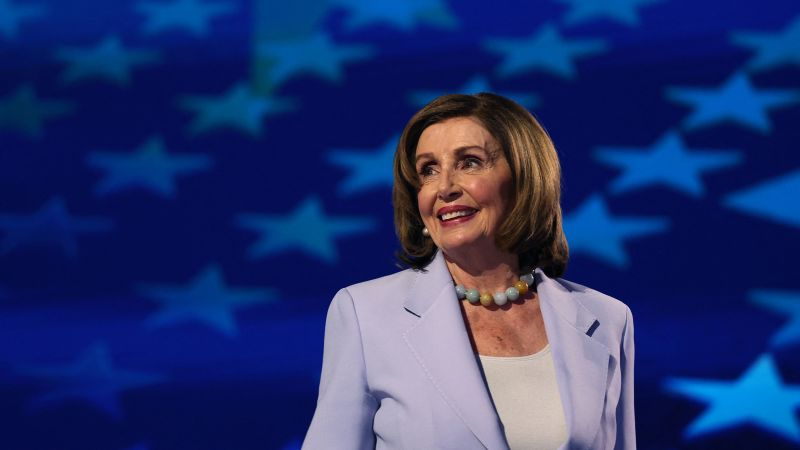
Former House Speaker Nancy Pelosi’s decision not to seek reelection next year could open the floodgates on the race to replace her.
Pelosi, who has served in Congress since 1987, already had two primary challengers ahead of her Thursday announcement: Saikat Chakrabarti, a former chief of staff to US Rep. Alexandria Ocasio-Cortez and Democratic California state Sen. Scott Wiener.
Chakrabarti launched his bid to unseat Pelosi earlier this year as part of a wave of younger Democratic challengers who argued the party needed candidates with new ideas to reshape it in the wake of Republicans’ 2024 electoral wins.
Wiener, who has represented much of the city in the state Senate since 2016, previously said he wouldn’t challenge the former House Speaker. But he argued that it was necessary to get in against Chakrabarti, a self-funder who made his millions in the tech industry.
“I never wanted to run against Nancy Pelosi. I have enormous respect for her – I think she walks on water,” Wiener said in an interview. “But there are limits to how long you can wait. At some point, you need to get into the race and start making the case to the voters.”
Other candidates are expected to announce their own bids. San Francisco Supervisor Connie Chan has been floated as a potential candidate and former San Francisco Mayor London Breed told Politico Friday she is considering running.
Already, the field of prospective and declared candidates has sparked discussions about what kind of leader the district should elect to represent a rare, solidly blue open seat. Pelosi won re-election to the San Francisco seat in 2024 with 81% of the vote.
“We’re really seeking authentic and courageous leadership for working families across the country, and San Francisco deserves no less,” Jane Kim, the California director for the Working Families Party, told CNN. “It is a generational chance for a bold new voice in Congress for the city by the bay, and we look forward to a robust endorsement process.”
Chakrabarti launched his campaign to unseat Pelosi in February, arguing that while he respected what she had accomplished during her career, the Democratic Party needed new leaders who could meet the current moment. He helped kick off a wave of young challengers who argued the party needs to be completely overhauled.
He praised Pelosi for deciding not to seek reelection.