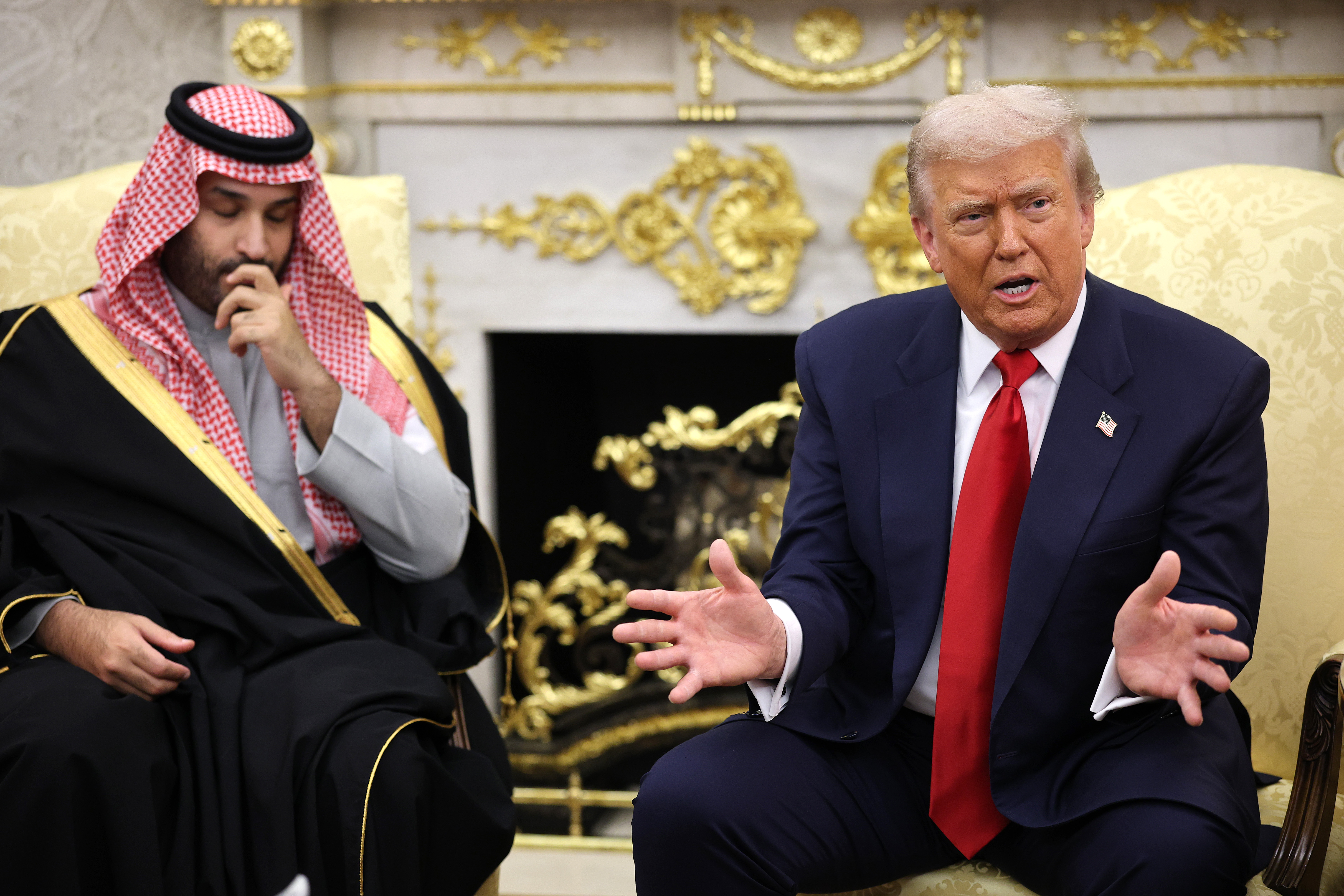
Republican Senator John Kennedy said he was not comfortable with the Trump administration's newly announced civilian nuclear agreement with Saudi Arabia, offering rare public skepticism from within the president's own party as lawmakers prepare to review the deal.
Kennedy's comments came days after President Donald Trump announced the agreement and then added a new requirement that Saudi Arabia normalize relations with Israel before it can proceed—a condition that has already drawn criticism from Democrats and raised questions about whether the deal can survive congressional scrutiny.
Newsweek reached out to the Trump administration for comment on Sunday.
Asked on CBS News' Face the Nation whether he was comfortable with the agreement, Kennedy responded bluntly: "No. Maybe someday, but not right now."
The Louisiana Republican argued that pursuing a Saudi nuclear agreement while the United States remains at war with Iran sends a contradictory message.
"We're bombing a country to keep them from getting a nuclear weapon, but we're signing a deal with another country,” he said. “I know it's a commercial agreement, but that the world perceives as possibly someday leading to a nuclear weapon.”
Kennedy repeatedly emphasized that his concern was not necessarily the concept of civilian nuclear cooperation itself but the timing.
"The world's on a hair trigger," he said, arguing that countries around the world are increasingly focused on nuclear deterrence amid instability in the Middle East, Europe and elsewhere.
The remarks are notable because Kennedy has generally supported Trump's foreign policy and used the same interview to defend the administration's broader approach toward Iran. He also rejected calls from some critics to simply end U.S. involvement in the conflict.
Instead, Kennedy argued that the administration should continue pressuring Iran through sanctions and military measures while avoiding a larger ground war.