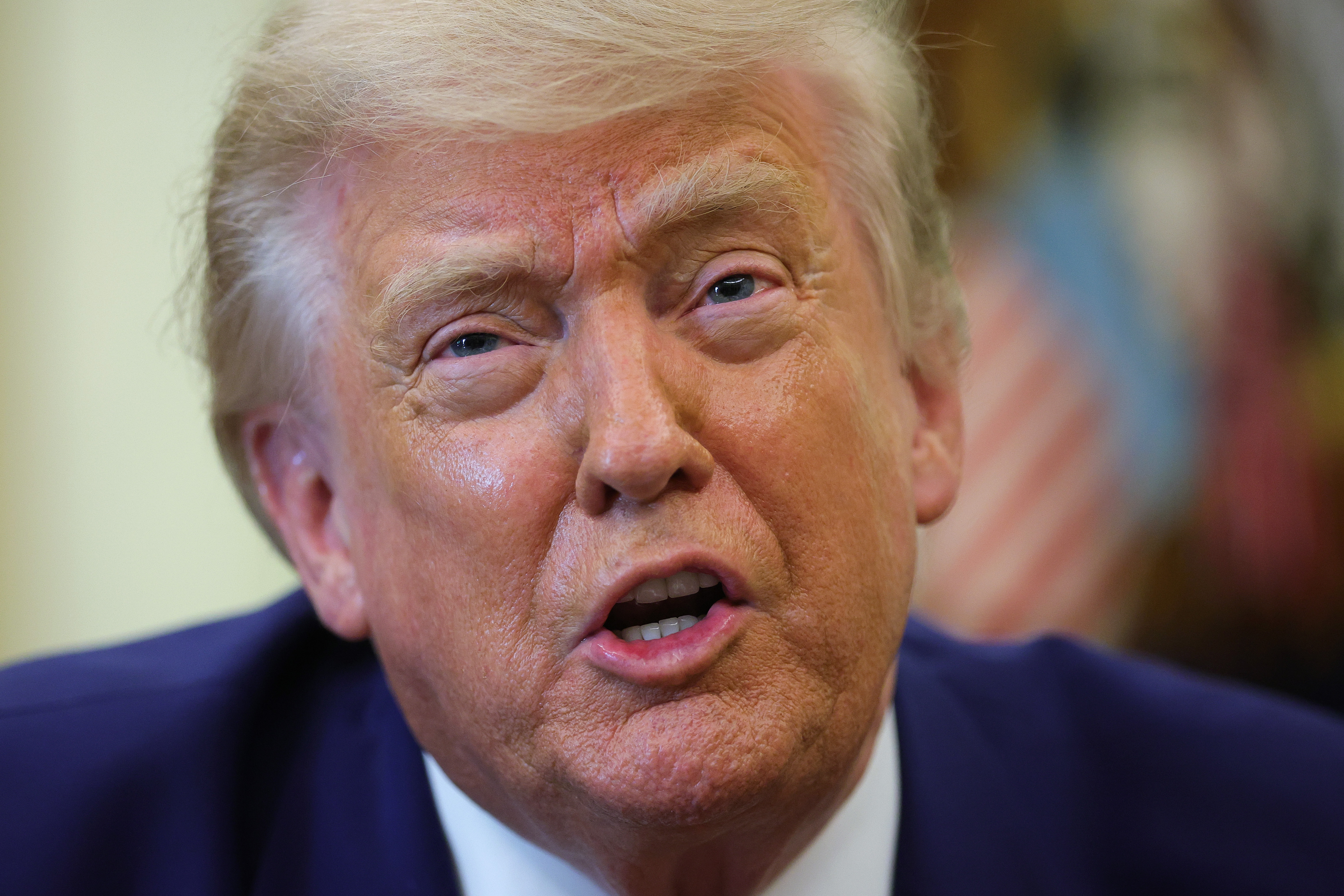
Several cracks have emerged in President Donald Trump’s grip over the Republican Party in recent days, with lawmakers, and voters alike expressing dissent, and even forcing the administration into retreat.
From Congress rebuking his war strategy, to primary voters rejecting his chosen candidate, and backlash apparently forcing the rollback of a Department of Justice plan (DOJ), the developments point to rare but notable resistance within the GOP as the 2026 midterms approach.
Taken together, the episodes seem to underscore growing unease among some Republicans over Trump’s leadership—particularly on foreign policy and the limits of executive power—even as most of the party remains publicly aligned with him.
Newsweek reached out to the White House by email outside of normal business hours.
Four House Republicans broke with Trump and party leadership to help pass a resolution aimed at curbing the president’s authority to wage war against Iran without congressional approval.
The measure passed, 215–208, on Wednesday with GOP representatives—Thomas Massie of Kentucky, Brian Fitzpatrick of Pennsylvania, Tom Barrett of Michigan and Warren Davidson of Ohio—joining Democrats.
The resolution directs the administration to remove U.S. forces from hostilities unless Congress authorizes the conflict, marking the first time the House has successfully advanced such a measure during the war.
The vote is largely symbolic and faces an uncertain future, but it represents a significant political rebuke of Trump’s military strategy, which was launched without congressional approval.
The White House pushed back, arguing the resolution lacks legal force as a concurrent measure and questioning its constitutionality. Officials also suggested the vote mostly reflected 18 GOP absences rather than a broader shift in support.
Still, the defection highlighted growing discomfort within Republican ranks over both the legality and political cost of the conflict, particularly as economic pressures and public skepticism mount.