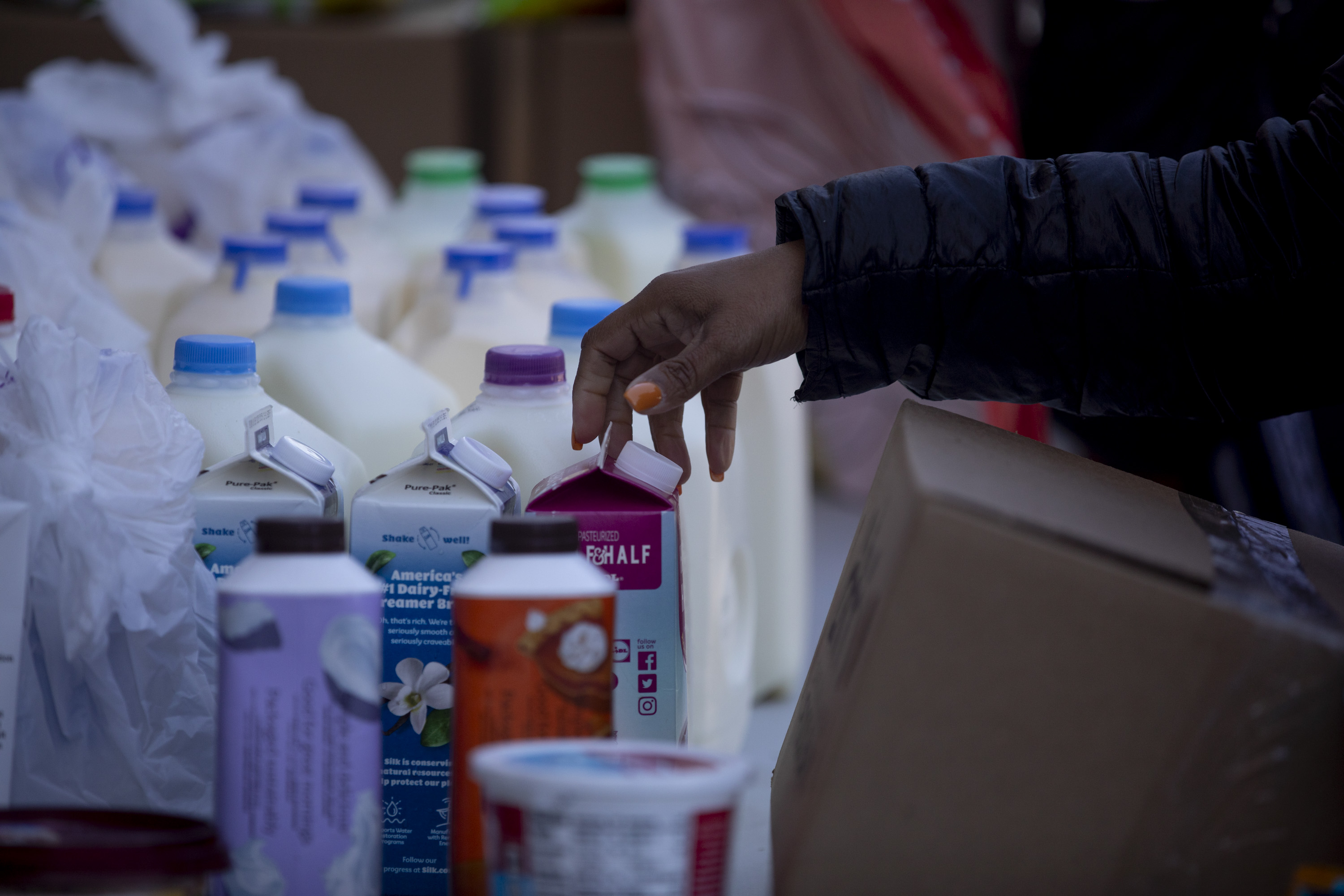
The federal government shutdown continues without an end in sight. In just a few days, tens of millions of people are at risk of losing federal food and nutrition benefits as a result. This includes the nearly 42 million people who rely on the Supplemental Nutrition Assistance Program, or SNAP, previously known as food stamps.
The Trump administration has warned that the debit-like EBT cards will not be refilled and that the program will run out of money on Nov. 1.
SNAP, the country's largest anti-hunger program, dates back to the Great Depression and has never been disrupted this way. Most recipients are seniors, families with kids and people with disabilities.
Individual states handle the distribution, while the federal government provides the funds and infrastructure that power the debit-like cards.
Are you worried about your SNAP benefits? NPR wants to hear your story
In a letter dated Oct. 10, the U.S. Department of Agriculture (USDA) told state agencies to hold off distributing November benefits "until further notice" because of insufficient funds. The left-leaning Center on Budget and Policy Priorities has called on the agency to shift money from its contingency fund and other places to keep SNAP at least partially funded. It contends the USDA has a legal obligation to do so since SNAP is an entitlement program. But the USDA rejects that argument, stating in a memo Friday that its contingency funds are "not legally available" to extend regular benefits and are meant only for "natural disasters like hurricanes, tornadoes, and floods."
Read more: 'The helpers need help'. Food banks brace for impact as SNAP cliff looms
Now, as November looms, states are trying to sort what options they can offer beneficiaries to fill the gap in food assistance.
Reporters from the NPR Network are covering the impact of this potential lapse in states across the country.
Some states are trying filling the gap
A handful of states and territories are pulling from local funding to backfill the SNAP benefits for their communities. Officials in Connecticut, Guam, Louisiana, Virginia, and Vermont. have found ways to fund the program from anywhere from a few days into November to the whole month.