The model for the electricity business in the United States is a monopoly that gives one company exclusive rights to distribute electricity in a given geographic area. For historical reasons, that model makes a lot of sense. Imagine if five electricity suppliers were putting up poles and stringing wires in every neighborhood. What an unsightly mess!
It also makes sense from a technical perspective. Modern appliances and electronic devices are designed to operate within a narrow range of voltages and cycles per second. If the electricity inside our homes falls outside those parameters, that can damage the electric motors in our refrigerators and washing machines or fry the motherboard in our computers. If things get bad enough, it can damage the fatherboard, too!
But what happens when the power goes out and no electricity is flowing through all those wires? In most cases, that means no heat, no A/C, and no refrigeration. For vigorous young people, that’s an inconvenience. For older people, or those with health issues, it can be a deadly situation.
When winter storm Uri hit Texas in 2021 with multiple days of sub-freezing temperatures, 246 people died, according to the Texas department of health services. 19 of those people died when they tried to run generators or use charcoal grills for heat in enclosed spaces.
“We were like, ‘Shoot, power grid failure is a serious thing that we are not prepared for’,” Becky Selle, co-director of disaster preparedness, organizing, and operations at West Street Recovery, a northeast Houston nonprofit founded after Hurricane Harvey in 2017, told the Associate Press recently. The organization bought generators and supplied them to residents who were willing to share them with neighbors.
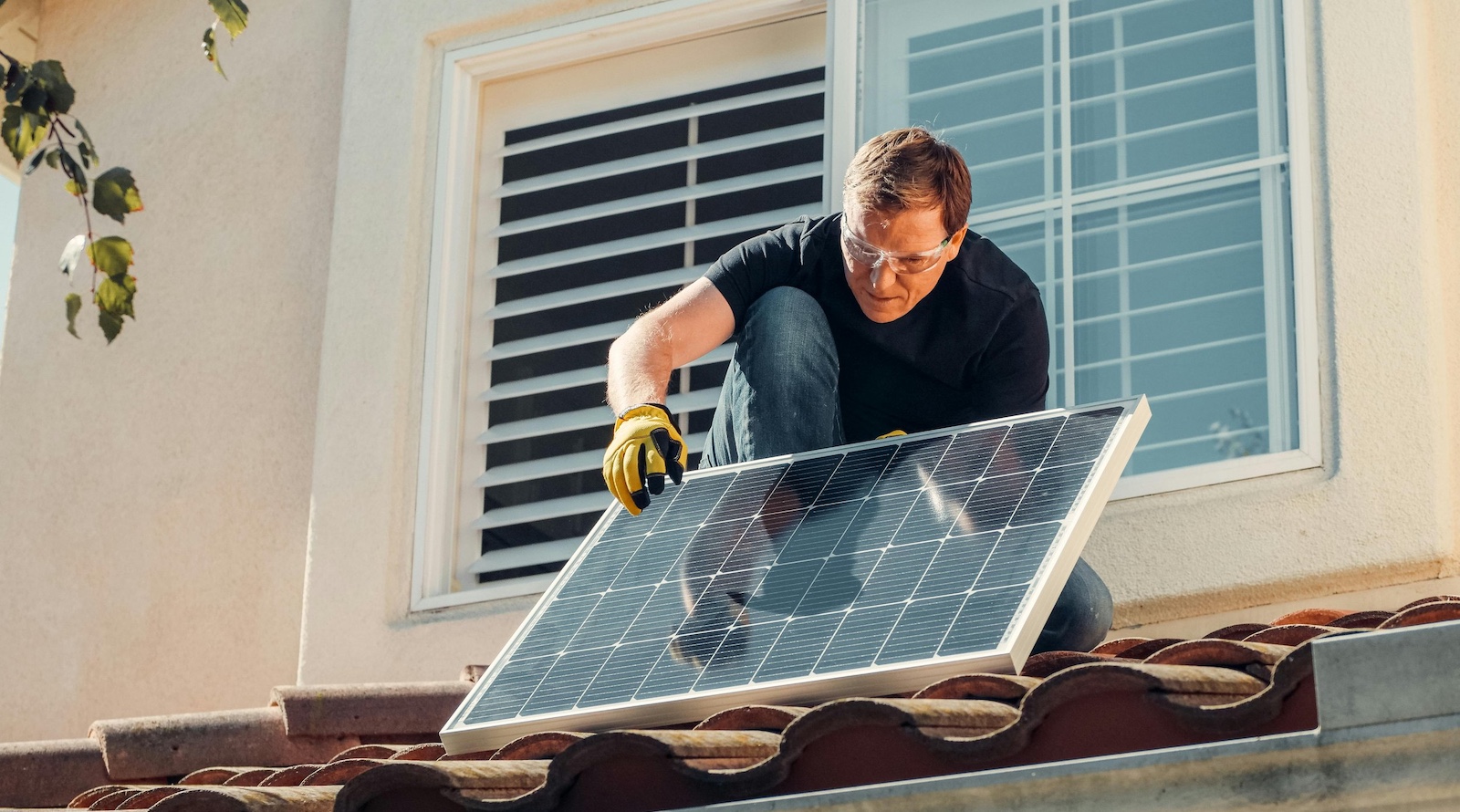
Then Solar United Neighbors, a nonprofit based in Washington, DC, offered to supply West Street Recovery with free solar panels and residential storage batteries for several homes in northern Houston. The panels and batteries were provided at no cost by the Hive Fund For Climate and Gender Justice, whose mission is to make “grants to groups working to accelerate the transition from dirty to clean energy in ways that enter justice, redistribute power, and create healthier, safer, and more prosperous communities.” On its website, it says:
We focus our grant making in the US South — a region whose high pollution levels, abundant opportunities for clean energy expansion, and legacy of environmental justice leadership make it critical for global climate progress.
In partnership with more than 30 donors, a broad array of advisors, and 10 full time staff, Hive Fund provides multi-year, general support to 140 grantee partners, primarily in Texas, Louisiana, Georgia, and the Carolinas — states contributing nearly a quarter of the nation’s climate pollution.
Nearly three quarters of this funding flows to organizations led by Black, Brown, Indigenous, and Asian American and Pacific Islander women and gender non-conforming people — impactful leaders that have historically been overlooked and undervalued by philanthropy. Our flexible and stable funding helps groups build people, economic, and cultural power to achieve and sustain wins and build momentum for increasingly ambitious and just climate action.
Well, there is enough “woke” coding in there to make a MAGAlomaniac’s head explode! Texas Governor Greg Abbott would find such programs anathema to his political agenda. But for people in northern Houston — home to oil, gas, and chemical facilities that spew cubic miles of crud into the atmosphere 24/7/365 — the program was a godsend.