The mission of the Media Research Center is to document and combat the falsehoods and censorship of the news media, entertainment media and Big Tech in order to defend and preserve America's founding principles and Judeo-Christian values. The MRC is a research and education organization operating under Section 501(c)(3) of the Internal Revenue Code, and contributions to the MRC are tax-deductible.
© 2005-2026, Media Research Center. All Rights Reserved.
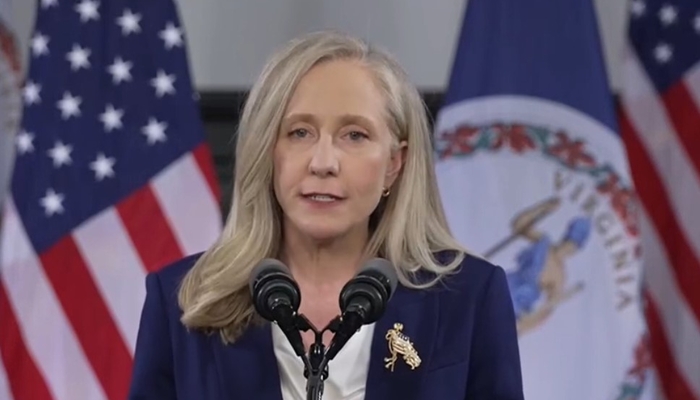
Despite claiming to champion “affordability” and reframing President Donald Trump’s reciprocal tariffs as an expensive “tax” during her rebuttal to Trump’s State of the Union address Tuesday, Democrat Virginia Governor Abigail Spanberger refused to mention the slew of new taxes she’s seeking to inflict on residents of her state.
Spanberger, who took office last month, admitted that she knew affordability was a concern for Virginians and other Americans while she was running for governor:
“As I campaigned for governor last year, I traveled to every corner of Virginia, and I heard the same pressing concern everywhere: costs are too high in housing, healthcare, energy, and childcare. And I know these same conversations are being had all across this country.”
“Since this president took office last year, his reckless trade policies have forced American families to pay more than $1,700 each in tariff costs,” Spanberger said, without citing evidence supporting her claim.
“Meanwhile, the president is planning for new tariffs, another massive tax hike on you and your family,” Spanberger said.
“But, here in Virginia, I am working with our state legislature to lower costs and make the Commonwealth more affordable,” Gov. Spanberger claimed.
However, while tariffs are not actual taxes, the Democrat governor is looking to make life less affordable for Virginians by instituting a host of genuine taxes and tax hikes.
“Democrats Pounce On Virginia Taxpayers,” Americans for Tax Reform (ATR) reported in an analysis of the tax consequences of Spanberger's party having gained complete control of the state’s government: