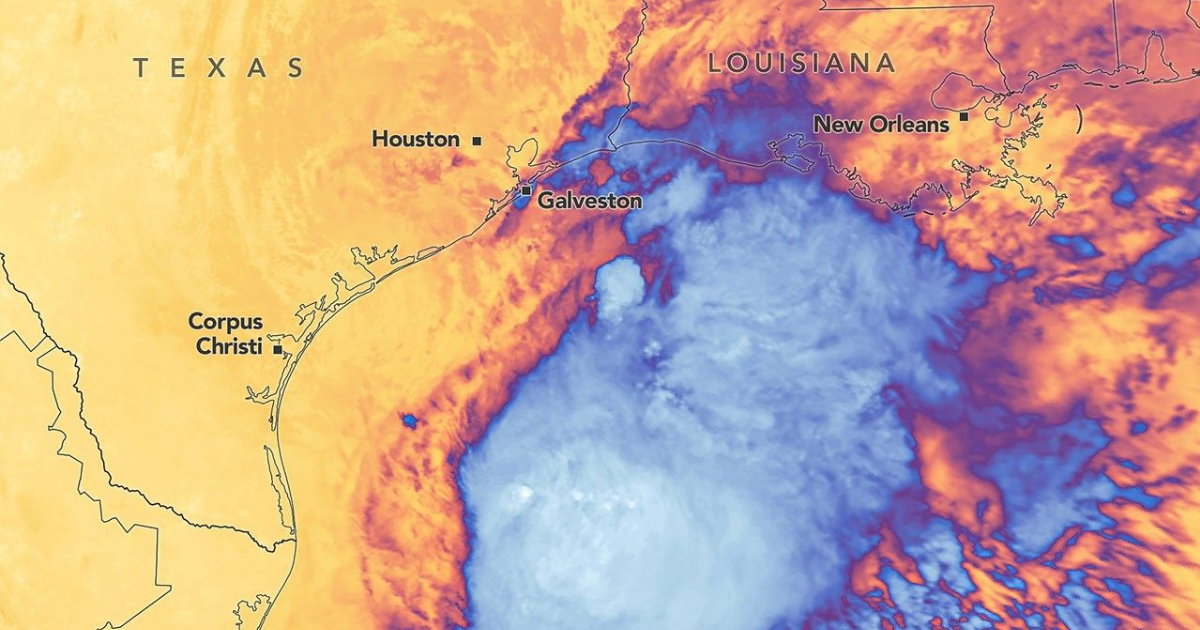
Tropical Storm Arthur may have lost its official title over the Gulf of Mexico on Wednesday night, but by early Thursday the weakened system was still driving deadly floods from Texas to Alabama, prompting the US National Weather Service (NWS) to warn that just six inches of fast‑moving water is enough to knock an adult off their feet.
The sprawling remnants of Arthur were pushing ashore across southeastern Louisiana and sweeping east through the Deep South, with forecasters describing an 'unusually high' risk of life‑threatening flash flooding.
The real trouble began to show itself on Thursday as Arthur's heavy rain bands and severe thunderstorms moved into Louisiana before sunrise.
The NWS logged at least one tornado about 20 miles southwest of New Orleans near Boutte, and another storm that may have spun up a tornado near New Orleans International Airport just before 5 a.m. local time. By mid‑morning, the dangerous weather shield was already expanding into Mississippi and Alabama.
NOAA's Weather Prediction Center placed a rare 'high risk' rating on a corridor from eastern Louisiana to the Florida Panhandle, a Level 4 out of 4 threat for excessive rainfall.
'Widespread and potentially life threatening flash flooding is likely as a result of these double‑digit rainfall numbers,' the centre warned.
Arthur's saturated core was forecast to roll over Louisiana, Mississippi, Alabama, Georgia, the Florida Panhandle and the Carolinas through Thursday and Friday, dropping 5 to 10 inches of rain across a broad area with isolated totals potentially reaching an almost absurd 20 inches.
Cities in the crosshairs included New Orleans and Baton Rouge in Louisiana, Jackson, Hattiesburg and Gulfport in Mississippi, and Mobile, Montgomery and Birmingham in Alabama.
Later, the focus shifts towards Atlanta, Macon and Augusta in Georgia and on to Columbia, Charleston and Myrtle Beach in South Carolina, before finally raking Charlotte, Wilmington and Cape Hatteras in North Carolina.
By late week, the phrase 'Storm Arthur danger' stopped feeling theoretical for people living along the Gulf Coast. The remnants of the storm had already torn through buildings, flooded at least 200 homes in rural Louisiana and triggered a wave of water rescues in Mississippi.