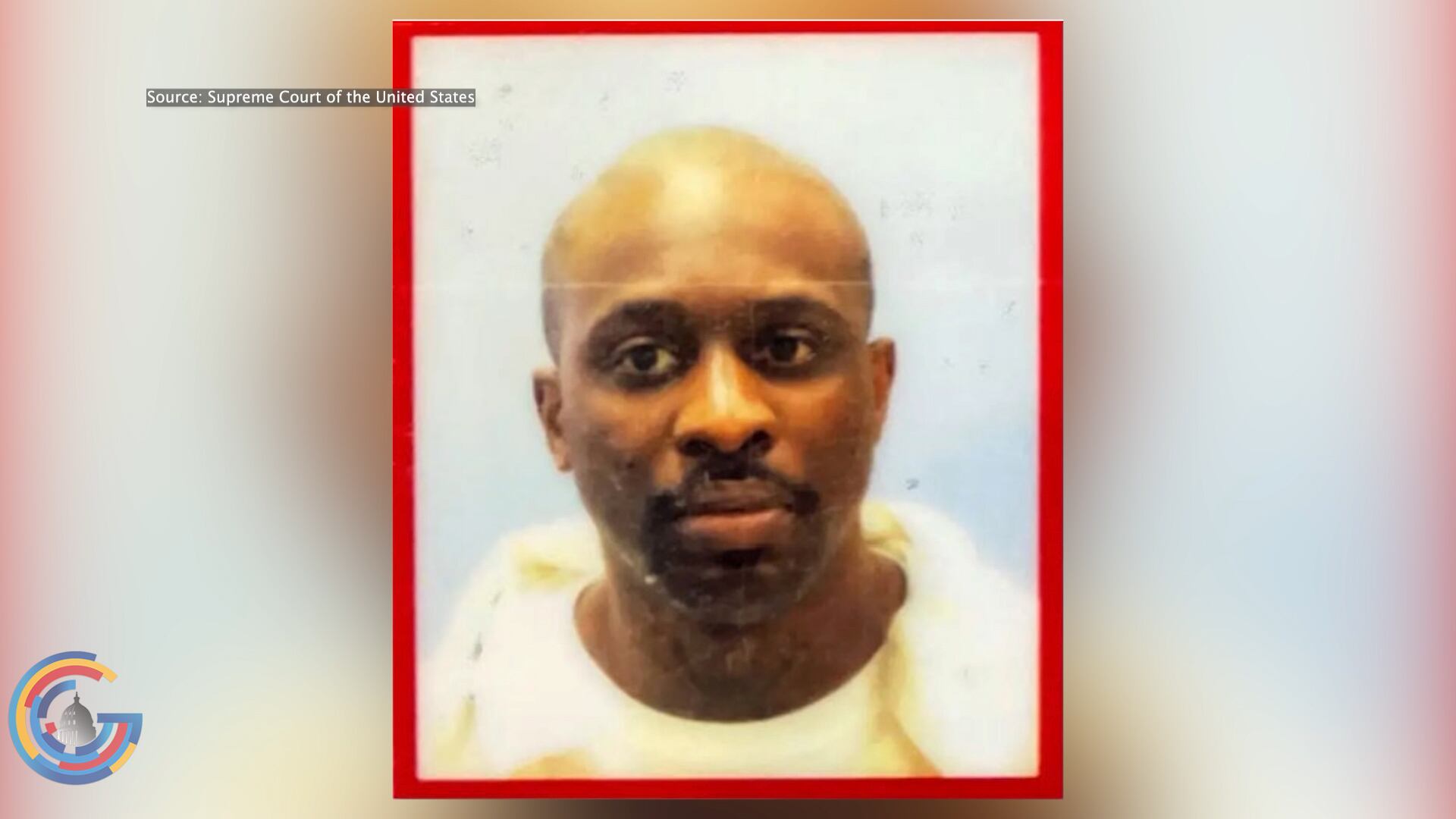
WASHINGTON (Gray DC) - The Supreme Court heard arguments on Monday in a religious rights case involving a Rastafarian man who is trying to sue Louisiana prison officials after they forcibly shaved his dreadlocks.
The case centers on Damon Landor, a devout Rastafarian who argues he should be able to sue Louisiana prison officials after they cut his hair against his religious beliefs. The key question before the court is whether Landor can seek monetary damages under the Religious Land Use and Institutionalized Persons Act, also known as RLUIPA.
Landor follows the Nazirite vow, which forbids him from cutting his hair. For nearly two decades, he let his hair grow. But towards the end of a five-month prison sentence he had to serve for drug possession, his lawyers said prison officials shaved them off.
“Even though they were made aware that other courts had protected this prisoner’s right to grow his hair long, to grow dreadlocks, they shackled him to a chair and shaved his head,” said Richard Garnett, a University of Notre Dame Law Professor.
During arguments on Monday, Landor’s attorney, Zachary Tripp, argued that damages are essential for enforcing the law.
“The whole point of individual capacity is to have damages. Damages are presumptively available against a non-sovereign and without damages, officials can literally treat the law like garbage,” he said.
State officials said that Landor’s argument would dramatically expand congressional power and is not part of the law.
“We don’t believe that Congress ever made it clear that states were agreeing to, to have to pay money damages for violations of RLUIPA,” said Liz Murrill, the state’s attorney general.
Several of the court’s conservative justices appeared skeptical of Landor’s claims. Associate Justice Neil Gorsuch said Congress could have written a clearer statute if it intended to allow such lawsuits.
“Congress could have easily written a statute that does this and says that those individual officers have to agree with the federal government to be bound under federal law… My concern is it had it didn’t do that,” Gorsuch said.