The bus has always been a universal symbol of one’s place in society especially in the days of desegregation in schools. The bus is where a country admits who belongs and who does not. It was where Rosa Parks staged her historic protest.
My father was thrown off buses in Washington DC for not being white. I was put on a bus and sent to an all-Black high school in the name of desegregation in the ‘70’s. The idea then was to merge black and non -black children into a common forum. Most people in my school did not know where India was and assumed we lived in a “teepee”.
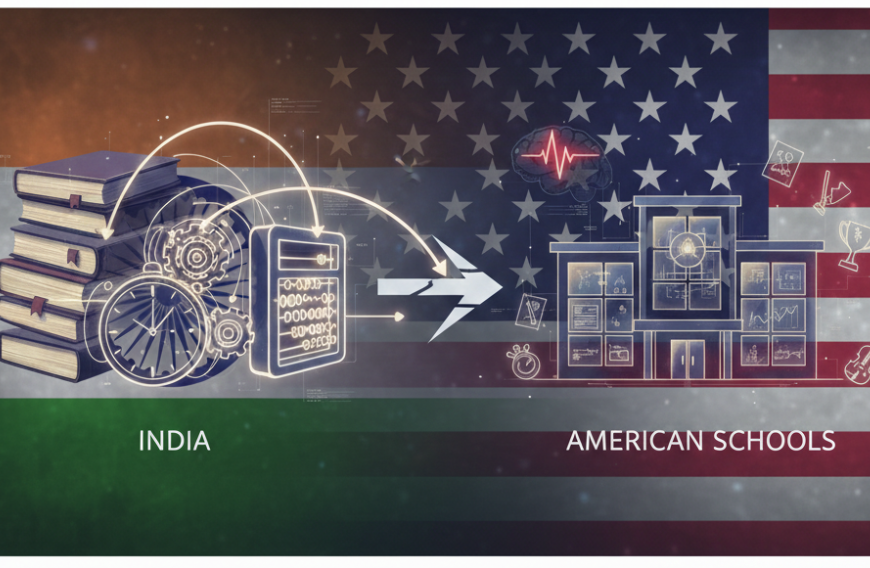
Many Indians, now, in the US are not familiar with the challenges of race decades from decades ago. Despite those struggles, the Indian diaspora has endured and excelled in most areas of professional life. Most people know where India is now and no longer think we live in teepees.
Our success has not been silent by any means. And now maybe so much so that there is a sense of resentment or anxiety created by that integration later that’s starting to show up in schools decades later.
Sreedhar Potarazu: Healthcare cracking, lawmakers scrambling, consumers falling: The demise of US healthcare as we know it (January 30, 2026)
Helen Andrews, a conservative writer recently put the tension plainly in a tweet
“Asian immigrants are often openly contemptuous of American education norms-like that Vivek tweet—because they think the only reason someone would opt out of grind culture is because they’re lazy and stupid. Actually, American education is traditionally quite demanding, it just tells you to find your passion first and then push yourself to the limit of your talents, as opposed to indiscriminately maximizing test scores and then picking a high-status career. Personally I think our way yields better results, but grind culture is absolutely going to kill it off soon if immigration continues.”
What makes her observation uncomfortable is not the politics but the reality of the tension that we are not aware of. She isn’t accusing Indian (Asian) students of working too hard; she’s pointing out that when one culture treats effort as an end in itself and another treats effort as a means toward self-development, coexistence becomes unstable. Indians may see Americans’ interest in exploration as laziness; Americans may see relentless grit by Indians as obsessive and narrowly focused.
It’s no secret that Indian homes tend to focus on hard work with very little room for play, not because pleasure is unimportant, but because it is deferred. In an Indian household sitting idle is considered a waste of time, especially since the children of their friends may be high achievers. The Indian mindset is straightforward: work first, secure your future, enjoy life later. Delay gratification.
American homes also care deeply about academics, but they deliberately pair schoolwork with sports, music, clubs, and independence. Athletics in this country isn’t optional or ornamental; it’s considered a vital part of the childhood experience. Band, theater, debate, summer camps- these are seen as essential to growing up, not distractions from success.