We’re sorry, this feature is currently unavailable. We’re working to restore it. Please try again later.
Add articles to your saved list and come back to them any time.
So, the acting chief executive and the State Library board are at war with the librarians. Again. This has been going on, in one shape or another, since about 1913. But this time, it feels as if a tipping point has been reached, or has even been passed. The issue now is whether the State Library is still a library. Or has it become something else?
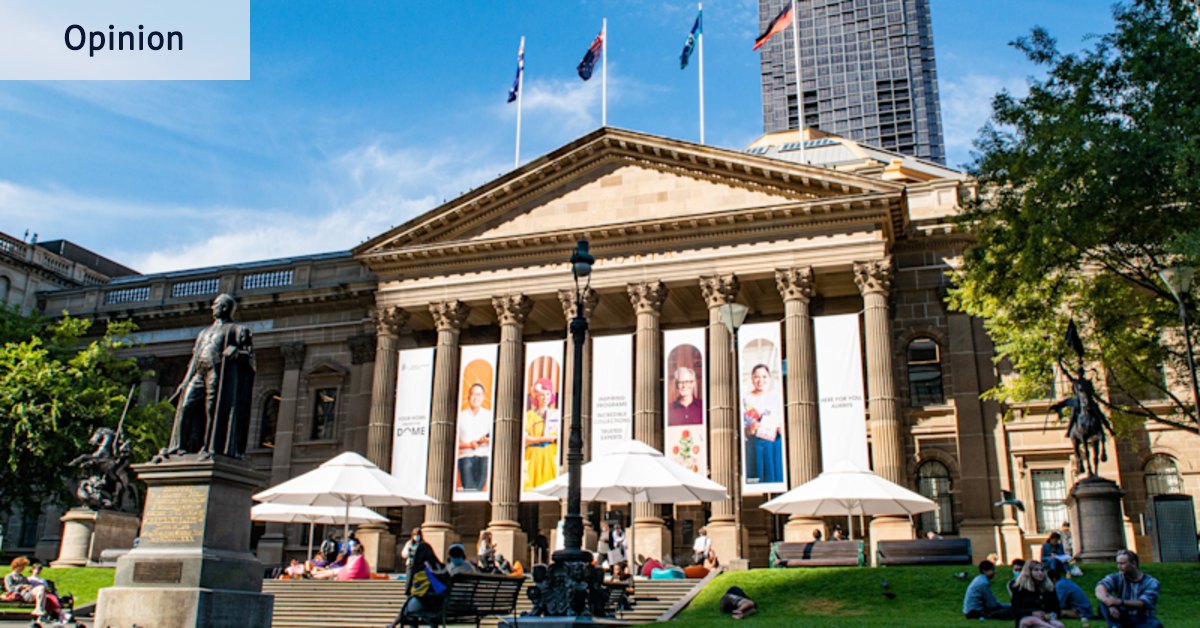
It has certainly become a destination, with its own train station. But when you get off at State Library station, have you arrived at our great public library or just at a heritage building?
Changes at the State Library have prompted outcry from writers, researchers and librarians.
The banner-bedecked facade promotes exhibition spaces. The impression is confirmed by the phalanx of guides who greet you as you enter and the promotion of “exclusive” $39 tours. Little to suggest it might also be about books, reading and research.
What has brought out the hundreds of angry historians, researchers and writers is the library board’s plan to redeploy a significant number of reference librarians. This follows an earlier reduction of their numbers. The purpose of the change, according to the plan, is to release more funds for the digital displays that attract visitors.
Even experts need help in accessing the immense collections. It is the reference librarians who provide this. While the number of scholarly users has always been small at any one time, the product of their research has often changed the way we understand ourselves. How do you measure that? It is simply impossible to predict what future researchers might discover from the collections.
Rare items in libraries are like rare plants – we don’t know how useful they might be. Shifting staff critical to research reminds me of an earlier idea that long ago sank: that unused rare books should be sold off to help library revenue.
A board spokesperson has said: “We are currently reviewing how best to support the needs of our visitors, users, and the community.” Note the order of words: visitors first, users second. For management, the main purpose of the library is to service visitors.