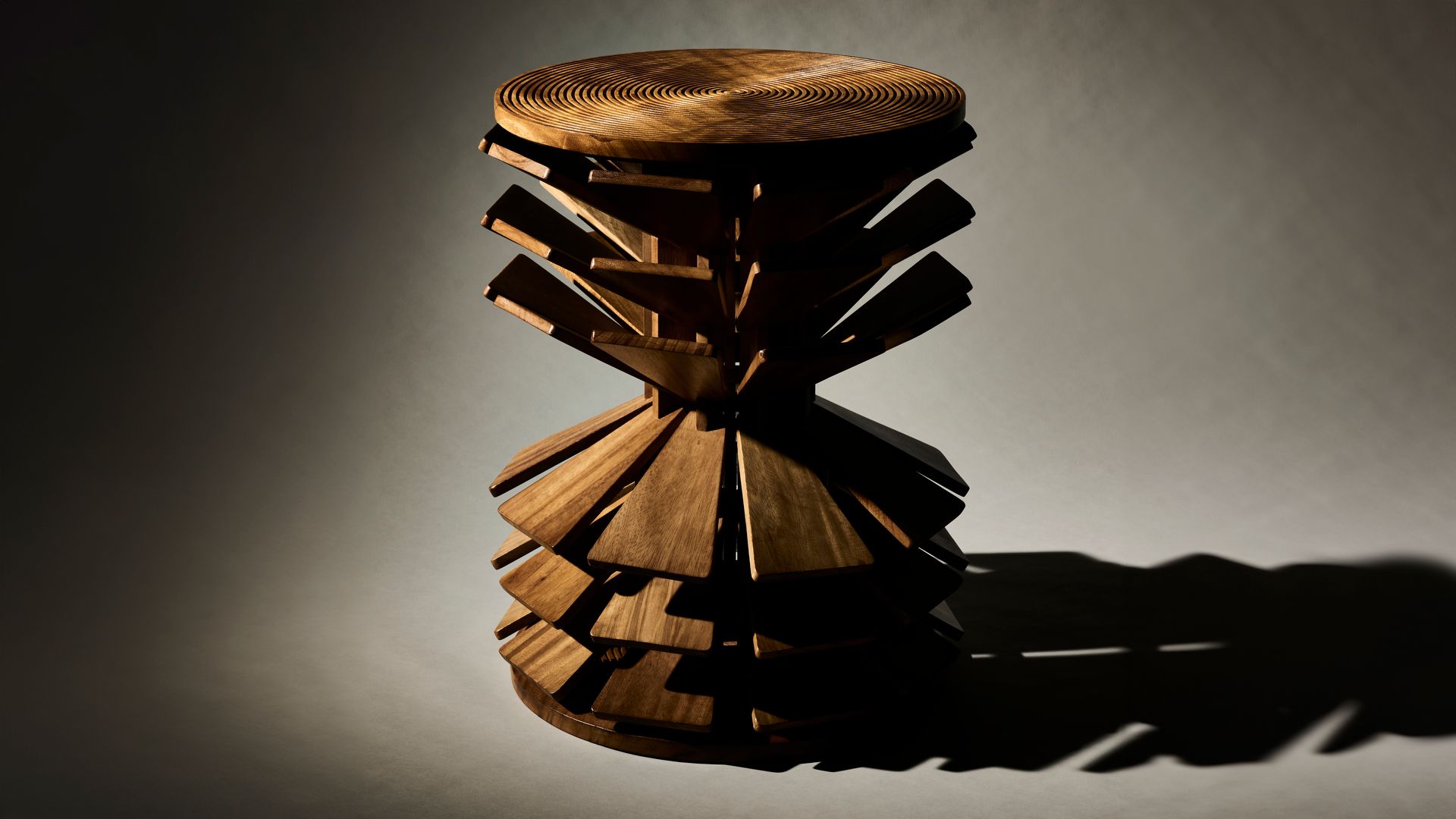
Wallpaper* Future Icons: based between Lagos and Dakar, Toluwalase Rufai and Sandia Nassila of Salù Iwadi Studio are inspired by the improvisational nature of African contemporary design
When you purchase through links on our site, we may earn an affiliate commission. Here’s how it works.
Exploring the relationship between materiality, craftsmanship, and cultural memory through collaboration with artisans across the African continent, Toluwalase Rufai and Sandia Nassila set up Salù Iwadi Studio as ‘a practice grounded in cultural depth and material inquiry aiming to reclaim and reinterpret African narratives through material and form, offering them renewed presence in the global design conversation.’
Toluwalase Rufai and Sandia Nassila of Salù Iwadi Studio
Rufai studied architecture at Howard University, Washington DC, and returned to Lagos to practice, while Nassila’s design career started in hospitality, working between Africa and Europe to create spaces and lifestyle concepts where narrative and experience merged.
‘Our journeys into design may have begun along different trajectories but converged in a shared conviction that design holds the capacity to preserve memory, embody meaning, and articulate identity,’ the pair explain. ‘It becomes a vessel for connection, bridging the past with the future and creating a medium through which people locate themselves within culture and place.’
Their work is inspired by boundary-pushing creatives, as they shaped their creative identity by observing architects like Zaha Hadid (‘her work taught us that form can be fluid, emotional, and unapologetically bold, that architecture can move like music and speak like sculpture,’ they say), Bjarke Ingels and Ma Yansong. ‘They have inspired us for their ability to balance utopia and pragmatism, to imagine cities and spaces that are both visionary and deeply human,’ they say. ‘They remind us that architecture is not just about shelter, but about possibility.’
But references for the pair come from beyond architecture, as they mention music as central to their creative process, as they look at artists like James Blake, Kanye West, André 3000, and Solange for the ways they ‘construct immersive worlds, where sound, image, and space are inseparable.’ Their inspirations, they note, all share a common thread: with their work, they create systems, connect sensory, cultural and spiritual missions. ‘That’s the kind of depth we aim for in our own practice,’ they share.
Living between Lagos and Dakar has shaped their creative outlook and output: those cities, they explain, have taught them to ‘pay attention to the poetry of the everyday.’ The way design naturally emerges from daily life, the improvisational nature of much contemporary design in Africa has been teaching them about adaptability and functionality, and working alongside local craftspeople has helped shape their work.
Collaborations with metalworkers in Dakar and bronze casters in Grand-Bassam, Côte d’Ivoire, have deepened the pair’s understanding of materials and processes (‘and patience’, they add). ‘These encounters remind us that design is not only made in studios, but also in workshops, markets, and conversations. Travel and research continue to shape our perspective: each journey expanding how we see the relationship between craft, culture, and contemporary form.’