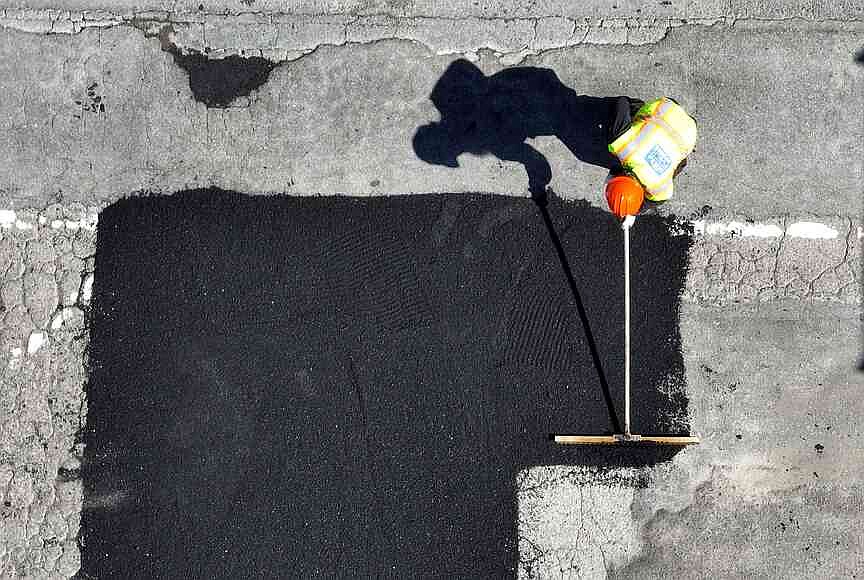
Across the country, potholes are more than a seasonal nuisance. They are a visible symptom of aging roads and bridges that many state and local governments say they cannot afford to fully maintain.
From local streets in small towns to major urban corridors, transportation agencies are grappling with deferred maintenance, rising construction costs and limited revenue streams. Even as federal infrastructure dollars increased in recent years, some transportation officials and infrastructure experts say the need continues to outpace available funding.
Gas taxes, which historically have largely gone to road repairs, have not kept up with inflation or shifts in vehicle efficiency, including the growing use of fuel-efficient and electric vehicles. The federal gas tax, at 18.4 cents per gallon, has remained unchanged since 1993. President Donald Trump has proposed temporarily suspending the federal gas tax to provide relief from surging fuel prices because of the Iran war.
"What states end up doing, partly because resources are limited, is they're sort of triaging the system," said Rocky Moretti, the director of policy and research at TRIP, a nonprofit research group focused on transportation issues.
For drivers, the cost of deteriorating roads often becomes clear only after damage occurs. At a time when many Americans are already feeling squeezed by fluctuating gas prices, tire blowouts, bent rims and suspension repairs can turn potholes into costly and unexpected expenses.
At the same time, some state and local governments are struggling to keep up with repairs while exploring new technologies -- including artificial intelligence-powered road monitoring systems, sensors and camera-equipped vehicles -- to identify road damage and respond more efficiently.
Federal transportation data shows that U.S. road conditions have changed little during the past three decades. Nationwide, the share of roadways rated in acceptable condition peaked at about 91 percent in 1999, but has since declined and averaged around 80 percent in recent years -- leaving roughly 1 in 5 roadways in poor condition.
In 2024, the latest year with available data, the share of road miles rated in poor condition ranged from 34 percent to 89 percent in the five states or jurisdictions with the worst roads: the District of Columbia, Rhode Island, Hawaii, California and New Mexico.
By comparison, the share of roads rated in acceptable condition ranged from 94 percent to 97 percent in the five best-performing states: Kansas, Tennessee, Indiana, Wyoming and Vermont.
With spring bringing warmer weather and heavier traffic, many transportation agencies have ramped up seasonal repair efforts by launching "pothole blitzes" aimed at rapidly filling road damage ahead of the busy summer driving season.