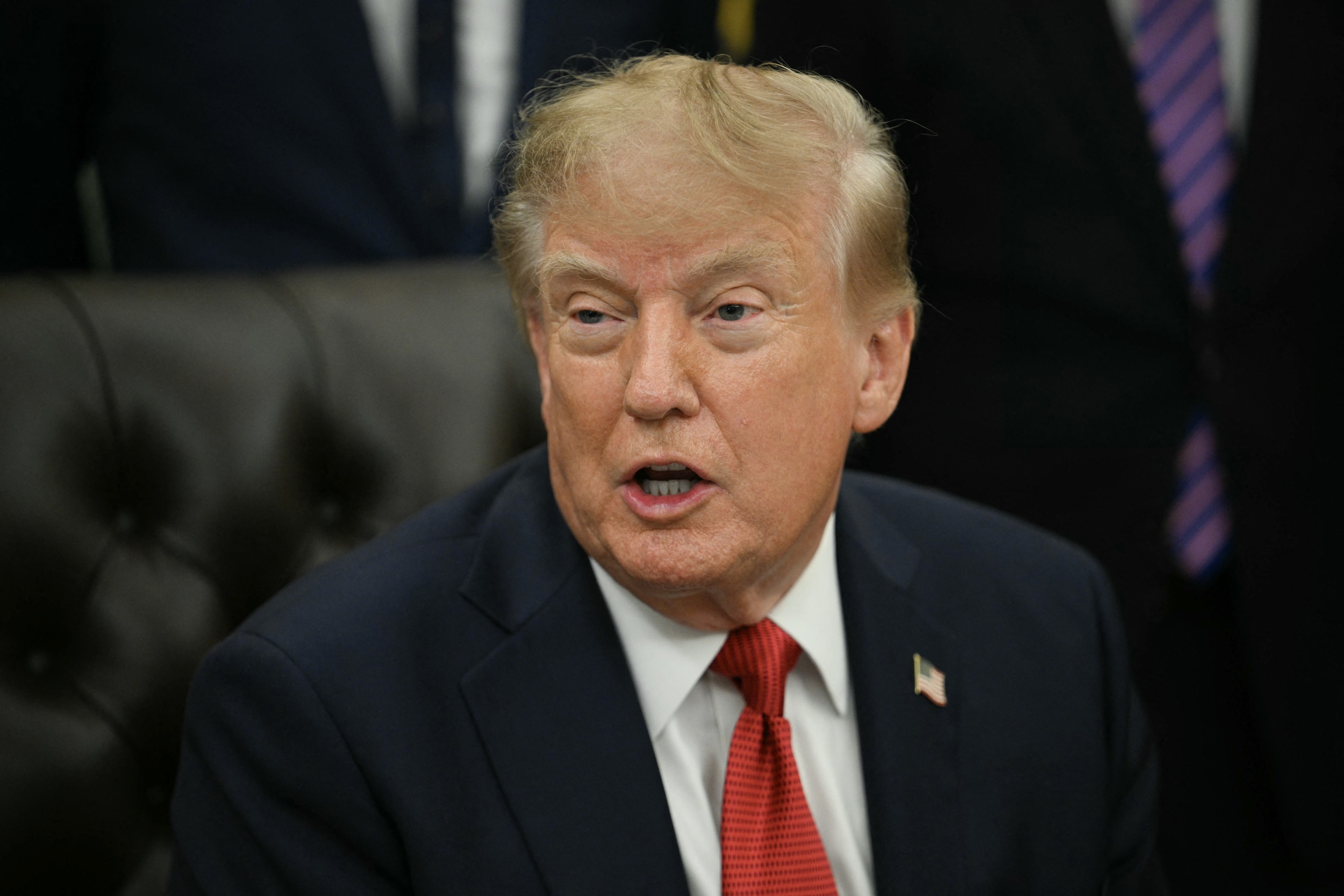
President Donald Trump on Friday signed into law the most sweeping package of economic measures against Russia since the full-scale invasion of Ukraine began, a bill that reaches far beyond Moscow itself by authorizing tariffs of up to 100 percent on the countries that buy the most Russian oil and natural gas.
The Lindsey O. Graham Sanctioning Russia and Iran Act of 2026, announced by the White House on Friday, targets senior Russian officials including President Vladimir Putin, the country's financial institutions, its defense industry and the aging tanker fleet that has kept Russian crude moving around existing restrictions. The Senate passed the measure 86-11 in August, and the House followed 262-159 on Wednesday after months of procedural delay. The administration formally backed the legislation, saying it would strengthen Washington's hand in pressuring Russia toward ending a war now in its fifth year.
The law's architecture works in two directions at once, and understanding both is essential to grasping why it unsettles capitals well beyond Moscow.
Inside Russia, the act authorizes sanctions on government officials, banks and companies involved in developing Russian pipelines and exporting weapons, and it permits a blanket tariff of up to 500 percent on Russian goods entering the United States — a largely symbolic figure, given how little direct trade survives between the two economies, but one that forecloses any quiet normalization of commerce while the war continues. More consequentially, it takes aim at the workaround economy Russia has built since 2022. Hundreds of aging tankers, sailing under obscure flags with opaque ownership and insurance arrangements, have carried Russian crude to buyers willing to ignore Western price caps. The new law gives Washington authority to sanction those vessels, the firms that operate them and the ports and intermediaries that service them, tightening a net that has leaked badly for four years.
Outside Russia, the act directs the president to impose tariffs of up to 100 percent within 30 days on goods from countries ranking among the five largest purchasers of Russian crude oil or natural gas, along with nations that begin buying Russian energy or help Moscow evade sanctions. The president retains significant discretion to waive or delay those penalties, and the tariff authority expires after five years. The measure also extends the Iran Sanctions Act of 1996, which imposes secondary penalties on non-U.S. companies doing business with Tehran and had been set to lapse this year, through 2031 — a provision that folds the Russia bill into Washington's parallel confrontation with Iran and ensures the legal machinery of secondary sanctions survives well into the next decade.
That combination — mandatory deadlines paired with presidential waivers — reflects the unusual bargain behind the bill, and the unusual man behind its name. The package began in 2025 as a sanctions push led by Sen. Lindsey Graham of South Carolina, who assembled dozens of Senate cosponsors for what he memorably called the "sanctions bill from hell." For more than a year the legislation sat in limbo, held back while Trump pursued his own track of personal diplomacy with Putin, alternating tariff threats with summit overtures in search of a negotiated settlement. Graham, a close ally and frequent golfing partner of the president, pressed the case that pressure and diplomacy had to run together, not in sequence.
He did not live to see the result. Graham died unexpectedly in July, shortly after returning from a trip to Ukraine, and his death changed the bill's trajectory. Colleagues who had deferred to the White House's timing began treating passage as a memorial obligation, and the administration — its settlement efforts stalled and the war escalating on multiple fronts — dropped its resistance and formally endorsed the renamed act. Sen. Richard Blumenthal of Connecticut, the Democrat who drafted the bill alongside Graham, shepherded it through to final passage. What emerged is a statute that functions as Graham's final legacy item, signed by a president who had spent a year keeping it on ice.
The vote margins were lopsided, but the coalition behind them scrambled normal party lines. Republicans supplied the driving force, joined by dozens of Democrats who saw the bill as overdue pressure on the Kremlin. A vocal group of Democrats broke the other way — not over Russia policy, but over handing Trump another expansive trade weapon. House Minority Leader Hakeem Jeffries, laying out his opposition on the floor, asked why Congress "would give this president unfettered authority to visit more tariffs on the world that will have an adverse economic impact on the American people." His objection captured a real tension in the bill's design: the same discretion that lets the president calibrate pressure on Moscow also lets him aim the tariff authority at targets Congress never had in mind.
The measure also overcame sustained resistance from business lobbying groups including the U.S. Chamber of Commerce and major retailers, who warned that the administration could leverage the new authority to broaden its tariff agenda well beyond Russia, raising costs for American importers and consumers already absorbing the price effects of the Gulf conflict. Congress retained oversight procedures for major changes to the sanctions regime — a check lawmakers from both parties insisted on keeping, and a quiet statement that the legislative branch trusts the statute more than it trusts any president's day-to-day judgment.
The countries with the most at stake are not in Europe's east but in Asia. China and India rank among the largest purchasers of Russian energy, and the top-five list also includes U.S. allies such as Turkey. Beijing has rejected unilateral sanctions targeting its trade with Russia and has given no indication it intends to curb purchases under threat of tariffs; Chinese refiners have been among the principal beneficiaries of discounted Russian crude since European buyers withdrew. New Delhi has said it will continue to prioritize energy security and diversified sourcing, though Indian refiners already reduced some Russian purchases earlier this year under pressure from Washington, and the calculus in Delhi has shifted as Gulf supply disruptions push global prices higher and make every barrel — Russian or otherwise — harder to replace.