High-stakes talks between the United States and Iran have ended without a deal, and Iran’s chief negotiator, Mohammad Bagher Ghalibaf, has blamed the US for the failure of talks held in Islamabad, Pakistan, during a two-week ceasefire in their war.
Ghalibaf, the speaker of Iran’s parliament, said on Sunday that his delegation raised “forward-looking” initiatives during the talks on Saturday but the US failed to gain the trust of the Iranian delegation.
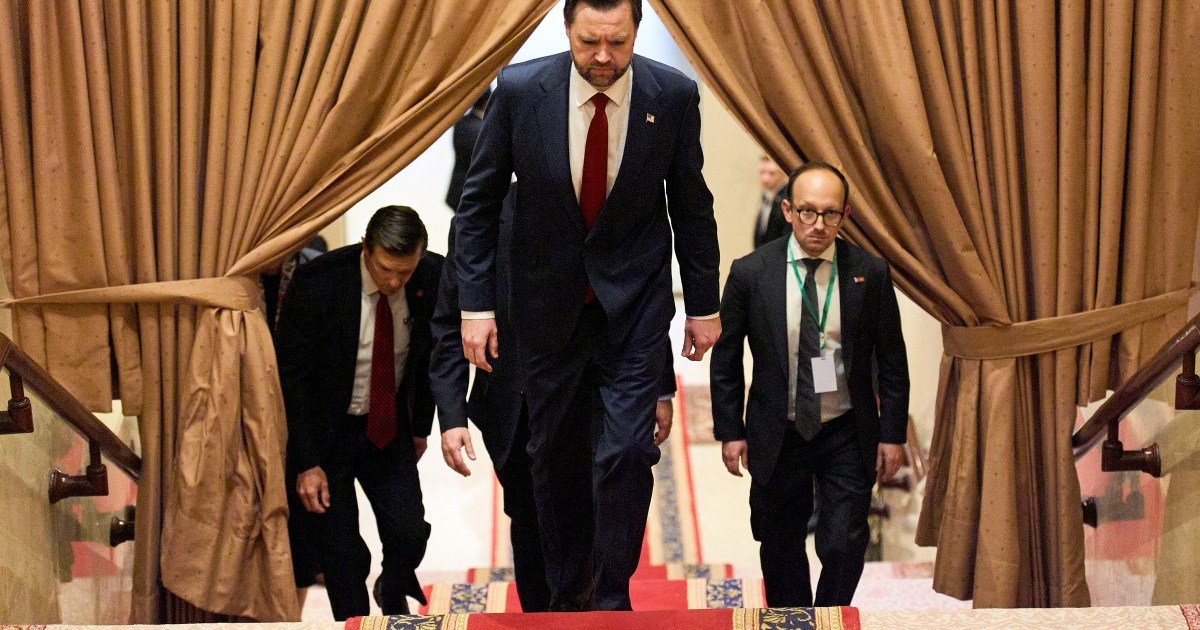
US Vice President JD Vance, who led the US delegation, said earlier that the talks ended without a deal. “The bad news is that we have not reached an agreement, and I think that’s bad news for Iran much more than it’s bad news for the United States of America,” he said six weeks into the US-Israeli war on Iran.
The talks – the first direct engagement between the two countries at this level since the 1979 Iranian Revolution – exposed deep divisions on core issues, including Iran’s nuclear programme and the Strait of Hormuz, which in effect has been under Tehran’s control since the war began on February 28.
The de facto blockade of the waterway, through which one-fifth of global crude oil supplies pass, has caused a global energy crisis and rattled stock markets globally.
Al Jazeera’s Kamal Hyder, reporting from Islamabad, said the talks mediated by Pakistan, which went on for more than 21 hours, were “neither a breakthrough nor a breakdown”.
Here’s a look at what each side said and what the key sticking points between Tehran and Washington are:
The US framed the lack of a breakthrough primarily around Iran’s alleged refusal to meet its core demand: a firm commitment not to develop nuclear weapons.
“We need to see an affirmative commitment that they will not seek a nuclear weapon and they will not seek the tools that would enable them to quickly achieve a nuclear weapon,” Vance told reporters at a news conference.
“That is the core goal of the president of the United States, and that’s what we’ve tried to achieve through these negotiations.”