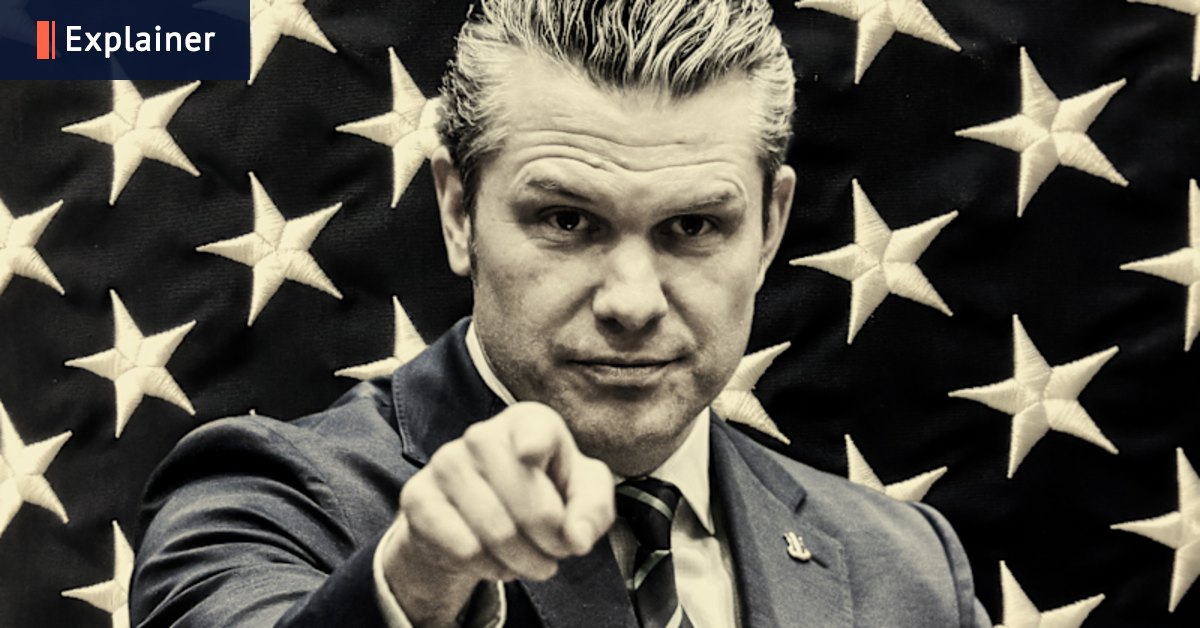
It’s been a busy year for Hegseth, Trump’s unconventional pick for secretary of war. Now, with the war in Iran, he’s firmly in the spotlight. Where did he come from? How is he performing so far?
You have reached your maximum number of saved items.
When Donald Trump announced his second-term cabinet just over a year ago, there were more than a few quirky picks in the mix. Not least Robert F. Kennedy Jr, the vaccine sceptic, for health secretary; Peter Navarro, recently released from jail, having served several months for contempt of Congress, as senior counsellor for trade and manufacturing; and Linda McMahon as education secretary, previously best known as the co-founder of a professional wrestling organisation.
Possibly Trump’s most contentious call of the lot, however, was Pete Hegseth for secretary of defence (a role that would be renamed secretary of war). Hegseth, a decorated veteran and right-wing author whose most recent career reinvention had been as a host on conservative TV channel Fox News, had no previous expertise in government and what little experience he’d had in leadership roles, in not-for-profits, had been tarnished by claims of mismanagement and unprofessional behaviour.
This and other dirty linen was aired during his Senate confirmation hearings, where his personal life, including a history of infidelity, was judged fair game in the context of whether or not he could be trusted to make life-or-death decisions.
Then, two months into the job, came “Signalgate”, the now-infamous group chat in which national security leaders, Hegseth included, blithely discussed classified information, unaware that the editor-in-chief of The Atlantic was also in the conversation. Surely, said his critics, this would be the last straw.
Flash forward a year, though, and Hegseth, 45, is not only still in the job but appears to be flourishing, both as Trump’s wingman in the current war in Iran and in Trump’s war on diversity and “woke” beliefs.
A devout Christian heavily tattooed with religious and war-fighting iconography, Hegseth says there is no place for “toxic ideological garbage” in the military. “No more identity months, DEI offices [diversity, equity and inclusion], or dudes in dresses. No more climate-change worship. No more division, distraction or gender delusions. No more debris. As I’ve said before and will say again, we are done with that shit.”
He has criticised generals for being “fat”, cracked down on facial hair and said women in combat roles should be subject to the same fitness criteria as men. His messaging can be crude, even gleeful. “Death and destruction from the sky all day long,” he bragged to reporters about the strikes on Iran. “We are punching them while they’re down, which is exactly how it should be.”
Yet despite his inexperience and naivety, he is putting runs on the board for Trump’s administration: the operation to remove Venezuelan leader Nicolas Maduro, whatever you make of its motivation, was a tactical success; Iran, so far, has proved to be a largely one-sided contest, even if the ultimate outcome is yet to be determined. Is Hegseth proving his naysayers wrong?