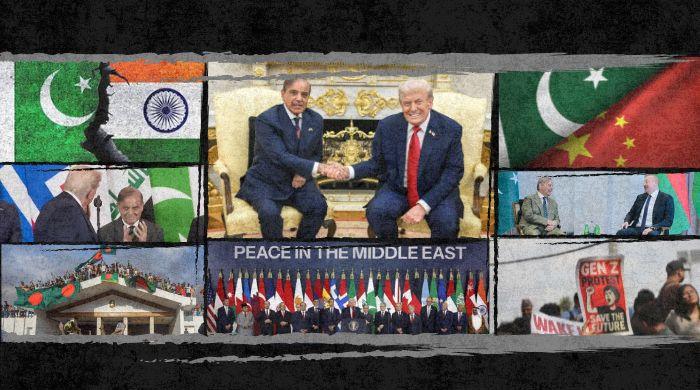
With shifts unfolding across region, Pakistan will have to handle each development with caution
The global geopolitical shift began in 2022 when Russia invaded Ukraine, reshaping Europe and forcing major powers to take sides. In South Asia, the change started the same year as Gen Z protesters toppled Sri Lanka’s Rajapaksa government. Their influence has grown since. In October 2023, Hamas attacked Israel, triggering the Gaza war and setting off wider geopolitical tremors across the Middle East. By 2024, Gen Z protesters had brought down another South Asian government — Hasina Wajid’s pro-India administration in Bangladesh.
This year, the changes in the global geopolitical landscape have escalated. However, it is most noticeable in South Asia and the Middle East. What mainly led to this change was the arrival of the Trump administration 2.0 in the United States. Soon after assuming the Oval Office, American President Donald Trump stunned the world with radical actions. Some observers had seen them coming, but the force they came with was overwhelming. He unleashed a plethora of executive orders and other measures aimed at improving American lives, in line with the slogan "Make America Great Again", also known as MAGA.
This opened floodgates of unwanted changes across the globe — unwanted because the US had been acting quite the contrary before, and countries across the world were familiar with that US, not the one led by Trump in his second term. Pakistan found itself confused in the beginning, unsure whether the new Trump administration would be welcoming, as Trump levied tariffs and launched a wave of insulting attacks against both his allies and foes, but Pakistan had no other option than to tread carefully and adapt to Trump’s leadership style.
The question is: where does Pakistan stand in this changing geopolitical landscape? Farhan Jaffery, a global affairs expert and consultant at the Midstone Center for International Affairs, told Geo.tv, "Pakistan stands at a crossroads in a rapidly evolving South Asian geopolitical landscape, one that presents not only challenges but also substantial opportunities for national renewal and strategic leverage."
Pakistan, a country of approximately 250 million people and the only Muslim nuclear power, has long benefited from its strategic location and the region’s geopolitics. It remains largely underdeveloped and politically unstable, and came very close to default in 2023, saved only by a bailout package from the International Monetary Fund (IMF). Nobody believed that a country in such poor shape would ever receive the kind of global importance it enjoys now.
A brief but decisive war with India in May this year changed Pakistan’s geopolitical fortunes and pushed it back into strategic prominence, while India suffered only humiliation. Trump, once Indian Prime Minister Narendra Modi’s close friend, mocked India repeatedly, bringing up how he stopped the war between the two countries and how jets “brand new beautiful jets” were downed. The downing of the fighter jets has become a point of embarrassment for India. Trump also imposed heavy tariffs on India and raised the fee of the H1B visa to $100,000, dealing a major blow to the country as most such visa holders in the US are Indians.
They May war may have ended with a clear victory for Pakistan, but it does not mean India’s hegemonic designs have also been put to rest forever.
Ambassador Dr Major General (retd) Raza Muhammad, an international and geopolitical affairs expert and former president of the Islamabad Policy Research Institute (IPRI), said, "India cannot be trusted; therefore, we must remain prepared — as ever — to swiftly and lethally respond to any acts of aggression from India."
"Regardless of India’s aggressive designs and the animosity embedded in the unjust Radcliff Award, Pakistan has persevered, progressed, and defended itself very well over the past several decades.