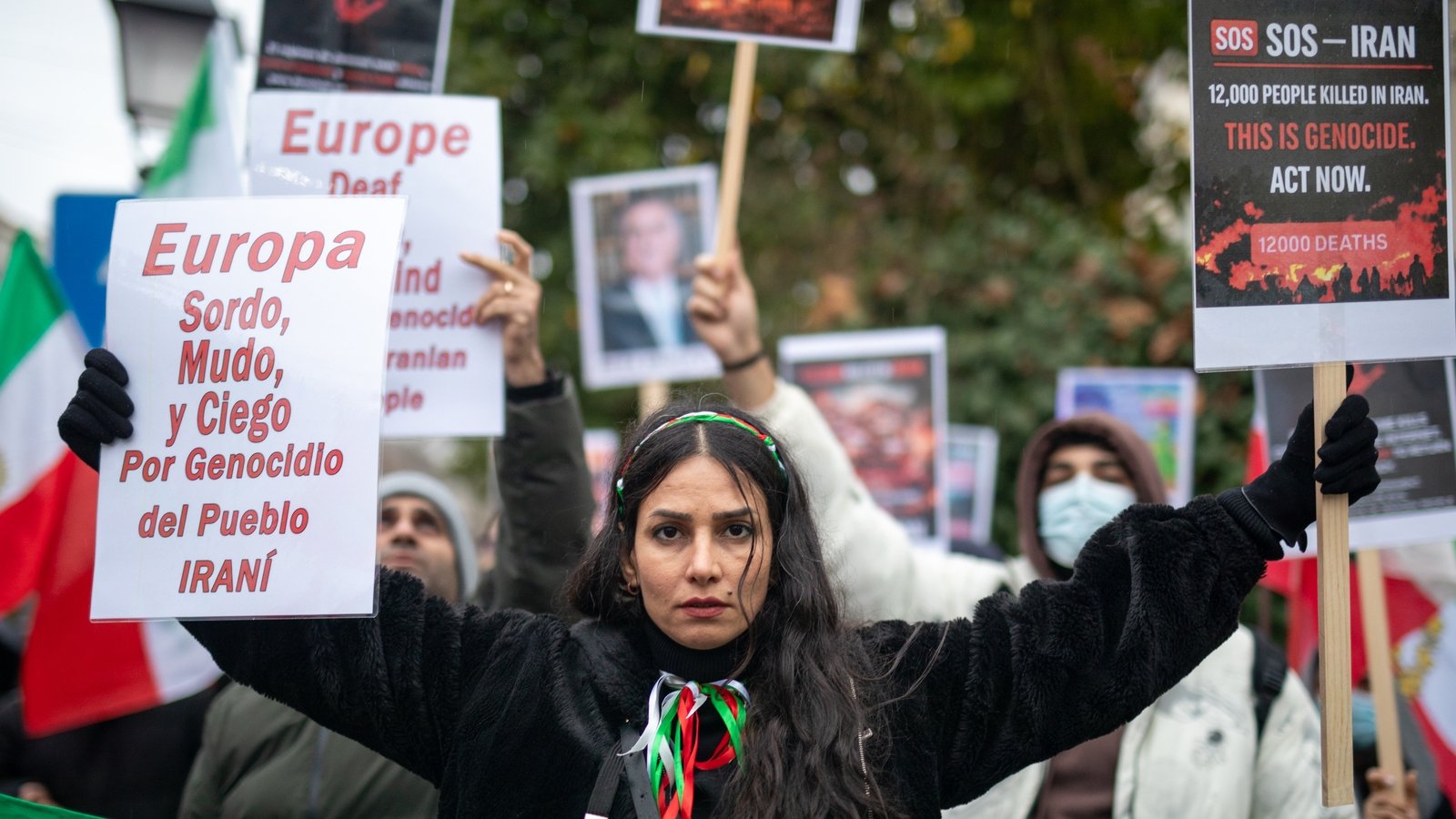
In recent days, thousands of Iranian protesters were gunned down by their rulers, according to rights groups.
Nobody is quite sure how many. A government-imposed internet blackout ensured that few details emerged.
But we do know that this is the most serious challenge to the Islamic regime since it took power in 1979 - bigger than the 'Green Revolution' in 2009 and the 'Woman, Life, Freedom' demonstrations of 2022 - prompting observers to wonder if this could be the beginning of the end for Iran's clerical rulers.
"With each suppressed protest movement, the Islamic Republic of Iran has turned more of its people against it," said Ellie Geranmayeh from the European Council on Foreign Relations.
What comes next, though, is a vexed question, with wildly differing opinions on how the rest of the world should react.
On Thursday, two Iranian dissidents made an impassioned plea to the UN Security Council for intervention.
"The Iranian people are asking the world to help through action, not back-to-back meetings and empty condemnation," said Masih Alinejad, an Iranian-American journalist and women's rights activist.
Fighting back tears, she read out the names of some of the protesters she said she had been in touch with before they were killed.
Addressing the Iranian envoy sitting on the opposite side of the horseshoe table, Ms Alinejad said: "You have tried to kill me three times - I have seen my would-be assassin with my own eyes in front of my garden, in my home in Brooklyn."
In October last year two "high-ranking members of the Russian mob" according to federal prosecutors, were sentenced to 25 years in prison for their participation in a "murder-for-hire plot" orchestrated by the Iranian government - targeting Ms Alinejad.