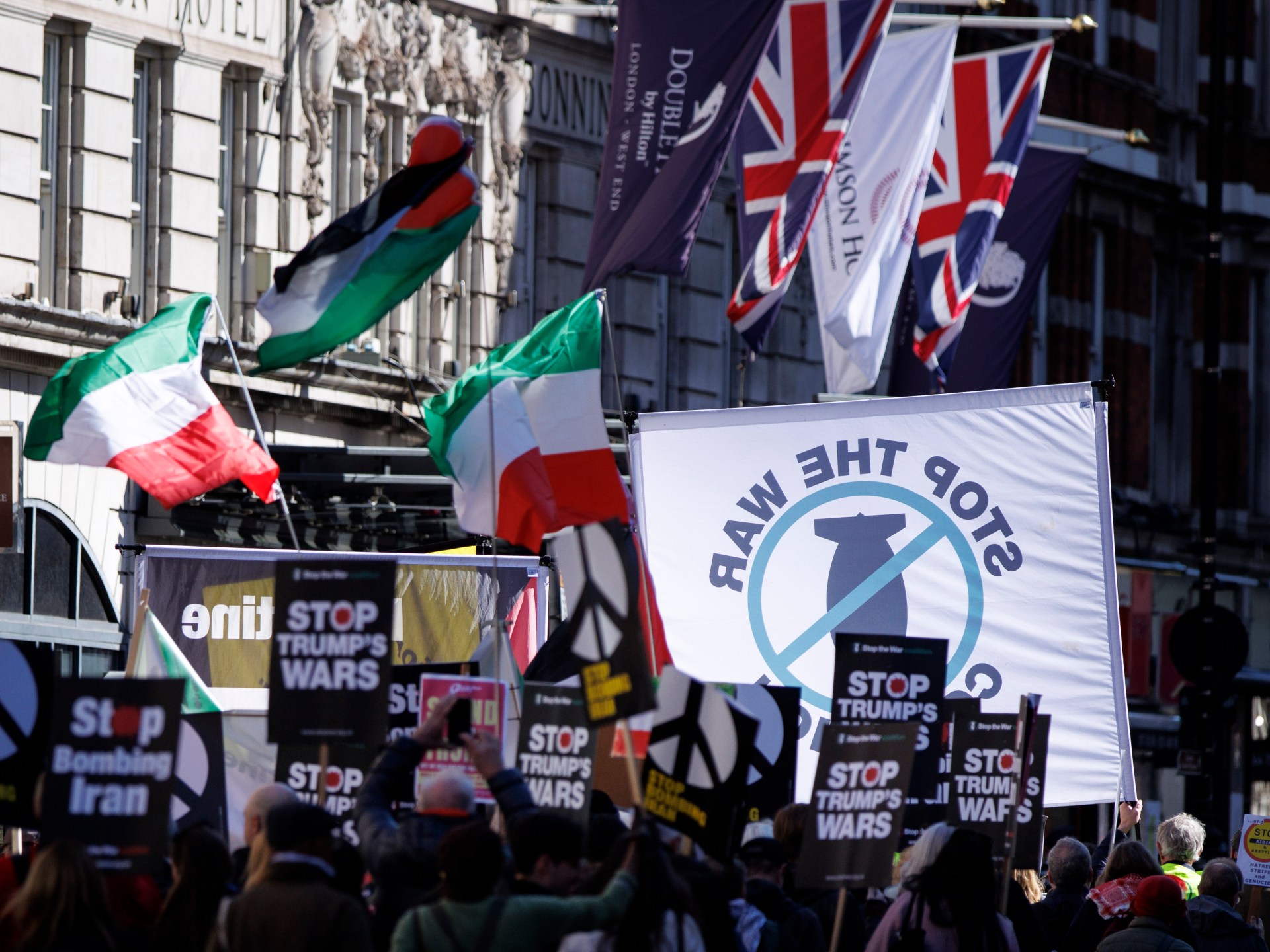
The US-Israeli war on Iran has kept the world on edge for nearly seven weeks, with a fragile ceasefire offering a tense pause over the past 10 days.
US and Israeli attacks on the 90-million-strong, oil-rich nation have killed more than 2,000 people, displaced millions and damaged vital infrastructure, including areas near Iran’s nuclear sites. US President Donald Trump also threatened to wipe out Iran’s “whole civilisation” if it did not accede to Washington’s demands.
In retaliation, Iran has attacked Israeli targets and fired missiles at Gulf countries and the wider region.
The ongoing Pakistan-brokered ceasefire between Washington and Tehran is threatened because of Israel’s air strikes on Lebanon, which have killed more than 1,300 people, and its invasion of southern Lebanon.
Opinion polls in the US and Europe say the war is deeply unpopular.
But widespread anger against the Iran war has failed to turn into mass street protests, such as during Israel’s genocidal war on Gaza and Russia’s war on Ukraine.
Though the reverberations from the war on Iran have been felt globally – with oil and gas price increases, fertiliser shortages and stock market volatility – the effects have been felt faster than in most previous conflicts.
Why? There are few clear answers — but analysts say several factors might help explain why this war has triggered fewer protests than other recent conflicts in its early days.
According to Armed Conflict Location and Event Data, a US-based nonprofit organisation that tracks violent events, armed conflict and protests, there were around 3,200 Iran war-related demonstrations worldwide in the first month since the US-Israeli attacks began on February 28.
By contrast, 3,700 demonstrations were in the first month after Russia’s 2022 invasion of Ukraine, and as many as 6,100 demonstrations in the first month against Israel’s war on Gaza.