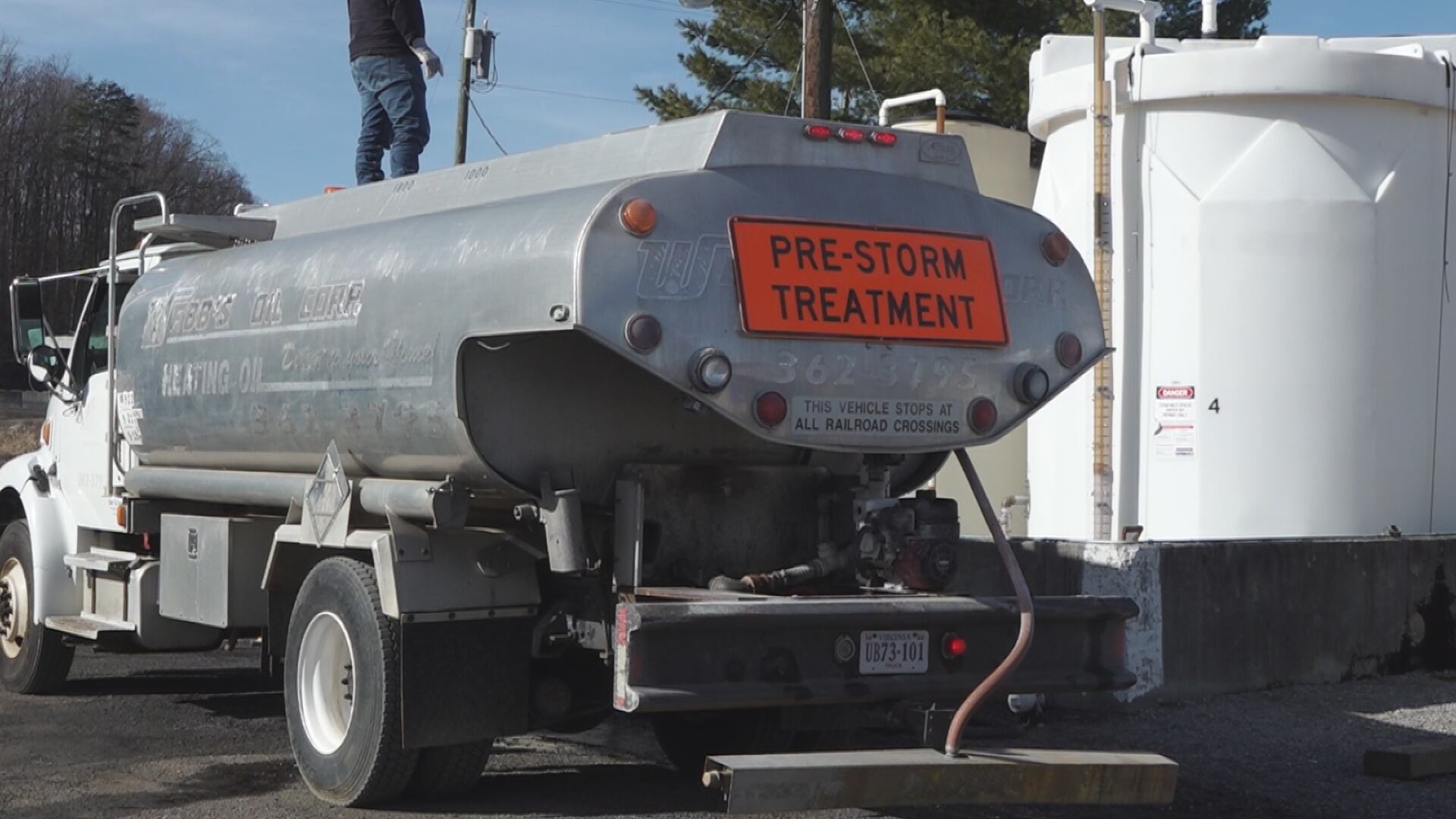
RICHMOND, Va. (WWBT) - Every time snow is in the forecast, crews pre-treat roads, sidewalks and parking lots with salt.
Salt helps reduce slip and fall accidents and makes roads safer in winter, but it has downsides.
It can speed corrosion of vehicles, roads, bridges, sidewalks and parking lots. It also makes its way into the water.
In Fairfax County in Northern Virginia back in 2017, hydrologists studying Accotink Creek noticed a pollutant they weren’t expecting.
“One of the pollutants we identified was chloride. And we found the source of it was sodium chloride. Winter salt. So it’s a winter storm water issue,” said Sarah Sievers with the Virginia Department of Environmental Quality.
The freshwater creek had turned into saltwater, and it was easy to figure out the source was tons of salt applied to roads ahead of a recent storm.
The DEQ worked for a few years on a plan, published in 2020. They released the “Salt Management Strategy” called “SaMS” - a guide to help use salt more sparingly and effectively.
“With this pollutant it’s not just ‘stop putting winter salt down.’ And I’m very intentional by saying winter salt. Because it’s not just roads that are managed. It’s our parking lots and our walkways,” Sievers said.
Progress has been made in the few years since. The liquid brine solution road crews spray before snow is more efficient than rock salt, but rock salt is still used in many smaller applications like sidewalks and parking lots.
The SaMS guide says people are probably using more salt than they need.